Old Testament
Genesis 3:1
Read the Bible in clear, modern English—easy to understand, faithful to the meaning, and written for everyday readers.
The serpent was the most clever of all the wild animals the LORD God had made. He said to the woman, "Did God really say you must not eat from any tree in the garden?"
Compare translations
Now the serpent was more subtil than any beast of the field which the LORD God had made. And he said unto the woman, Yea, hath God said, Ye shall not eat of every tree of the garden?
What Genesis 3:1 means
Plain-English insight for readers
In this verse, we meet the serpent, described as the most clever of all the creatures God created. The serpent approaches the woman and questions her about God's command regarding the trees in the garden. This moment is significant because it introduces doubt and curiosity. The serpent's question implies that God may be withholding something good from them. By asking, 'Did God really say...?' the serpent plants a seed of uncertainty in the woman's mind. This interaction highlights the theme of temptation and the struggle between trust in God and the allure of disobedience. The cleverness of the serpent symbolizes the challenges we face when confronted with choices that test our faith. It serves as a reminder that not everything that seems wise or appealing is aligned with God's intentions. The woman's response to the serpent will set the stage for the events that follow, illustrating the impact of our choices and the importance of understanding God's words clearly. This moment is pivotal in the story of humanity's relationship with God.
How to apply Genesis 3:1 to your life
When faced with choices, be aware of the voices that challenge your understanding of what is right. Reflect on your beliefs and seek clarity in God's guidance. Trusting in God's wisdom can help you navigate temptations and make choices that align with your values. Stay grounded in your faith to resist doubt and confusion.
Curated for this public verse page. Genesis Summary
Learn the Bible through its people and places
Get to know the people in Scripture through illustrated stories, and explore the places where they lived and traveled.
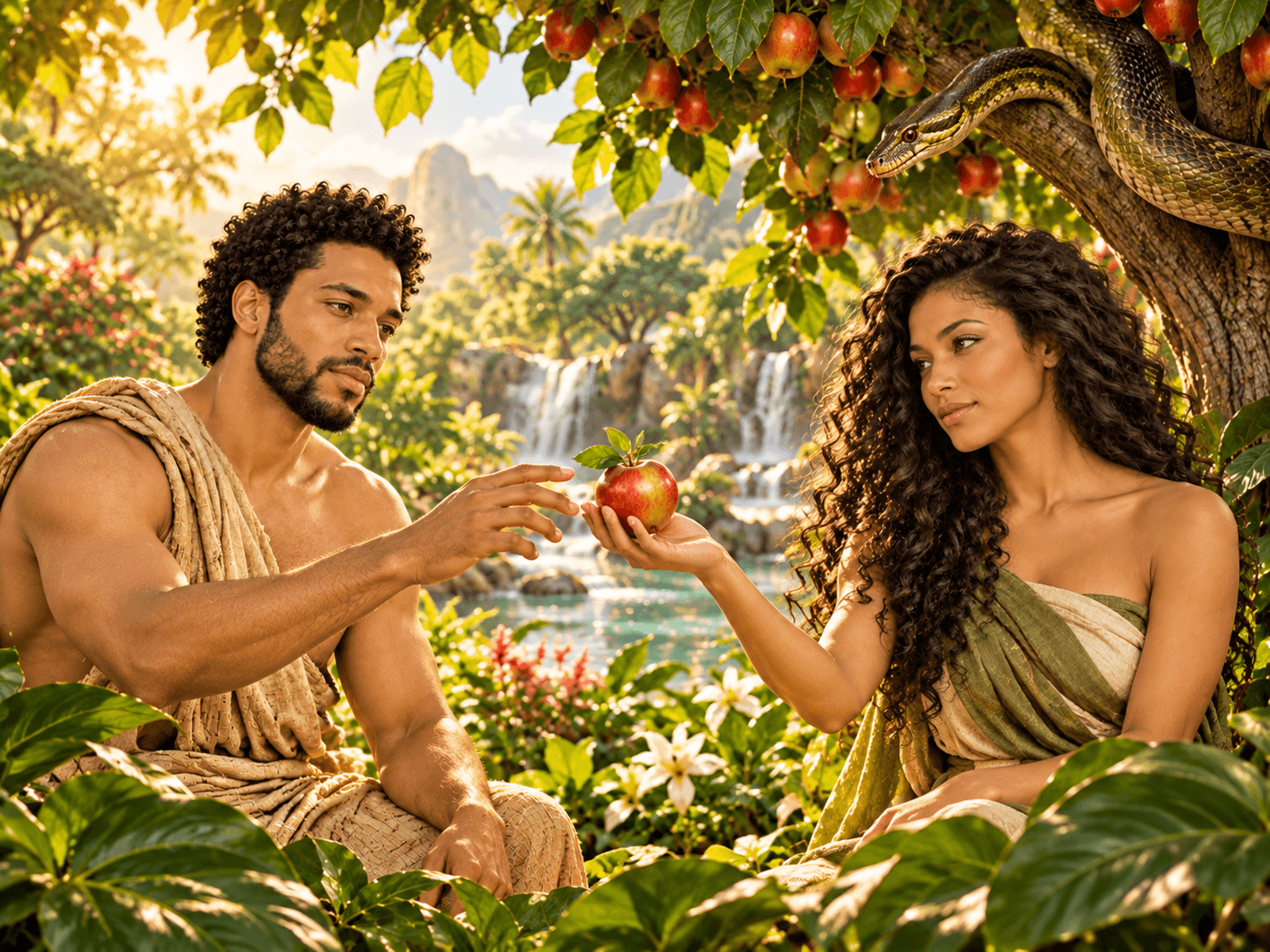
Illustrated scene from Adam's story: The Forbidden Fruit (Genesis 3:1–7)
Meet the people of the Bible
Follow their lives in order, with illustrated scenes and Bible passages that tell their stories.
 Adam

Photo: U.S. Army photo by Spc. Samantha R. Ciaramitaro, via DVIDS and Wikimedia Commons. License: Public domain in the United States — U.S. federal-government work. Source. Location: Great Ziggurat, Ur Archaeological City (Tell el-Mukayyar), Dhi Qar Governorate, Iraq. Resized for the web.
Explore the places of the Bible
See where biblical events happened, why each place matters, and what archaeology helps us understand.
Ur
The city Abram's family left to travel toward Canaan.
Get full access with one subscription
Explore the people and places of the Bible. Read summaries of every book, with images and clear explanations covering every chapter. Access all these features and our Bible study tools with one subscription.
See PlansAsk AI about Genesis 3:1
Ask a question about this verse and get a clear answer, with Bible references you can read for yourself.
Every Bible book, explained chapter by chapter
Explore summaries of every book of the Bible, with images and easy-to-understand explanations covering every chapter.
Keep studying Genesis 3:1
Related Bible verses
Key themes
Related topics
At a Glance — the Book of Genesis
- Author
- Traditionally attributed to Moses
- Written
- Around 1400 BC
- Genre
- Law (Pentateuch)
- Original Audience
- The Israelites in the wilderness
Frequently Asked Questions
Quick, clear answers about this verse
What does Genesis 3:1 mean?
Genesis 3:1 introduces the serpent, described as the most clever of God's creations, who questions the woman about God's command regarding the trees in the garden. This moment highlights the themes of temptation and doubt, as the serpent's question suggests that God may be withholding something good from them.
What is the significance of the serpent in Genesis 3:1?
The serpent represents temptation and cunning, challenging the woman's understanding of God's command. Its cleverness symbolizes the internal and external struggles people face when making choices that test their faith.
What does the phrase 'Did God really say?' in Genesis 3:1 imply?
The phrase 'Did God really say?' implies doubt and encourages questioning of God's words. It serves to plant uncertainty in the woman's mind, setting the stage for the temptation to disobey God's command.
What themes are present in Genesis 3:1?
Genesis 3:1 presents themes of temptation, doubt, trust, and disobedience. The interaction between the serpent and the woman illustrates the struggle between faith in God's intentions and the allure of disobedience.
Daily Verse — straight to your inbox
A verse and a 2-sentence plain-English explanation, every morning. Free. Unsubscribe anytime.