Old Testament
Genesis 3:4
Read the Bible in clear, modern English—easy to understand, faithful to the meaning, and written for everyday readers.
"You won't die," the serpent told her.
Compare translations
And the serpent said unto the woman, Ye shall not surely die:
What Genesis 3:4 means
Plain-English insight for readers
In this moment, the serpent speaks to Eve, challenging what God has said. He assures her that she will not face death if she eats the forbidden fruit. This statement is a direct contradiction to God's warning. The serpent's words are designed to create doubt and entice Eve to disobey. By suggesting that she won't die, he manipulates her understanding of consequences. This interaction highlights the theme of temptation and the struggle between trust in God and the allure of disobedience. Eve is faced with a choice: to believe the serpent or to trust God's word. This pivotal moment sets the stage for the consequences of their actions, illustrating how easily one can be swayed by persuasive words. It serves as a reminder of the importance of discernment in our choices and the impact of believing lies over truth. The serpent's deceitful nature is a warning for us to be vigilant against similar temptations in our lives, urging us to seek clarity and truth in our decisions.
How to apply Genesis 3:4 to your life
When faced with choices, consider the source of the information. Just like Eve, we may encounter persuasive voices that contradict what we know to be true. It's essential to ground ourselves in truth and seek wisdom before making decisions. Reflect on the potential consequences of your choices and choose wisely. Trust in what you know is right, even when tempted otherwise.
Curated for this public verse page. Genesis Summary
Learn the Bible through its people and places
Get to know the people in Scripture through illustrated stories, and explore the places where they lived and traveled.
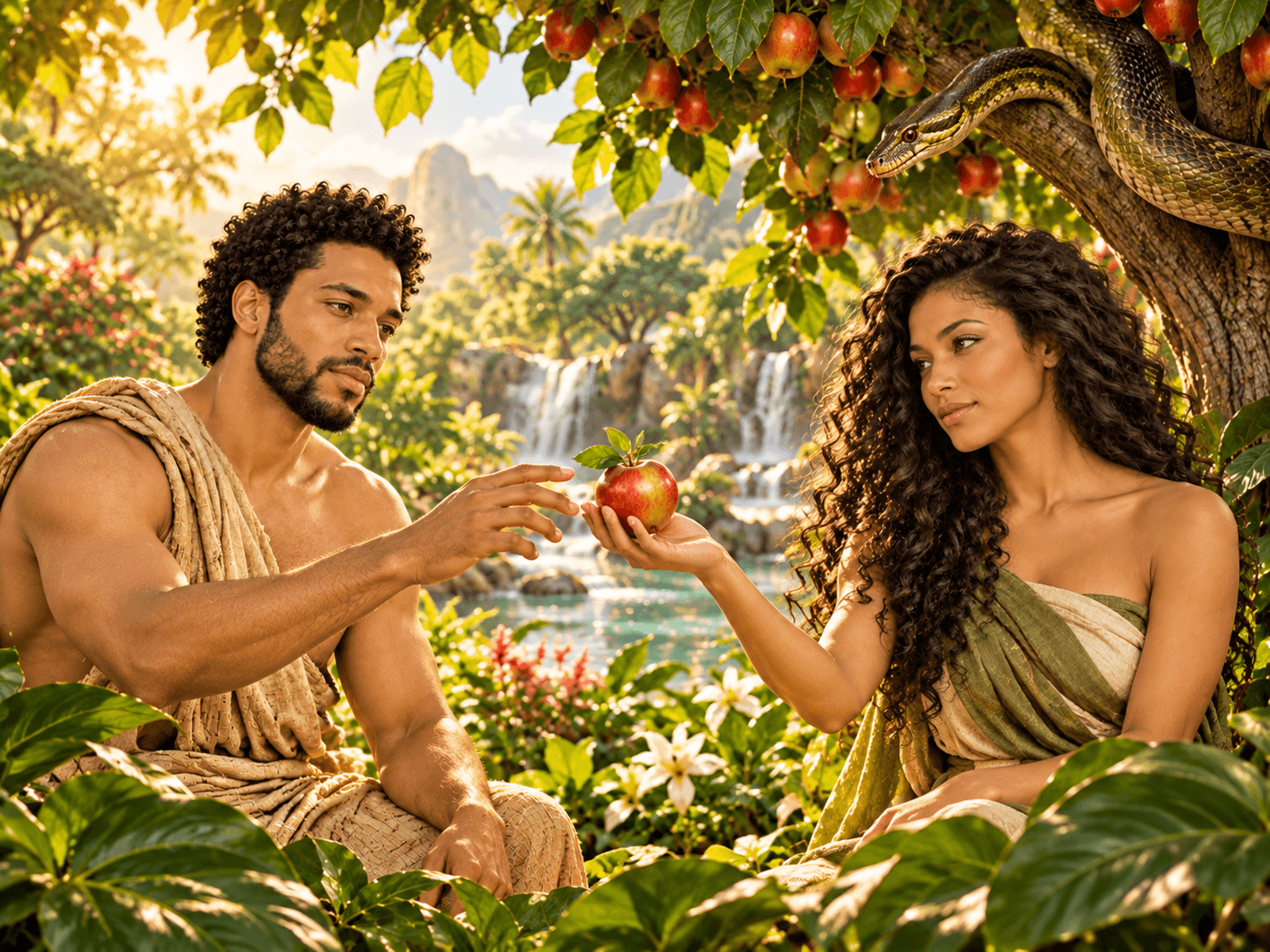
Illustrated scene from Adam's story: The Forbidden Fruit (Genesis 3:1–7)
Meet the people of the Bible
Follow their lives in order, with illustrated scenes and Bible passages that tell their stories.
 Adam

Photo: U.S. Army photo by Spc. Samantha R. Ciaramitaro, via DVIDS and Wikimedia Commons. License: Public domain in the United States — U.S. federal-government work. Source. Location: Great Ziggurat, Ur Archaeological City (Tell el-Mukayyar), Dhi Qar Governorate, Iraq. Resized for the web.
Explore the places of the Bible
See where biblical events happened, why each place matters, and what archaeology helps us understand.
Ur
The city Abram's family left to travel toward Canaan.
Get full access with one subscription
Explore the people and places of the Bible. Read summaries of every book, with images and clear explanations covering every chapter. Access all these features and our Bible study tools with one subscription.
See PlansAsk AI about Genesis 3:4
Ask a question about this verse and get a clear answer, with Bible references you can read for yourself.
Every Bible book, explained chapter by chapter
Explore summaries of every book of the Bible, with images and easy-to-understand explanations covering every chapter.
Keep studying Genesis 3:4
Related Bible verses
Key themes
Related topics
At a Glance — the Book of Genesis
- Author
- Traditionally attributed to Moses
- Written
- Around 1400 BC
- Genre
- Law (Pentateuch)
- Original Audience
- The Israelites in the wilderness
Frequently Asked Questions
Quick, clear answers about this verse
What does Genesis 3:4 mean?
Genesis 3:4 features the serpent telling Eve that she will not die if she eats the forbidden fruit. This statement directly contradicts God's warning and introduces doubt about the consequences of disobedience.
What is the significance of the serpent's words in Genesis 3:4?
The serpent's words in Genesis 3:4 are significant because they represent temptation and deception. By assuring Eve that she won't die, the serpent manipulates her understanding of God's command and encourages her to disobey.
How does Genesis 3:4 relate to the theme of temptation?
Genesis 3:4 illustrates the theme of temptation by showing how the serpent entices Eve to question God's truth. This moment highlights the struggle between trusting God's word and giving in to persuasive, misleading voices.
What does the phrase 'Ye shall not surely die' imply in Genesis 3:4?
The phrase 'Ye shall not surely die' implies that the serpent is downplaying the seriousness of disobedience to God. It suggests that there are no real consequences for eating the forbidden fruit, which contradicts God's warning.
Daily Verse — straight to your inbox
A verse and a 2-sentence plain-English explanation, every morning. Free. Unsubscribe anytime.