Old Testament
Genesis 39:17
Read the Bible in clear, modern English—easy to understand, faithful to the meaning, and written for everyday readers.
Then she repeated the same story to him, saying, "That Hebrew slave you brought into our home came to me to humiliate me.
Compare translations
And she spake unto him according to these words, saying, The Hebrew servant, which thou hast brought unto us, came in unto me to mock me:
What Genesis 39:17 means
Plain-English insight for readers
In this verse, Potiphar's wife accuses Joseph of trying to humiliate her. She refers to him as a 'Hebrew slave,' emphasizing his status and her own power. This accusation is part of her attempt to manipulate the situation after Joseph rejected her advances. By framing Joseph as a threat, she seeks to justify her actions and shift blame away from herself. This moment highlights the themes of false accusations and the misuse of power. Potiphar's wife uses her influence to control the narrative, showing how easily truth can be distorted. Joseph, who remains innocent, faces severe consequences due to her lies. This story serves as a reminder of the dangers of jealousy and the lengths some will go to protect their reputation, even at the expense of others. It also illustrates the importance of integrity and standing firm in one's values, even when faced with unjust treatment.
How to apply Genesis 39:17 to your life
This verse teaches us the importance of maintaining integrity in the face of false accusations. It encourages us to stand firm in our values and not succumb to pressure or manipulation. We should also be cautious about how we speak of others, ensuring our words reflect truth and justice.
Curated for this public verse page. Genesis Summary
Learn the Bible through its people and places
Get to know the people in Scripture through illustrated stories, and explore the places where they lived and traveled.
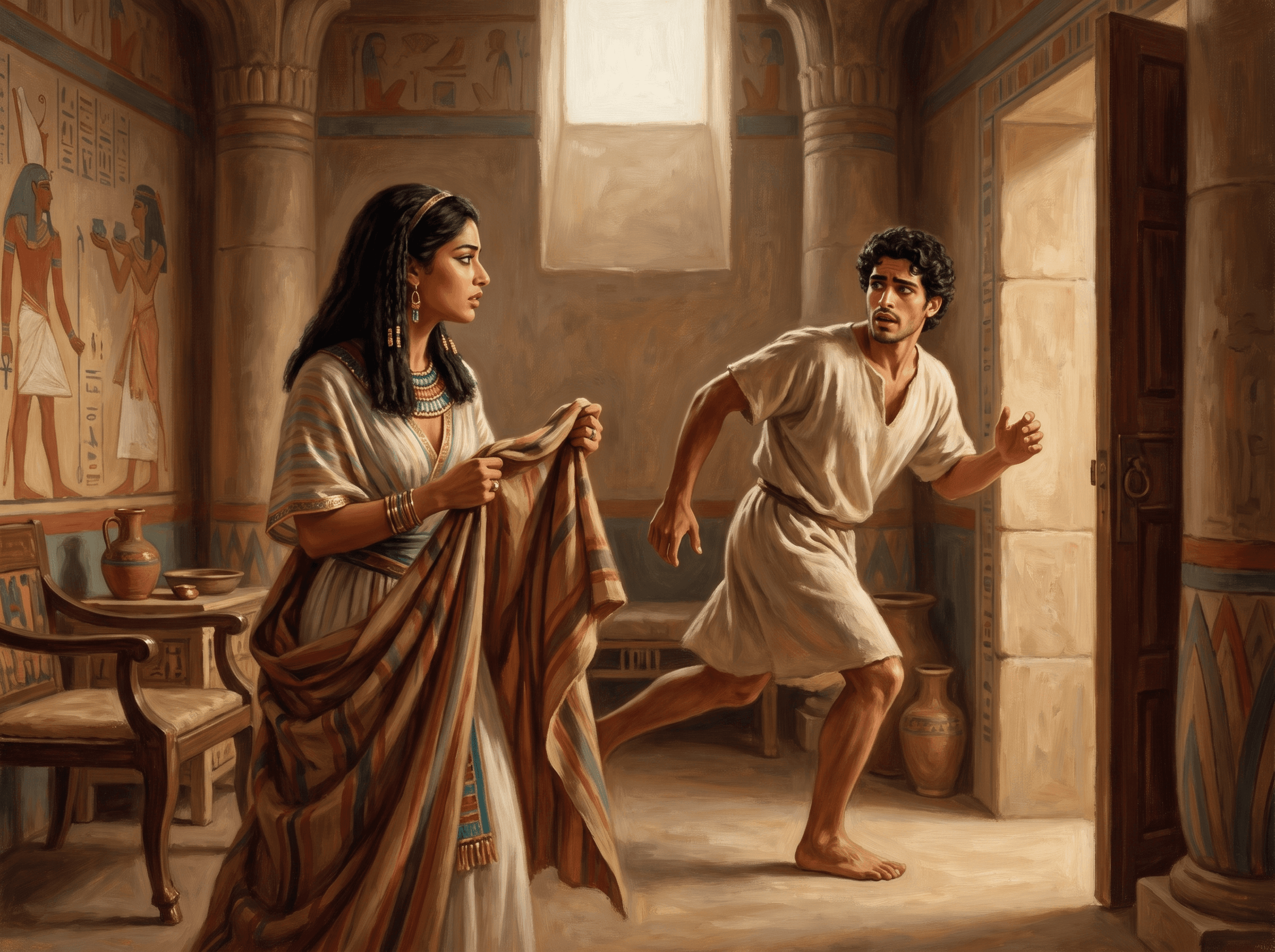
Illustrated scene from Joseph, Jacob's son's story: Joseph and Potiphar's Wife (Genesis 39:7–20)
Meet the people of the Bible
Follow their lives in order, with illustrated scenes and Bible passages that tell their stories.
 Joseph, Jacob's son

Photo: Zeev Stein / PikiWiki Israel, via Wikimedia Commons. License: CC BY 2.5. Source. Location: Tel Beer Sheva National Park, Israel. Resized for the web.
Explore the places of the Bible
See where biblical events happened, why each place matters, and what archaeology helps us understand.
Beersheba
Where Abraham and Isaac dug wells and worshiped the LORD, at the southern edge of the land.
Get full access with one subscription
Explore the people and places of the Bible. Read summaries of every book, with images and clear explanations covering every chapter. Access all these features and our Bible study tools with one subscription.
See PlansAsk AI about Genesis 39:17
Ask a question about this verse and get a clear answer, with Bible references you can read for yourself.
Every Bible book, explained chapter by chapter
Explore summaries of every book of the Bible, with images and easy-to-understand explanations covering every chapter.
Keep studying Genesis 39:17
Related Bible verses
At a Glance — the Book of Genesis
- Author
- Traditionally attributed to Moses
- Written
- Around 1400 BC
- Genre
- Law (Pentateuch)
- Original Audience
- The Israelites in the wilderness
Frequently Asked Questions
Quick, clear answers about this verse
What does Genesis 39:17 mean?
Genesis 39:17 describes Potiphar's wife accusing Joseph of trying to humiliate her after he rejected her advances. This accusation highlights her attempt to manipulate the situation and shift blame onto Joseph, showcasing themes of false accusations and the misuse of power.
What is the significance of the term 'Hebrew slave' in Genesis 39:17?
In Genesis 39:17, Potiphar's wife uses the term 'Hebrew slave' to emphasize Joseph's low status and her own power. This language serves to dehumanize Joseph and justify her false accusations against him.
What themes are present in Genesis 39:17?
Genesis 39:17 presents themes of false accusations, abuse of power, integrity, jealousy, and manipulation. These themes illustrate the dangers of jealousy and the impact of lies on innocent individuals.
What can we learn from Genesis 39:17 about integrity?
Genesis 39:17 teaches the importance of maintaining integrity in the face of false accusations. It encourages individuals to stand firm in their values and resist manipulation, highlighting the need for truth in our words about others.
Daily Verse — straight to your inbox
A verse and a 2-sentence plain-English explanation, every morning. Free. Unsubscribe anytime.