Old Testament
Genesis 40:17
Read the Bible in clear, modern English—easy to understand, faithful to the meaning, and written for everyday readers.
"The top basket was filled with all kinds of baked goods for Pharaoh, but birds were eating them out of the basket on my head."
Compare translations
And in the uppermost basket there was of all manner of bakemeats for Pharaoh; and the birds did eat them out of the basket upon my head.
What Genesis 40:17 means
Plain-English insight for readers
In this verse, a prisoner recounts a dream he had while in jail. He describes a basket on his head filled with various baked goods meant for Pharaoh. However, birds are eating the food from the basket, symbolizing a negative outcome. This imagery reflects the man's situation, as he is in prison and feels helpless. The dream serves as a metaphor for his life, where he is meant to serve Pharaoh but is instead being undermined by external forces, represented by the birds. This dream is part of a larger narrative where Joseph interprets dreams, revealing deeper meanings and foreshadowing future events. The act of birds eating the baked goods suggests loss and failure, indicating that the man's fate may not be favorable. This dream ultimately leads to a significant turning point in the story, as it sets the stage for Joseph's rise to power after interpreting the dreams of others in prison.
How to apply Genesis 40:17 to your life
This verse reminds us that our circumstances can feel overwhelming, much like the birds consuming the baked goods. It encourages us to seek understanding and clarity in difficult situations. Just as Joseph interpreted dreams, we can look for deeper meanings in our challenges and trust that they may lead to growth and new opportunities.
Curated for this public verse page. Genesis Summary
Learn the Bible through its people and places
Get to know the people in Scripture through illustrated stories, and explore the places where they lived and traveled.
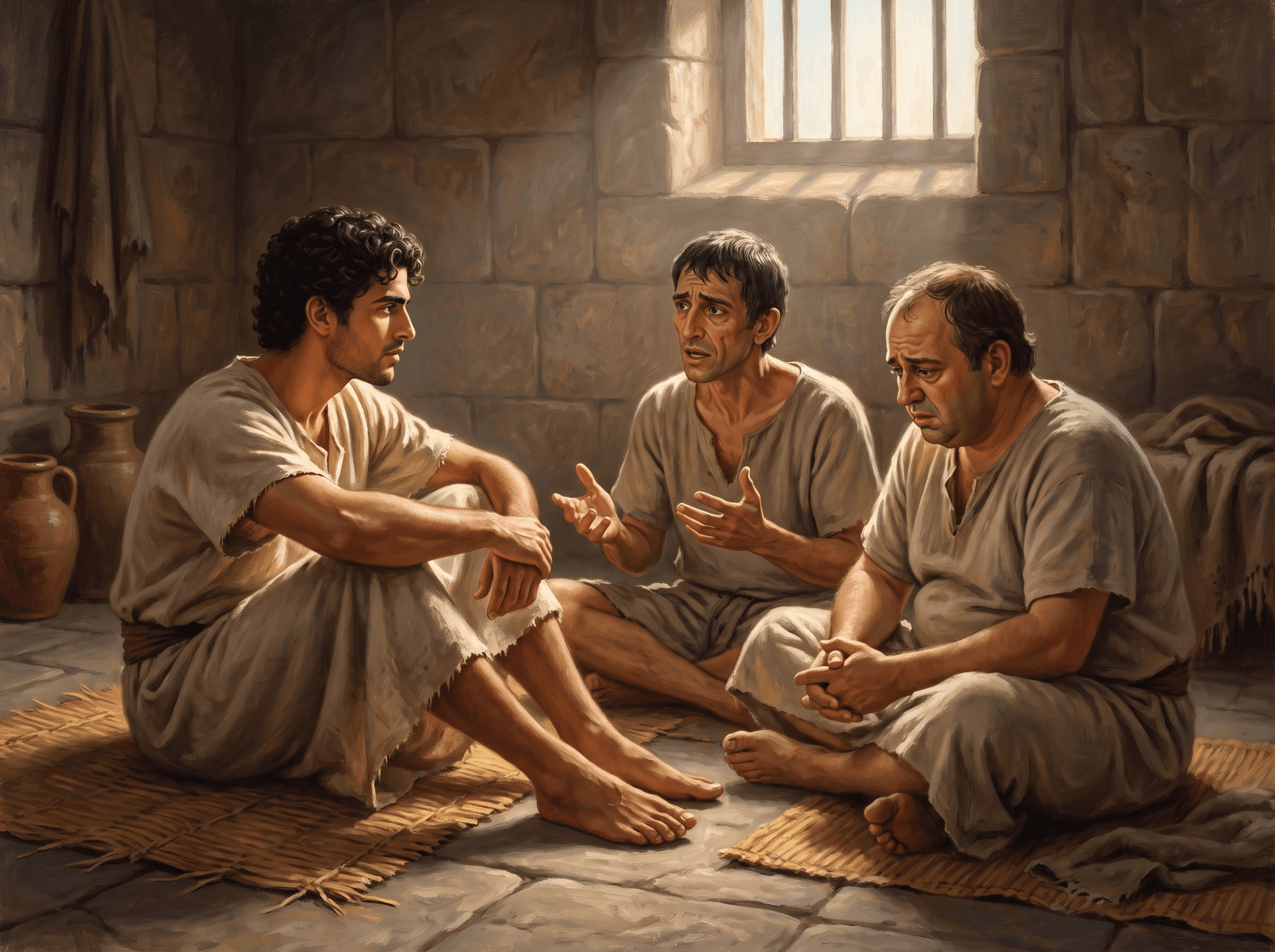
Illustrated scene from Joseph, Jacob's son's story: The Cupbearer and the Baker (Genesis 40:1–23)
Meet the people of the Bible
Follow their lives in order, with illustrated scenes and Bible passages that tell their stories.
 Joseph, Jacob's son

Photo: Photochrom print, Library of Congress Prints and Photographs Division (LCCN 2002725043). License: Public domain in the United States; Library of Congress states no known restrictions on publication. Source. Location: Nablus and Mount Gerizim, West Bank; print preserved by the Library of Congress. Resized for the web.
Explore the places of the Bible
See where biblical events happened, why each place matters, and what archaeology helps us understand.
Shechem
Where God promised the land to Abram, and where Joshua led Israel to renew the covenant.
Get full access with one subscription
Explore the people and places of the Bible. Read summaries of every book, with images and clear explanations covering every chapter. Access all these features and our Bible study tools with one subscription.
See PlansAsk AI about Genesis 40:17
Ask a question about this verse and get a clear answer, with Bible references you can read for yourself.
Every Bible book, explained chapter by chapter
Explore summaries of every book of the Bible, with images and easy-to-understand explanations covering every chapter.
Keep studying Genesis 40:17
Related Bible verses
Key themes
At a Glance — the Book of Genesis
- Author
- Traditionally attributed to Moses
- Written
- Around 1400 BC
- Genre
- Law (Pentateuch)
- Original Audience
- The Israelites in the wilderness
Frequently Asked Questions
Quick, clear answers about this verse
What does the basket in Genesis 40:17 symbolize?
In Genesis 40:17, the basket symbolizes the prisoner's hopes and aspirations, which are ultimately undermined by external forces, represented by the birds. The baked goods meant for Pharaoh indicate the man's intended service and potential favor, but the birds eating them suggest impending failure and loss, reflecting the prisoner's dire situation.
How does Genesis 40:17 relate to the theme of fate?
Genesis 40:17 illustrates the theme of fate by showing how the prisoner's dream reveals a grim future. The imagery of birds consuming the baked goods signifies that despite the man's intentions to serve Pharaoh, his fate is being negatively influenced by uncontrollable circumstances. This highlights the unpredictability of life and how one's destiny can be altered by external factors.
What lesson can we learn from the dream in Genesis 40:17?
The dream in Genesis 40:17 teaches us that our challenges may feel overwhelming, much like the birds consuming the baked goods. It encourages us to seek understanding in our struggles and to look for deeper meanings in our experiences. Just as Joseph interpreted dreams, we can find insights in our difficulties that may lead to personal growth and new opportunities.
Why is the act of birds eating the baked goods significant?
The act of birds eating the baked goods in Genesis 40:17 is significant because it symbolizes loss and failure. It reflects the prisoner's feelings of helplessness and foreshadows a negative outcome for him. This imagery serves to emphasize the precariousness of his situation and the idea that despite one's efforts, external forces can disrupt plans and lead to unfavorable results.
Daily Verse — straight to your inbox
A verse and a 2-sentence plain-English explanation, every morning. Free. Unsubscribe anytime.