Old Testament
Genesis 40:5
Read the Bible in clear, modern English—easy to understand, faithful to the meaning, and written for everyday readers.
One night, both the cupbearer and the baker of the king of Egypt, who were confined in the prison, each had a dream, and each dream carried its own meaning.
Compare translations
And they dreamed a dream both of them, each man his dream in one night, each man according to the interpretation of his dream, the butler and the baker of the king of Egypt, which were bound in the prison.
What Genesis 40:5 means
Plain-English insight for readers
In Genesis 40:5, we see two important figures in Pharaoh's court, the cupbearer and the baker, who find themselves imprisoned. During one night, both men experience dreams that are significant and personal to them. Dreams in the ancient world were often seen as messages from God or omens that needed interpretation. The fact that both men dreamt on the same night suggests a divine timing and purpose. Each dream is unique and holds its own meaning, which sets the stage for the unfolding events in the story. This moment is crucial as it leads to Joseph's involvement, who has the ability to interpret dreams. The dreams symbolize hope and the potential for change, even in dire circumstances, highlighting the theme of divine providence and the importance of understanding one's experiences. This passage emphasizes that even in confinement, God can communicate and work through individuals, leading to future restoration and purpose.
How to apply Genesis 40:5 to your life
This verse reminds us that even in difficult situations, we can find meaning and purpose. It encourages us to pay attention to our experiences and seek understanding, as they may lead to significant changes in our lives. Trust in divine timing.
Curated for this public verse page. Genesis Summary
Learn the Bible through its people and places
Get to know the people in Scripture through illustrated stories, and explore the places where they lived and traveled.
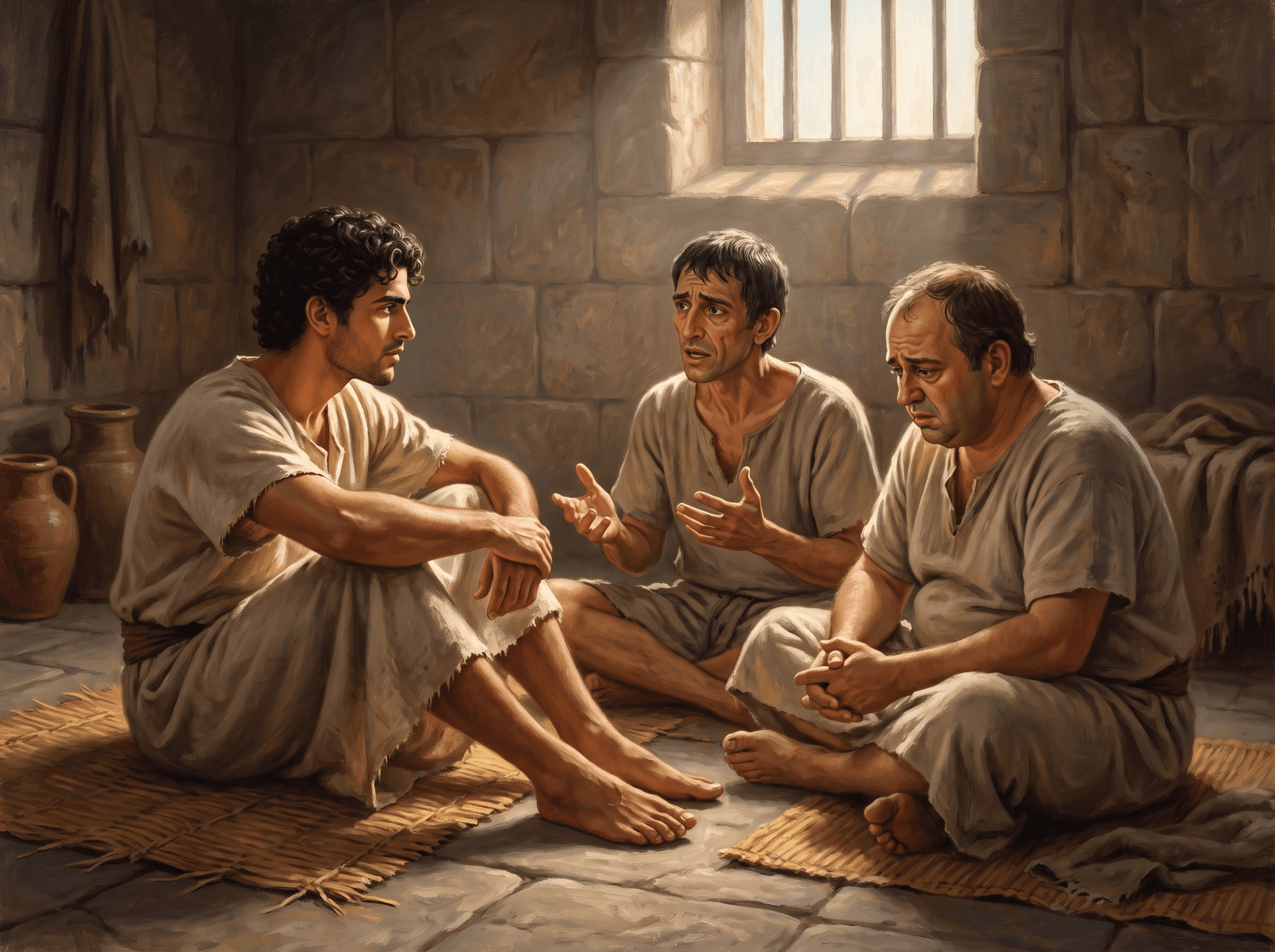
Illustrated scene from Joseph, Jacob's son's story: The Cupbearer and the Baker (Genesis 40:1–23)
Meet the people of the Bible
Follow their lives in order, with illustrated scenes and Bible passages that tell their stories.
 Joseph, Jacob's son

Photo: Photochrom print, Library of Congress Prints and Photographs Division (LCCN 2002725043). License: Public domain in the United States; Library of Congress states no known restrictions on publication. Source. Location: Nablus and Mount Gerizim, West Bank; print preserved by the Library of Congress. Resized for the web.
Explore the places of the Bible
See where biblical events happened, why each place matters, and what archaeology helps us understand.
Shechem
Where God promised the land to Abram, and where Joshua led Israel to renew the covenant.
Get full access with one subscription
Explore the people and places of the Bible. Read summaries of every book, with images and clear explanations covering every chapter. Access all these features and our Bible study tools with one subscription.
See PlansAsk AI about Genesis 40:5
Ask a question about this verse and get a clear answer, with Bible references you can read for yourself.
Every Bible book, explained chapter by chapter
Explore summaries of every book of the Bible, with images and easy-to-understand explanations covering every chapter.
Keep studying Genesis 40:5
Related Bible verses
Key themes
Related topics
At a Glance — the Book of Genesis
- Author
- Traditionally attributed to Moses
- Written
- Around 1400 BC
- Genre
- Law (Pentateuch)
- Original Audience
- The Israelites in the wilderness
Frequently Asked Questions
Quick, clear answers about this verse
What is the significance of dreams in Genesis 40:5?
In Genesis 40:5, dreams are portrayed as significant messages that require interpretation. In the ancient world, dreams were often seen as divine communications, indicating that they held important meanings for the dreamers. The cupbearer and baker's dreams foreshadow their futures and set the stage for Joseph's role as an interpreter, highlighting the theme of divine providence and the potential for change.
Why were the cupbearer and baker imprisoned?
The cupbearer and baker were imprisoned due to offenses against Pharaoh, though the specific reasons are not detailed in the text. Their imprisonment places them in a position where they encounter Joseph, who has the ability to interpret their dreams. This situation emphasizes how God can use even dire circumstances to orchestrate significant events and fulfill His plans.
What does Genesis 40:5 teach about hope in difficult times?
Genesis 40:5 illustrates that even in challenging situations, such as imprisonment, there is potential for hope and change. The dreams of the cupbearer and baker symbolize the possibility of restoration and new beginnings. This passage encourages readers to remain open to the meanings behind their experiences, suggesting that understanding these can lead to transformative outcomes.
How does Joseph's ability to interpret dreams relate to Genesis 40:5?
Joseph's ability to interpret dreams is central to the narrative in Genesis 40:5. The dreams of the cupbearer and baker serve as a catalyst for Joseph's eventual rise to prominence in Egypt. This moment highlights the importance of recognizing and acting upon divine messages, as Joseph's interpretations lead to significant changes in both his life and the lives of those around him.
Daily Verse — straight to your inbox
A verse and a 2-sentence plain-English explanation, every morning. Free. Unsubscribe anytime.