Old Testament
Genesis 49:11
Read the Bible in clear, modern English—easy to understand, faithful to the meaning, and written for everyday readers.
"He ties his donkey to the vine, his donkey's colt to the choicest vine. He washes his garments in wine, his robes in the blood of grapes."
Compare translations
Binding his foal unto the vine, and his ass’s colt unto the choice vine; he washed his garments in wine, and his clothes in the blood of grapes:
What Genesis 49:11 means
Plain-English insight for readers
In this verse, Jacob is prophesying about his son Judah. The imagery of tying a donkey to a vine suggests abundance and prosperity, as vines are associated with fruitful harvests. The mention of washing garments in wine symbolizes joy and celebration, indicating that Judah's lineage will bring blessings and richness. The 'blood of grapes' further emphasizes the idea of abundance and the joy that comes from the fruit of the vine. This prophecy highlights Judah's future significance, as he will be a leader among his brothers and a symbol of strength and royalty. The imagery also foreshadows the coming of a king from Judah's line, ultimately pointing to Jesus Christ, who is often referred to as the Lion of the tribe of Judah. Thus, this verse encapsulates themes of prosperity, leadership, and the divine promise of a savior.
How to apply Genesis 49:11 to your life
This verse encourages us to recognize the blessings in our lives and to celebrate them. Just as Judah's lineage was marked by abundance, we can find joy in our own blessings and share that joy with others. Embracing a spirit of gratitude can transform our perspective.
Curated for this public verse page. Genesis Summary
Learn the Bible through its people and places
Get to know the people in Scripture through illustrated stories, and explore the places where they lived and traveled.
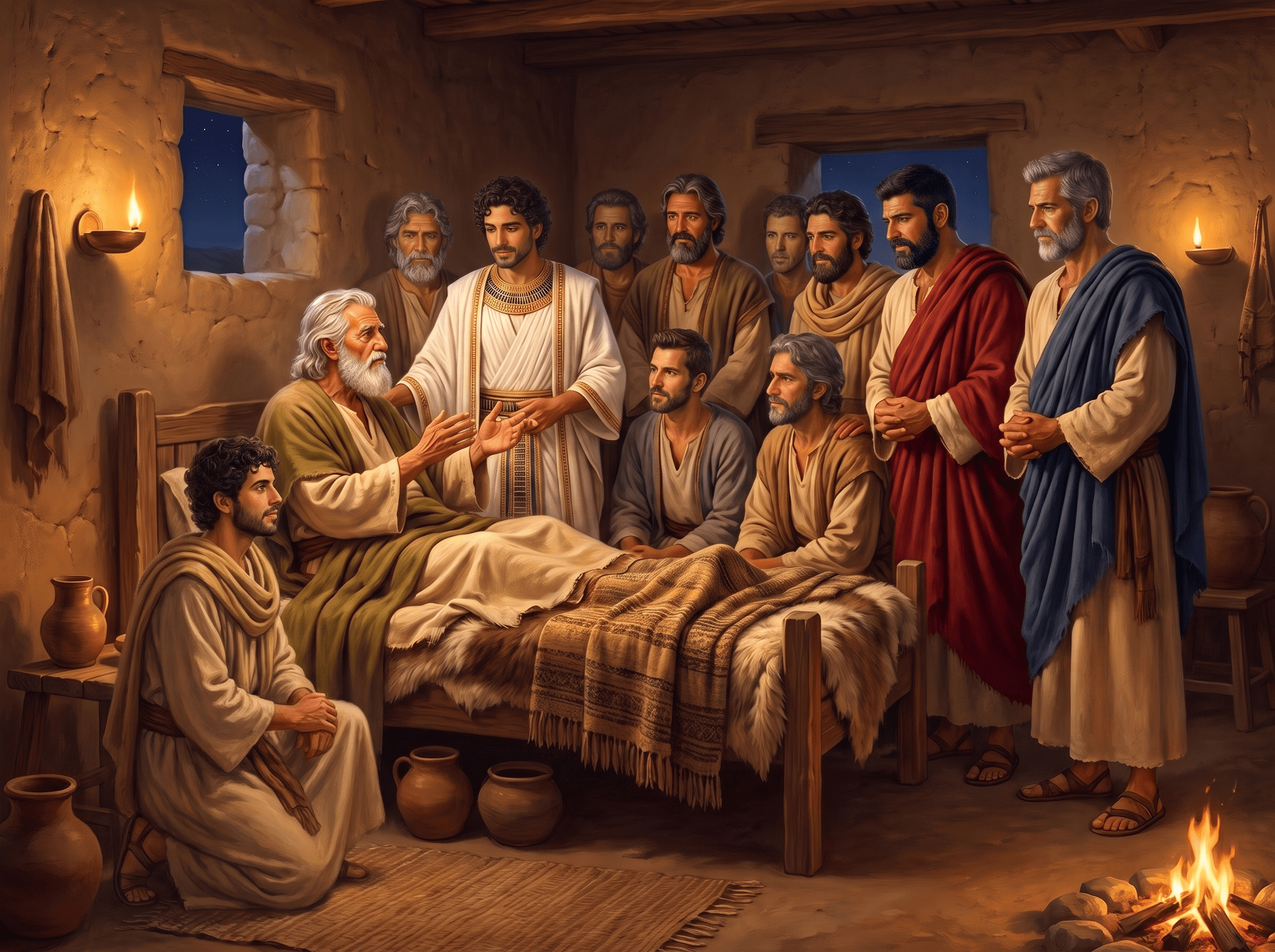
Illustrated scene from Joseph, Jacob's son's story: Jacob's Last Words (Genesis 49:1–33)
Meet the people of the Bible
Follow their lives in order, with illustrated scenes and Bible passages that tell their stories.
 Joseph, Jacob's son

Photo: Photochrom print, Library of Congress Prints and Photographs Division (LCCN 2002724987). License: Public domain in the United States; Library of Congress states no known restrictions on publication. Source. Location: Hebron, West Bank; print preserved by the Library of Congress. Resized for the web.
Explore the places of the Bible
See where biblical events happened, why each place matters, and what archaeology helps us understand.
Hebron
Where Abraham lived and buried Sarah, and where David was first made king.
Get full access with one subscription
Explore the people and places of the Bible. Read summaries of every book, with images and clear explanations covering every chapter. Access all these features and our Bible study tools with one subscription.
See PlansAsk AI about Genesis 49:11
Ask a question about this verse and get a clear answer, with Bible references you can read for yourself.
Every Bible book, explained chapter by chapter
Explore summaries of every book of the Bible, with images and easy-to-understand explanations covering every chapter.
Keep studying Genesis 49:11
Related Bible verses
Key themes
Related topics
At a Glance — the Book of Genesis
- Author
- Traditionally attributed to Moses
- Written
- Around 1400 BC
- Genre
- Law (Pentateuch)
- Original Audience
- The Israelites in the wilderness
Frequently Asked Questions
Quick, clear answers about this verse
What does Genesis 49:11 mean?
Genesis 49:11 is a prophecy by Jacob about his son Judah, symbolizing abundance and prosperity. The imagery of tying a donkey to a vine suggests a fruitful harvest, while washing garments in wine indicates joy and celebration, highlighting Judah's future significance as a leader.
What is the significance of the donkey in Genesis 49:11?
The donkey in Genesis 49:11 represents humility and service, while its connection to the vine symbolizes abundance. This imagery reflects Judah's future role as a leader who will bring blessings and prosperity to his lineage.
What does 'blood of grapes' mean in Genesis 49:11?
The phrase 'blood of grapes' in Genesis 49:11 emphasizes the richness and joy associated with wine, symbolizing celebration and abundance. It highlights the blessings that will come from Judah's lineage.
How does Genesis 49:11 relate to Jesus?
Genesis 49:11 foreshadows the coming of a king from Judah's line, ultimately pointing to Jesus Christ, who is referred to as the Lion of the tribe of Judah. This connection emphasizes the royal lineage and divine promise associated with Judah.
Daily Verse — straight to your inbox
A verse and a 2-sentence plain-English explanation, every morning. Free. Unsubscribe anytime.