Old Testament
Job 41:21
Read the Bible in clear, modern English—easy to understand, faithful to the meaning, and written for everyday readers.
His breath kindles coals, and a flame goes out of his mouth.
Compare translations
His breath kindleth coals, and a flame goeth out of his mouth.
What Job 41:21 means
Plain-English insight for readers
In Job 41:21, the imagery describes a powerful creature, often interpreted as a dragon or a sea monster, whose breath is so intense that it can ignite coals and produce flames. This verse emphasizes the creature's might and the awe it inspires. The vivid description serves to illustrate the greatness of God's creation, showcasing beings that are beyond human control or understanding. The mention of fire symbolizes destruction and power, highlighting the creature's ferocity. This passage is part of a larger discourse where God speaks to Job about the wonders of creation, reminding him of the limits of human knowledge and strength. The creature's ability to breathe fire serves as a metaphor for the overwhelming power of God, who created such beings. It invites readers to reflect on the majesty of God and the complexity of the world He has made, encouraging humility in the face of divine power.
How to apply Job 41:21 to your life
This verse reminds us of the awe-inspiring power of God and His creation. In our lives, we should recognize our limitations and approach challenges with humility. By acknowledging the greatness of God, we can find strength and guidance in our daily struggles, trusting in His wisdom and power.
Curated for this public verse page. Job Summary
Learn the Bible through its people and places
Get to know the people in Scripture through illustrated stories, and explore the places where they lived and traveled.
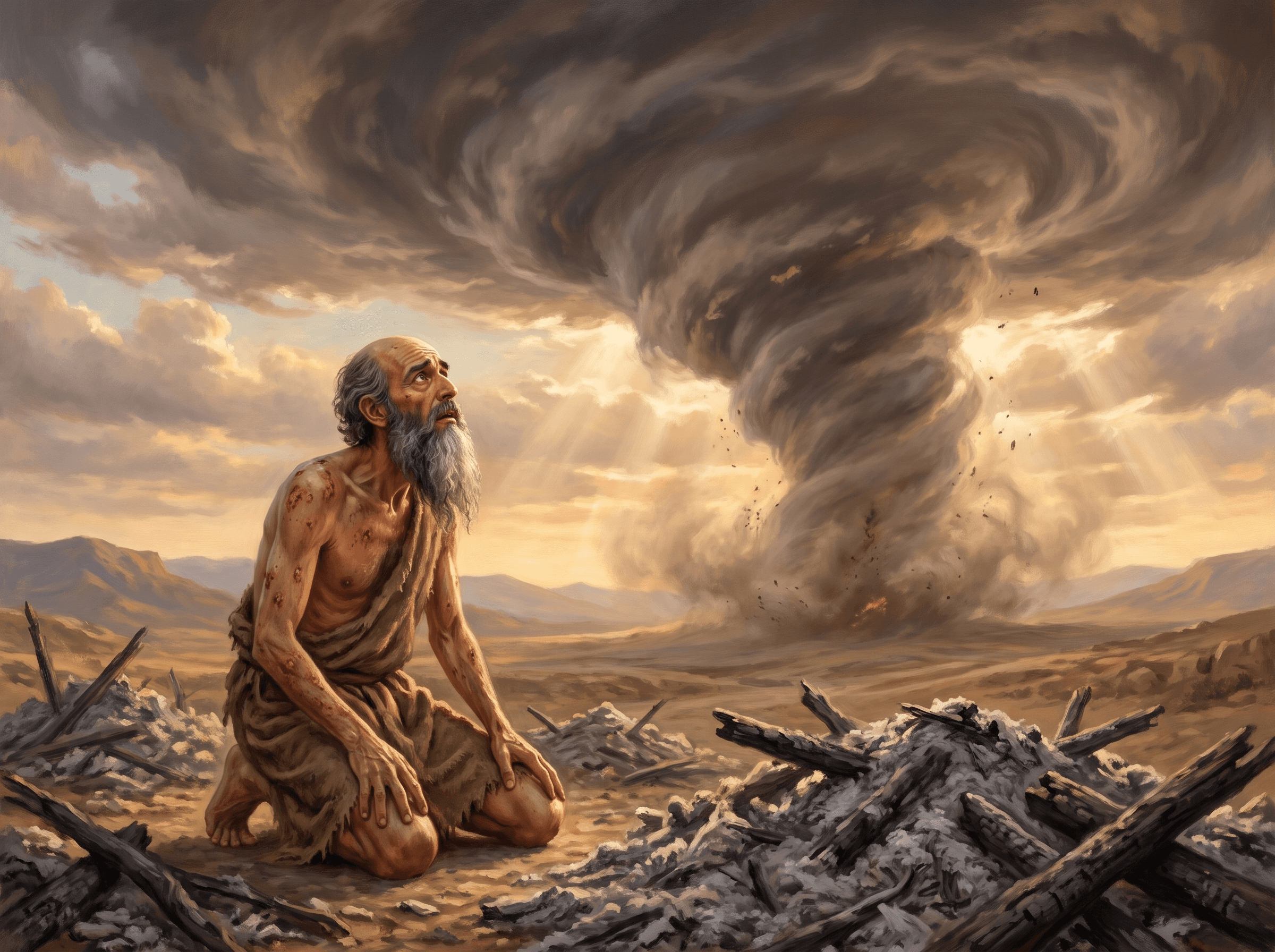
Illustrated scene from Job's story: Out of the Whirlwind (Job 38:1–41:34)
Meet the people of the Bible
Follow their lives in order, with illustrated scenes and Bible passages that tell their stories.
 Job

Photo: Diego Delso, via Wikimedia Commons. License: CC BY-SA 3.0. Source. Location: Tell es-Sultan, Jericho, West Bank. Resized for the web.
Explore the places of the Bible
See where biblical events happened, why each place matters, and what archaeology helps us understand.
Jericho
The city of palm trees, whose walls fell in Joshua's day.
Get full access with one subscription
Explore the people and places of the Bible. Read summaries of every book, with images and clear explanations covering every chapter. Access all these features and our Bible study tools with one subscription.
See PlansAsk AI about Job 41:21
Ask a question about this verse and get a clear answer, with Bible references you can read for yourself.
Every Bible book, explained chapter by chapter
Explore summaries of every book of the Bible, with images and easy-to-understand explanations covering every chapter.
Keep studying Job 41:21
Related Bible verses
Related topics
At a Glance — the Book of Job
- Author
- Author unknown; events likely in the patriarchal era
- Written
- Date debated
- Genre
- Wisdom literature
- Original Audience
- All who suffer or question God
Frequently Asked Questions
Quick, clear answers about this verse
What does Job 41:21 mean?
Job 41:21 describes a powerful creature, often thought to be a dragon or sea monster, whose breath can ignite coals and produce flames. This imagery highlights the creature's might and serves as a reminder of the greatness of God's creation.
What is the significance of fire in Job 41:21?
In Job 41:21, fire symbolizes destruction and power, illustrating the ferocity of the creature being described. It emphasizes the overwhelming strength of God's creation and invites reflection on divine majesty.
What creature is described in Job 41:21?
Job 41:21 refers to a powerful creature, commonly interpreted as a dragon or sea monster. This creature's ability to breathe fire showcases its might and serves as a metaphor for the power of God's creations.
How does Job 41:21 relate to humility before God?
Job 41:21 illustrates the limits of human understanding and strength in the face of God's creation. Recognizing the power of such creatures encourages humility and trust in God's wisdom.
Daily Verse — straight to your inbox
A verse and a 2-sentence plain-English explanation, every morning. Free. Unsubscribe anytime.