New Testament
John 1:27
Read the Bible in clear, modern English—easy to understand, faithful to the meaning, and written for everyday readers.
"He is the one who comes after me, who ranks above me, whose sandal strap I am not worthy to untie."
Compare translations
He it is, who coming after me is preferred before me, whose shoe’s latchet I am not worthy to unloose.
What John 1:27 means
Plain-English insight for readers
In this verse, John the Baptist speaks about Jesus, emphasizing His superiority and divine status. John acknowledges that Jesus comes after him in time but ranks higher in importance. The act of untying a sandal strap was a task reserved for the lowest servant, highlighting John's humility. He recognizes that he is not worthy to perform even this menial task for Jesus, indicating the greatness of Christ. This statement sets the stage for understanding Jesus' role as the Messiah and the significance of His ministry. John's humility and recognition of Jesus' authority serve as a powerful reminder of the need for humility in our own lives, especially in relation to God and others. It also foreshadows the greater revelation of Jesus' identity and mission, which unfolds throughout the Gospel of John.
How to apply John 1:27 to your life
This verse encourages us to adopt a posture of humility, recognizing that we are not worthy in comparison to Christ. It challenges us to serve others selflessly and to acknowledge the greatness of Jesus in our lives. By understanding our place, we can better appreciate the grace and love offered to us.
Curated for this public verse page. John Summary
Learn the Bible through its people and places
Get to know the people in Scripture through illustrated stories, and explore the places where they lived and traveled.
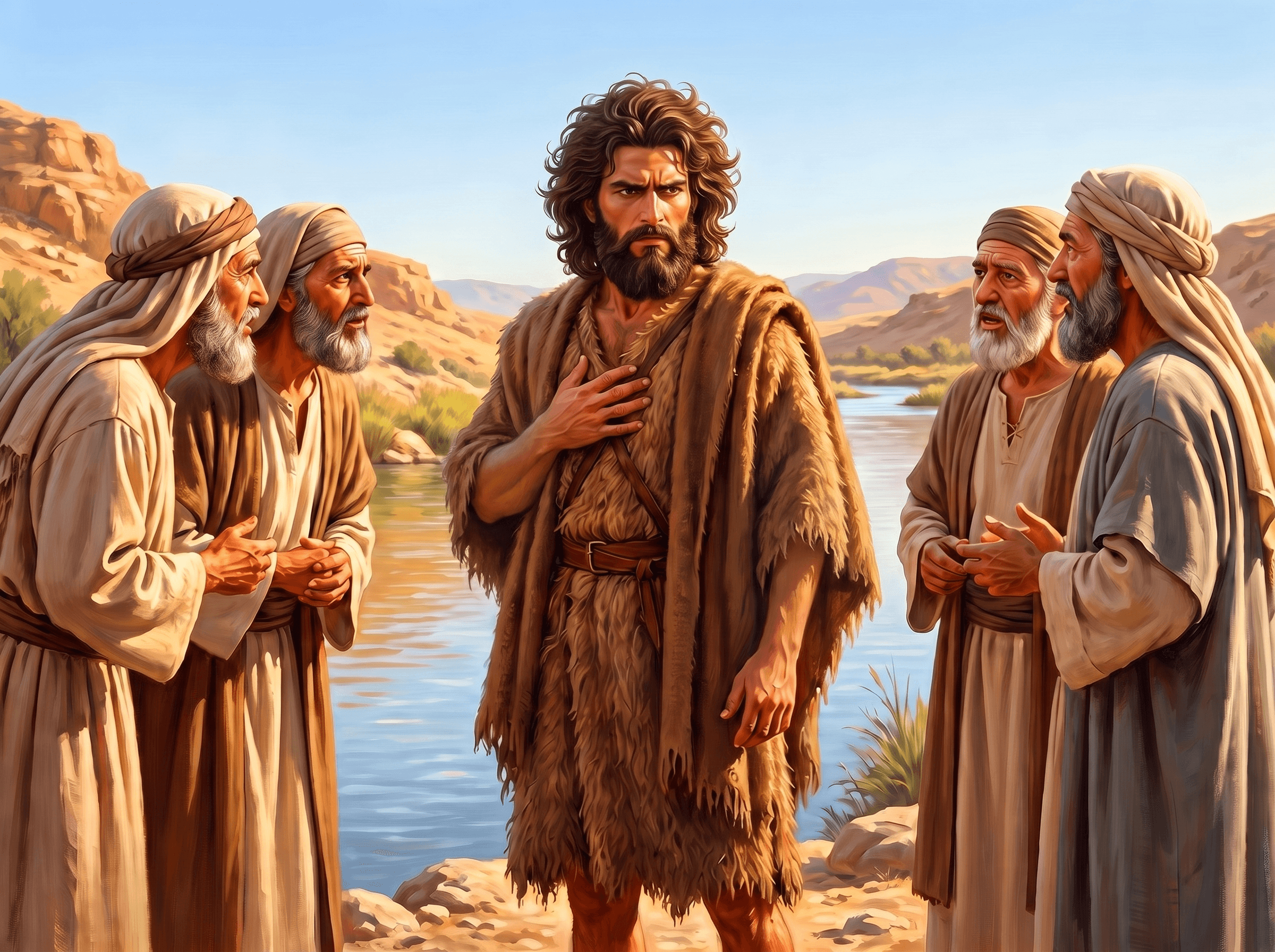
Illustrated scene from John the Baptist's story: “Who Are You?” (John 1:19–28)
Meet the people of the Bible
Follow their lives in order, with illustrated scenes and Bible passages that tell their stories.
 John the Baptist

Photo: zeevveez, via Wikimedia Commons. License: CC BY 2.0. Source. Location: Capernaum, on the northern shore of the Sea of Galilee. Resized for the web.
Explore the places of the Bible
See where biblical events happened, why each place matters, and what archaeology helps us understand.
Capernaum
Jesus' home base by the Sea of Galilee, and the town where Peter lived.
Get full access with one subscription
Explore the people and places of the Bible. Read summaries of every book, with images and clear explanations covering every chapter. Access all these features and our Bible study tools with one subscription.
See PlansAsk AI about John 1:27
Ask a question about this verse and get a clear answer, with Bible references you can read for yourself.
Every Bible book, explained chapter by chapter
Explore summaries of every book of the Bible, with images and easy-to-understand explanations covering every chapter.
Keep studying John 1:27
Related Bible verses
Key themes
At a Glance — the Book of John
- Author
- John the apostle
- Written
- Around AD 85-95
- Genre
- Gospel
- Original Audience
- All believers
Frequently Asked Questions
Quick, clear answers about this verse
What does John 1:27 mean?
John 1:27 highlights John the Baptist's acknowledgment of Jesus' superiority. John emphasizes that although Jesus comes after him in time, He is of greater importance, illustrating John's humility and recognition of Jesus' divine status.
What is the significance of untying a sandal strap in John 1:27?
In John 1:27, the act of untying a sandal strap symbolizes the lowest form of service. By stating he is not worthy to perform this task for Jesus, John the Baptist underscores his humility and the greatness of Christ.
How does John 1:27 relate to humility?
John 1:27 teaches humility by showing that even a great prophet like John the Baptist felt unworthy to serve Jesus in the smallest way. This serves as a reminder for us to adopt a humble attitude in our own lives.
What themes are present in John 1:27?
Key themes in John 1:27 include humility, the superiority of Christ, servanthood, and the recognition of authority. These themes emphasize the importance of understanding our place in relation to Jesus.
Daily Verse — straight to your inbox
A verse and a 2-sentence plain-English explanation, every morning. Free. Unsubscribe anytime.