New Testament
John 1:30
Read the Bible in clear, modern English—easy to understand, faithful to the meaning, and written for everyday readers.
"This is the one I meant when I said, 'After me comes a man who ranks above me, because he was before me.'"
Compare translations
This is he of whom I said, After me cometh a man which is preferred before me: for he was before me.
What John 1:30 means
Plain-English insight for readers
In this verse, John the Baptist is identifying Jesus as the Messiah. He emphasizes that Jesus is greater than him because Jesus existed before him, even though John was born first. This statement highlights the preeminence of Jesus in God's plan. John acknowledges his role as a forerunner, preparing the way for Jesus, who is divine and eternal. By stating that Jesus ranks above him, John is making it clear that he is not the main focus; rather, he is pointing others to the true light and Savior. This verse sets the stage for understanding Jesus' significance in the Gospel and the fulfillment of prophecies about the coming Messiah. John's humility and recognition of Jesus' authority serve as a model for believers, reminding them to prioritize Christ in their lives and witness.
How to apply John 1:30 to your life
This verse encourages us to recognize Jesus' rightful place in our lives. Like John the Baptist, we should humbly point others to Christ, acknowledging His greatness and our role in sharing His message. Prioritizing Jesus helps us live out our faith authentically and effectively.
Curated for this public verse page. John Summary
Learn the Bible through its people and places
Get to know the people in Scripture through illustrated stories, and explore the places where they lived and traveled.
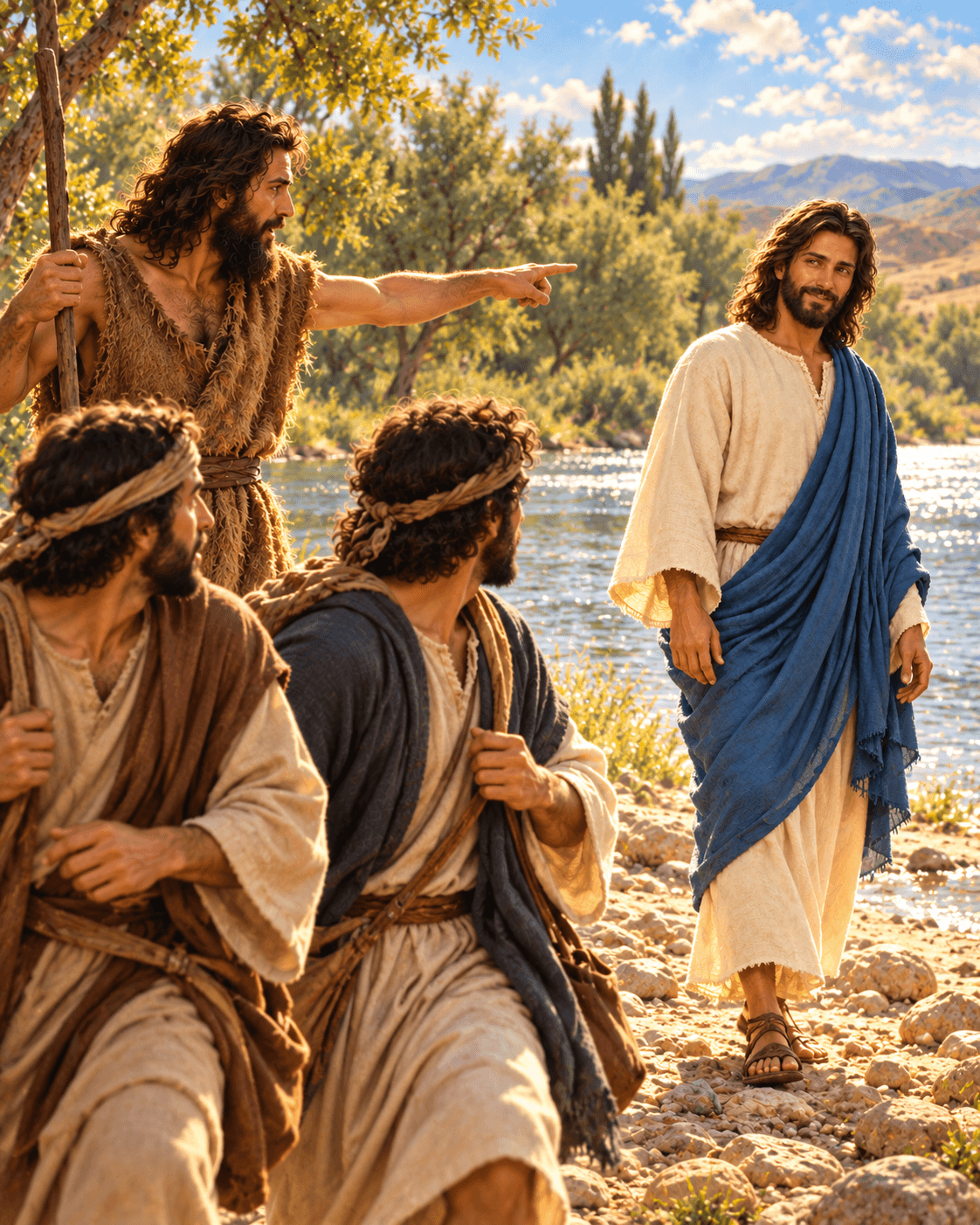
Illustrated scene from John the Baptist's story: “Behold the Lamb of God” (John 1:29–37)
Meet the people of the Bible
Follow their lives in order, with illustrated scenes and Bible passages that tell their stories.
 John the Baptist

Photo: zeevveez, via Wikimedia Commons. License: CC BY 2.0. Source. Location: Capernaum, on the northern shore of the Sea of Galilee. Resized for the web.
Explore the places of the Bible
See where biblical events happened, why each place matters, and what archaeology helps us understand.
Capernaum
Jesus' home base by the Sea of Galilee, and the town where Peter lived.
Get full access with one subscription
Explore the people and places of the Bible. Read summaries of every book, with images and clear explanations covering every chapter. Access all these features and our Bible study tools with one subscription.
See PlansAsk AI about John 1:30
Ask a question about this verse and get a clear answer, with Bible references you can read for yourself.
Every Bible book, explained chapter by chapter
Explore summaries of every book of the Bible, with images and easy-to-understand explanations covering every chapter.
Keep studying John 1:30
Related Bible verses
Key themes
At a Glance — the Book of John
- Author
- John the apostle
- Written
- Around AD 85-95
- Genre
- Gospel
- Original Audience
- All believers
Frequently Asked Questions
Quick, clear answers about this verse
What does John 1:30 mean?
John 1:30 means that John the Baptist is declaring Jesus as the Messiah, emphasizing that Jesus is greater than him because He existed before him, highlighting Jesus' divine nature and preeminence.
What is the significance of 'he was before me' in John 1:30?
The phrase 'he was before me' signifies Jesus' eternal existence and divinity, indicating that although John the Baptist was born first, Jesus' existence predates him, affirming His role as the preeminent Savior.
What does John the Baptist say about Jesus in this verse?
In this verse, John the Baptist identifies Jesus as the one who ranks above him, acknowledging his own role as a forerunner and emphasizing Jesus' authority and significance in God's plan.
How does John 1:30 reflect humility?
John 1:30 reflects humility by showing that John the Baptist recognizes his position as a servant preparing the way for Jesus, prioritizing Jesus' greatness over his own role.
Daily Verse — straight to your inbox
A verse and a 2-sentence plain-English explanation, every morning. Free. Unsubscribe anytime.