New Testament
John 11:36
Read the Bible in clear, modern English—easy to understand, faithful to the meaning, and written for everyday readers.
The Jews said, "See how he loved him!"
Compare translations
Then said the Jews, Behold how he loved him!
What John 11:36 means
Plain-English insight for readers
In this verse, the Jews observe Jesus weeping over the death of Lazarus, and they remark on the depth of His love for him. This moment highlights the humanity of Jesus, showing that He experiences grief and compassion just like anyone else. The Jews' statement reflects their recognition of the bond between Jesus and Lazarus, emphasizing that love can be profoundly felt even in the face of death. This scene serves as a reminder that love is a powerful emotion that can bring people together, even in sorrow. It also foreshadows the miracle that is about to take place, where Jesus will raise Lazarus from the dead, demonstrating His authority over life and death. The verse encapsulates the essence of Jesus' mission: to show love and compassion to humanity, and to offer hope in times of despair.
How to apply John 11:36 to your life
This verse encourages us to express our love and compassion openly, especially during times of loss. It reminds us that it is okay to grieve and that showing our emotions can strengthen our connections with others. Love is a vital part of healing.
Curated for this public verse page. John Summary
Learn the Bible through its people and places
Get to know the people in Scripture through illustrated stories, and explore the places where they lived and traveled.
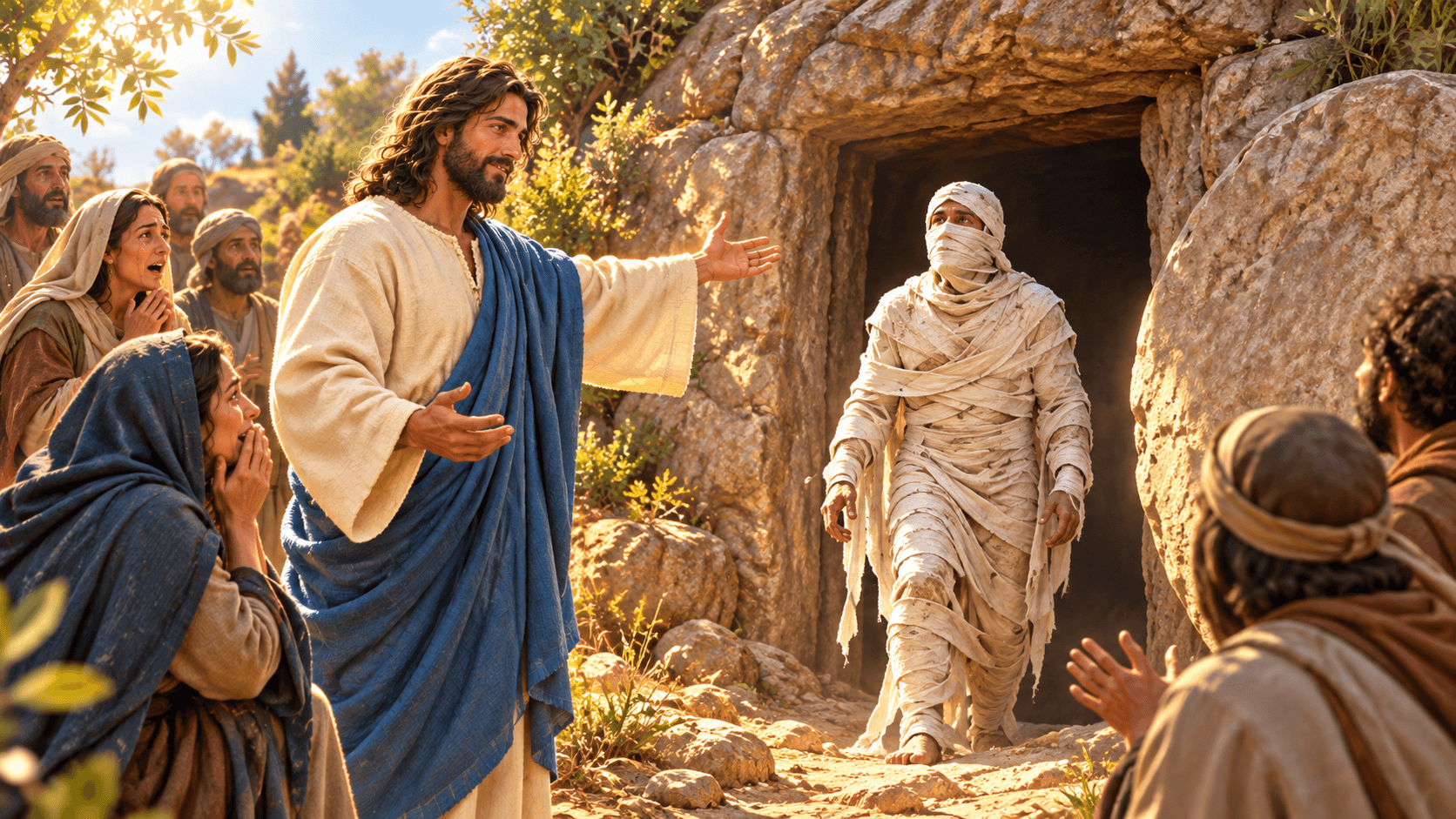
Illustrated scene from Jesus's story: Raising Lazarus (John 11:1–44)
Meet the people of the Bible
Follow their lives in order, with illustrated scenes and Bible passages that tell their stories.
 Jesus

Photo: Gary Todd (Gary Lee Todd, Ph.D.), via Wikimedia Commons. License: CC0 1.0 Universal Public Domain Dedication. Source. Location: Southern end of the Temple Mount, Jerusalem Old City. Resized for the web.
Explore the places of the Bible
See where biblical events happened, why each place matters, and what archaeology helps us understand.
Jerusalem
David's capital, the city of the temple, and the place where Jesus died and rose again.
Get full access with one subscription
Explore the people and places of the Bible. Read summaries of every book, with images and clear explanations covering every chapter. Access all these features and our Bible study tools with one subscription.
See PlansAsk AI about John 11:36
Ask a question about this verse and get a clear answer, with Bible references you can read for yourself.
Every Bible book, explained chapter by chapter
Explore summaries of every book of the Bible, with images and easy-to-understand explanations covering every chapter.
Keep studying John 11:36
Related Bible verses
Related topics
At a Glance — the Book of John
- Author
- John the apostle
- Written
- Around AD 85-95
- Genre
- Gospel
- Original Audience
- All believers
Frequently Asked Questions
Quick, clear answers about this verse
What does John 11:36 mean?
John 11:36 captures a moment where the Jews witness Jesus weeping over Lazarus' death and remark on His love for him. This highlights Jesus' humanity and His capacity for grief, emphasizing the deep bond He shared with Lazarus.
What is the significance of Jesus weeping in John 11:36?
Jesus weeping in John 11:36 shows His compassion and empathy towards human suffering. It illustrates that even though He is divine, He fully experiences human emotions, making His love and connection to others profoundly relatable.
What does the phrase 'See how he loved him' indicate in John 11:36?
The phrase 'See how he loved him' indicates the Jews' recognition of the strong emotional bond between Jesus and Lazarus. It reflects their understanding of love's power, especially in moments of grief and loss.
How does John 11:36 relate to the theme of love?
John 11:36 emphasizes the theme of love by showcasing Jesus' deep affection for Lazarus. This moment serves as a reminder that love is a powerful force that can be openly expressed, even in the face of death.
Daily Verse — straight to your inbox
A verse and a 2-sentence plain-English explanation, every morning. Free. Unsubscribe anytime.