New Testament
John 11:41
Read the Bible in clear, modern English—easy to understand, faithful to the meaning, and written for everyday readers.
So they took away the stone. Jesus looked up and said, "Father, I thank you that you have heard me.
Compare translations
Then they took away the stone from the place where the dead was laid. And Jesus lifted up his eyes, and said, Father, I thank thee that thou hast heard me.
What John 11:41 means
Plain-English insight for readers
In this verse, Jesus is preparing to perform a miraculous act by raising Lazarus from the dead. Before doing so, He expresses gratitude to God the Father, acknowledging that He has already been heard in His prayers. This moment highlights the importance of prayer and thanksgiving in Jesus' ministry. By looking up and thanking God, Jesus demonstrates His close relationship with the Father and His reliance on divine power. The act of removing the stone signifies the removal of barriers to faith and the beginning of a significant miracle. This verse sets the stage for the demonstration of Jesus' authority over death, reinforcing the belief that He is the source of life. It also encourages believers to approach God with gratitude, recognizing that He listens to their prayers and is actively involved in their lives. Jesus' example teaches us to maintain a posture of thankfulness, even in challenging situations, as we trust in God's ability to intervene and bring about change.
How to apply John 11:41 to your life
This verse encourages us to cultivate a habit of gratitude in our prayers. When facing challenges, we should remember to thank God for His past faithfulness and trust that He hears our requests. Acknowledging God's presence can strengthen our faith and prepare us for His miraculous work in our lives.
Curated for this public verse page. John Summary
Learn the Bible through its people and places
Get to know the people in Scripture through illustrated stories, and explore the places where they lived and traveled.
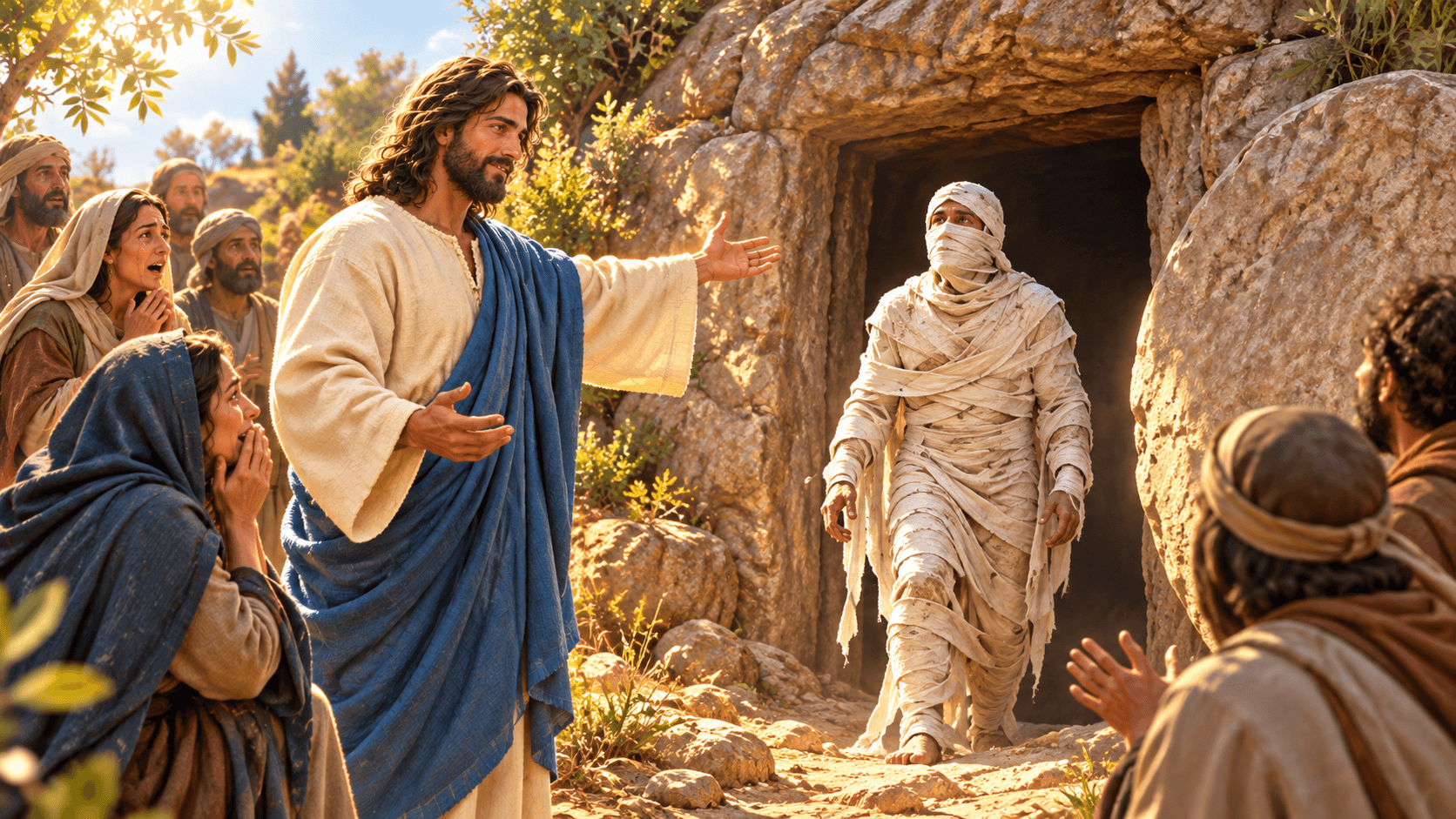
Illustrated scene from Jesus's story: Raising Lazarus (John 11:1–44)
Meet the people of the Bible
Follow their lives in order, with illustrated scenes and Bible passages that tell their stories.
 Jesus

Photo: Gary Todd (Gary Lee Todd, Ph.D.), via Wikimedia Commons. License: CC0 1.0 Universal Public Domain Dedication. Source. Location: Southern end of the Temple Mount, Jerusalem Old City. Resized for the web.
Explore the places of the Bible
See where biblical events happened, why each place matters, and what archaeology helps us understand.
Jerusalem
David's capital, the city of the temple, and the place where Jesus died and rose again.
Get full access with one subscription
Explore the people and places of the Bible. Read summaries of every book, with images and clear explanations covering every chapter. Access all these features and our Bible study tools with one subscription.
See PlansAsk AI about John 11:41
Ask a question about this verse and get a clear answer, with Bible references you can read for yourself.
Every Bible book, explained chapter by chapter
Explore summaries of every book of the Bible, with images and easy-to-understand explanations covering every chapter.
Keep studying John 11:41
Related Bible verses
Key themes
At a Glance — the Book of John
- Author
- John the apostle
- Written
- Around AD 85-95
- Genre
- Gospel
- Original Audience
- All believers
Frequently Asked Questions
Quick, clear answers about this verse
What does John 11:41 mean?
John 11:41 shows Jesus expressing gratitude to God before raising Lazarus from the dead. It emphasizes the importance of prayer and thanksgiving, highlighting Jesus' relationship with the Father and His reliance on divine power.
What is the significance of Jesus thanking God in John 11:41?
Jesus thanking God in John 11:41 signifies His acknowledgment of God's presence and power. It illustrates the importance of gratitude in prayer and sets the stage for the miracle of raising Lazarus, reinforcing faith in God's ability to intervene.
What does the act of removing the stone represent in John 11:41?
The removal of the stone in John 11:41 symbolizes the removal of barriers to faith. It prepares the way for Jesus' miracle, demonstrating His authority over death and encouraging believers to trust in God's power.
How can we apply John 11:41 to our lives?
We can apply John 11:41 by cultivating a habit of gratitude in our prayers. Acknowledging God's past faithfulness can strengthen our faith and prepare us for His miraculous work in our lives.
Daily Verse — straight to your inbox
A verse and a 2-sentence plain-English explanation, every morning. Free. Unsubscribe anytime.