New Testament
John 11:49
Read the Bible in clear, modern English—easy to understand, faithful to the meaning, and written for everyday readers.
But one of them, Caiaphas, who was high priest that year, said to them, "You know nothing at all.
Compare translations
And one of them, named Caiaphas, being the high priest that same year, said unto them, Ye know nothing at all,
What John 11:49 means
Plain-English insight for readers
In this verse, Caiaphas, the high priest, addresses the council of Jewish leaders who are discussing what to do about Jesus. He bluntly tells them that they are ignorant of the bigger picture. Caiaphas is suggesting that they do not understand the implications of Jesus' actions and teachings. He believes that it is better for one man, Jesus, to die for the people than for the entire nation to face destruction. This statement reveals Caiaphas's political motivations and foreshadows the events leading to Jesus' crucifixion. His role as high priest gives him authority, but his words also reflect a lack of spiritual insight. This moment highlights the tension between religious authority and the truth of Jesus' mission, setting the stage for the conflict that will lead to his sacrifice.
How to apply John 11:49 to your life
This verse reminds us to seek understanding and wisdom in our decisions, especially in leadership roles. It challenges us to look beyond immediate concerns and consider the broader implications of our actions. We should strive to be informed and aware, rather than making decisions based on ignorance or self-interest.
Curated for this public verse page. John Summary
Learn the Bible through its people and places
Get to know the people in Scripture through illustrated stories, and explore the places where they lived and traveled.
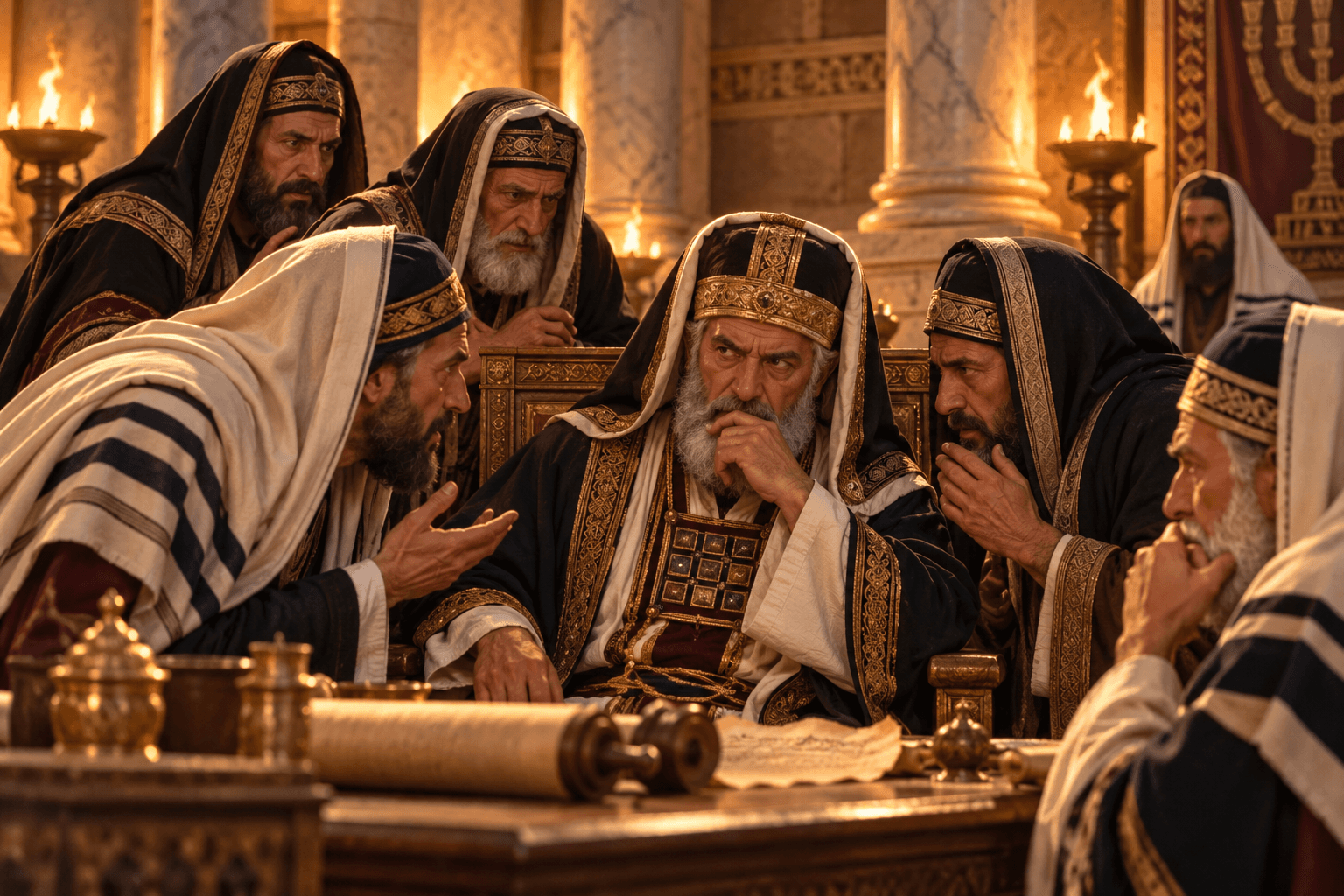
Illustrated scene from Jesus's story: The Plot to Kill Jesus (John 11:45–57)
Meet the people of the Bible
Follow their lives in order, with illustrated scenes and Bible passages that tell their stories.
 Jesus

Photo: Gary Todd (Gary Lee Todd, Ph.D.), via Wikimedia Commons. License: CC0 1.0 Universal Public Domain Dedication. Source. Location: Southern end of the Temple Mount, Jerusalem Old City. Resized for the web.
Explore the places of the Bible
See where biblical events happened, why each place matters, and what archaeology helps us understand.
Jerusalem
David's capital, the city of the temple, and the place where Jesus died and rose again.
Get full access with one subscription
Explore the people and places of the Bible. Read summaries of every book, with images and clear explanations covering every chapter. Access all these features and our Bible study tools with one subscription.
See PlansAsk AI about John 11:49
Ask a question about this verse and get a clear answer, with Bible references you can read for yourself.
Every Bible book, explained chapter by chapter
Explore summaries of every book of the Bible, with images and easy-to-understand explanations covering every chapter.
Keep studying John 11:49
Related Bible verses
Key themes
Related topics
At a Glance — the Book of John
- Author
- John the apostle
- Written
- Around AD 85-95
- Genre
- Gospel
- Original Audience
- All believers
Frequently Asked Questions
Quick, clear answers about this verse
Who was Caiaphas in John 11:49?
Caiaphas was the high priest during the time of Jesus' ministry. He played a significant role in the Jewish council's decision-making regarding Jesus, particularly in the events leading up to the crucifixion. His position gave him authority, but his actions reflected a political agenda rather than a spiritual understanding of Jesus' mission.
What does Caiaphas mean by 'You know nothing at all'?
Caiaphas's statement indicates his belief that the council is not grasping the full implications of Jesus' actions. He suggests that their concerns are misguided and that they lack insight into the necessity of Jesus' death for the greater good of the nation, highlighting a tension between political expediency and moral truth.
What is the significance of Caiaphas's statement about one man dying for the people?
Caiaphas's assertion that it is better for one man to die for the people foreshadows the sacrificial role Jesus would play in the salvation of humanity. This statement reflects a utilitarian perspective on leadership, prioritizing the survival of the nation over individual lives, and sets the stage for the theological significance of Jesus' crucifixion.
How does John 11:49 relate to the themes of leadership and sacrifice?
This verse illustrates the complexities of leadership, where decisions are often made based on political motivations rather than ethical considerations. Caiaphas's willingness to sacrifice Jesus for the perceived greater good raises questions about the nature of true leadership and the moral implications of sacrificing one for many.
Daily Verse — straight to your inbox
A verse and a 2-sentence plain-English explanation, every morning. Free. Unsubscribe anytime.