New Testament
John 13:27
Read the Bible in clear, modern English—easy to understand, faithful to the meaning, and written for everyday readers.
After Judas took the bread, Satan entered into him. Then Jesus said to him, "What you are going to do, do quickly."
Compare translations
And after the sop Satan entered into him. Then said Jesus unto him, That thou doest, do quickly.
What John 13:27 means
Plain-English insight for readers
In this verse, Judas Iscariot receives a piece of bread from Jesus, which symbolizes his betrayal. The act of taking the bread signifies Judas's acceptance of his role in the upcoming betrayal. When it says that Satan entered into him, it indicates that Judas was influenced by evil to carry out his treachery against Jesus. Jesus, aware of Judas's intentions, tells him to act quickly, suggesting that the time for his betrayal has come. This moment highlights the tension between divine purpose and human choice, as Judas makes a conscious decision to betray Jesus despite knowing the consequences. It also emphasizes the spiritual battle at play, with Satan actively seeking to undermine Jesus's mission. This passage serves as a reminder of the seriousness of betrayal and the influence of evil in our choices, urging us to remain vigilant against such temptations.
How to apply John 13:27 to your life
This verse challenges us to reflect on our own choices and the influences that guide them. We should be aware of the temptations that can lead us away from our values and faith. Staying close to God through prayer and scripture can help us resist negative influences and make choices that align with our beliefs.
Curated for this public verse page. John Summary
Learn the Bible through its people and places
Get to know the people in Scripture through illustrated stories, and explore the places where they lived and traveled.
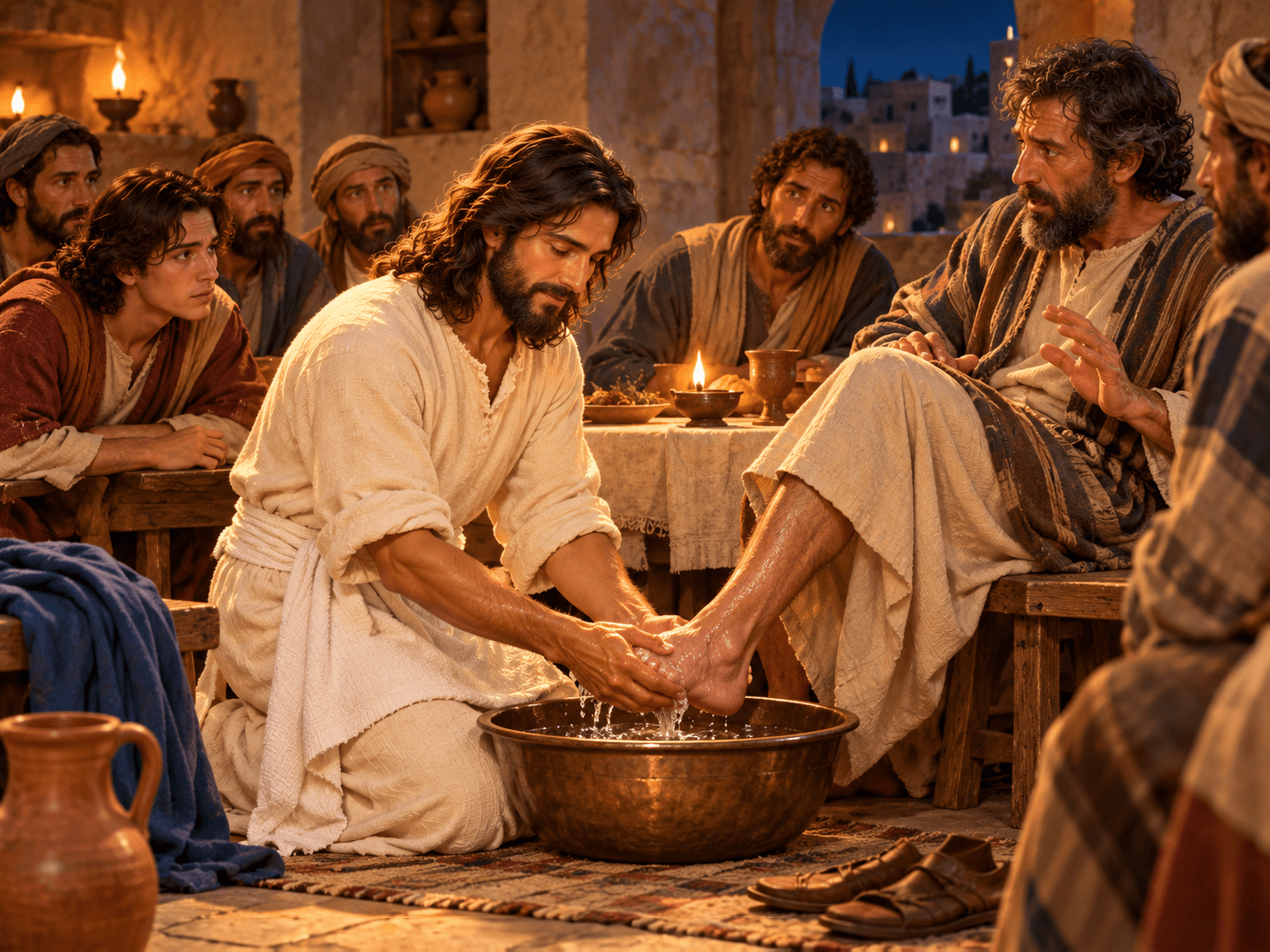
Illustrated scene from Jesus's story: Washing the Disciples' Feet (John 13:1–30)
Meet the people of the Bible
Follow their lives in order, with illustrated scenes and Bible passages that tell their stories.
 Jesus

Photo: Photochrom print, Library of Congress Prints and Photographs Division (LCCN 2002725045). License: Public domain in the United States; Library of Congress states no known restrictions on publication. Source. Location: Nazareth, Israel; print preserved by the Library of Congress. Resized for the web.
Explore the places of the Bible
See where biblical events happened, why each place matters, and what archaeology helps us understand.
Nazareth
The small town in Galilee where Jesus grew up.
Get full access with one subscription
Explore the people and places of the Bible. Read summaries of every book, with images and clear explanations covering every chapter. Access all these features and our Bible study tools with one subscription.
See PlansAsk AI about John 13:27
Ask a question about this verse and get a clear answer, with Bible references you can read for yourself.
Every Bible book, explained chapter by chapter
Explore summaries of every book of the Bible, with images and easy-to-understand explanations covering every chapter.
Keep studying John 13:27
Related Bible verses
Key themes
Related topics
At a Glance — the Book of John
- Author
- John the apostle
- Written
- Around AD 85-95
- Genre
- Gospel
- Original Audience
- All believers
Frequently Asked Questions
Quick, clear answers about this verse
What does John 13:27 mean?
John 13:27 describes the moment when Judas Iscariot accepts the bread from Jesus, symbolizing his betrayal. The verse indicates that Judas is influenced by Satan to carry out this act, highlighting the conflict between good and evil.
What is the significance of Judas taking the bread in John 13:27?
Judas taking the bread signifies his acceptance of his role in betraying Jesus. This act represents a pivotal moment where he aligns himself with evil intentions, leading to the fulfillment of prophecy.
What is the context of John 13:27?
John 13:27 occurs during the Last Supper, where Jesus shares a meal with his disciples. This moment is crucial as it marks the beginning of Judas's betrayal, setting in motion the events leading to Jesus's crucifixion.
How does John 13:27 relate to themes of betrayal and choice?
John 13:27 highlights the theme of betrayal through Judas's actions, emphasizing that he made a deliberate choice to betray Jesus despite knowing the consequences. It serves as a reminder of the influence of evil and the importance of making righteous choices.
Daily Verse — straight to your inbox
A verse and a 2-sentence plain-English explanation, every morning. Free. Unsubscribe anytime.