New Testament
John 19:24
Read the Bible in clear, modern English—easy to understand, faithful to the meaning, and written for everyday readers.
So they said to one another, "Let's not tear it, but cast lots for it to see whose it will be." This happened so that the Scripture would be fulfilled: "They divided my garments among them, and for my clothing they cast lots." This is what the soldiers did.
Compare translations
They said therefore among themselves, Let us not rend it, but cast lots for it, whose it shall be: that the scripture might be fulfilled, which saith, They parted my raiment among them, and for my vesture they did cast lots. These things therefore the soldiers did.
What John 19:24 means
Plain-English insight for readers
In this verse, the soldiers who crucified Jesus decided not to tear his seamless robe but instead to cast lots to determine who would keep it. This action fulfilled a prophecy from the Old Testament, which stated that the Messiah's garments would be divided among people and that lots would be cast for his clothing. This moment highlights the indifference of the soldiers to Jesus' suffering and the fulfillment of Scripture, showing that even in his death, Jesus' life and mission were in accordance with God's plan. The soldiers' actions reflect a common practice of the time, where valuable items were often gambled for. This verse emphasizes the significance of prophecy and how events in Jesus' life were foretold, reinforcing the belief in his identity as the Messiah.
How to apply John 19:24 to your life
This verse reminds us of the importance of recognizing God's hand in our lives, even in difficult circumstances. It encourages us to reflect on how we treat others, especially in their times of suffering, and to seek to fulfill God's purpose in our actions.
Curated for this public verse page. John Summary
Learn the Bible through its people and places
Get to know the people in Scripture through illustrated stories, and explore the places where they lived and traveled.
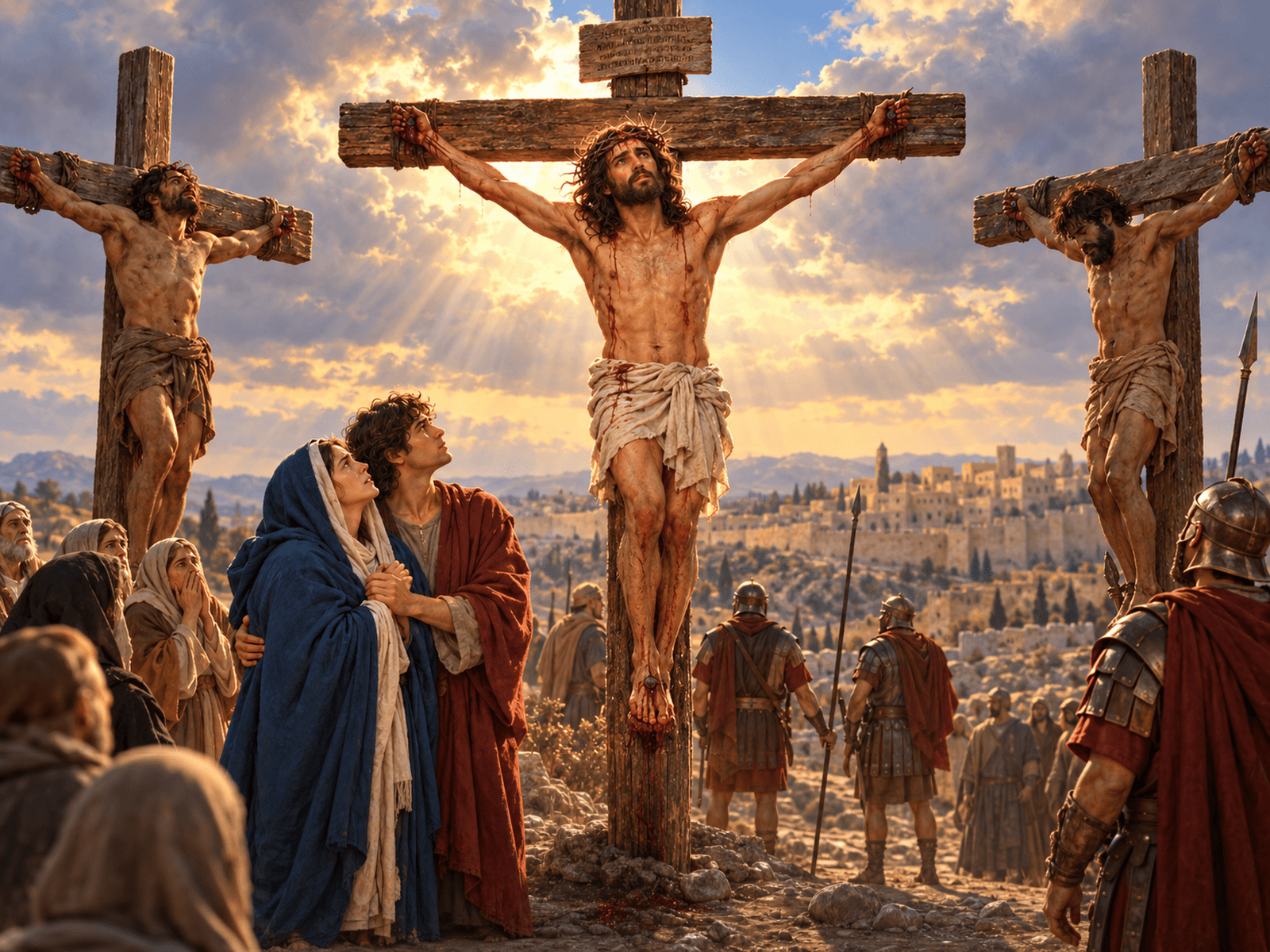
Illustrated scene from Jesus's story: The Crucifixion (John 19:16–27)
Meet the people of the Bible
Follow their lives in order, with illustrated scenes and Bible passages that tell their stories.
 Jesus

Photo: Gary Todd (Gary Lee Todd, Ph.D.), via Wikimedia Commons. License: CC0 1.0 Universal Public Domain Dedication. Source. Location: Southern end of the Temple Mount, Jerusalem Old City. Resized for the web.
Explore the places of the Bible
See where biblical events happened, why each place matters, and what archaeology helps us understand.
Jerusalem
David's capital, the city of the temple, and the place where Jesus died and rose again.
Get full access with one subscription
Explore the people and places of the Bible. Read summaries of every book, with images and clear explanations covering every chapter. Access all these features and our Bible study tools with one subscription.
See PlansAsk AI about John 19:24
Ask a question about this verse and get a clear answer, with Bible references you can read for yourself.
Every Bible book, explained chapter by chapter
Explore summaries of every book of the Bible, with images and easy-to-understand explanations covering every chapter.
Keep studying John 19:24
Related Bible verses
Key themes
Related topics
At a Glance — the Book of John
- Author
- John the apostle
- Written
- Around AD 85-95
- Genre
- Gospel
- Original Audience
- All believers
Frequently Asked Questions
Quick, clear answers about this verse
What does John 19:24 mean in context?
John 19:24 describes the soldiers at the crucifixion of Jesus deciding to cast lots for his seamless robe instead of tearing it. This act fulfilled the prophecy from Psalm 22:18, which foretold that the Messiah's garments would be divided and lots would be cast for his clothing. This moment illustrates the soldiers' indifference to Jesus' suffering and highlights the fulfillment of Scripture, emphasizing that even in his death, Jesus' life was part of God's divine plan.
Why did the soldiers cast lots for Jesus' clothing?
The soldiers cast lots for Jesus' clothing as a way to determine who would keep his seamless robe. This practice was common for valuable items during that time. By choosing to gamble for the robe instead of tearing it, they fulfilled the prophecy found in Psalm 22:18, which stated that the Messiah's garments would be divided among people. This act reflects the soldiers' lack of compassion and underscores the significance of prophecy in the narrative of Jesus' crucifixion.
What is the significance of the prophecy in John 19:24?
The prophecy referenced in John 19:24 is significant because it demonstrates that events in Jesus' life were foretold in Scripture, affirming his identity as the Messiah. The fulfillment of this prophecy, where the soldiers divided his garments and cast lots for his robe, highlights God's sovereignty and the divine plan at work even in the midst of suffering. It serves as a reminder of the importance of Scripture and how it connects to the life and mission of Jesus.
How does John 19:24 relate to the theme of suffering?
John 19:24 relates to the theme of suffering by showcasing the indifference of the soldiers to Jesus' pain during his crucifixion. While Jesus was enduring immense suffering, the soldiers were focused on their own interests, gambling for his clothing. This contrast emphasizes the human tendency to overlook the suffering of others and serves as a call for compassion and awareness in our own lives, encouraging us to be mindful of how we treat those who are suffering.
Daily Verse — straight to your inbox
A verse and a 2-sentence plain-English explanation, every morning. Free. Unsubscribe anytime.