New Testament
John 4:6
Read the Bible in clear, modern English—easy to understand, faithful to the meaning, and written for everyday readers.
Jacob's well was there. Jesus, worn out from the journey, sat down by the well. It was about the sixth hour.
Compare translations
Now Jacob’s well was there. Jesus therefore, being wearied with his journey, sat thus on the well: and it was about the sixth hour.
What John 4:6 means
Plain-English insight for readers
In this verse, we find Jesus resting by Jacob's well after a long journey. The mention of Jacob's well connects Jesus to the history of the Israelites, as Jacob was a significant patriarch. The detail that Jesus was 'worn out' highlights His humanity, showing that He experienced fatigue just like anyone else. The 'sixth hour' refers to noon, a time when the sun is at its peak, making it an unusual time for someone to be at a well, suggesting that something significant is about to happen. This setting prepares the reader for the encounter between Jesus and the Samaritan woman, emphasizing themes of divine purpose and the breaking of social barriers. Jesus' weariness also serves as a reminder that He understands our struggles and needs, making Him relatable and approachable. This moment sets the stage for a profound conversation about spiritual thirst and living water, illustrating the depth of Jesus' mission to offer salvation to all, regardless of their background.
How to apply John 4:6 to your life
This verse encourages us to recognize our own weariness and the importance of rest. Just as Jesus took a moment to pause, we should also find time to recharge. It reminds us that even in our fatigue, God can use us for significant encounters and purposes. We should be open to divine appointments in our daily lives.
Curated for this public verse page. John Summary
Learn the Bible through its people and places
Get to know the people in Scripture through illustrated stories, and explore the places where they lived and traveled.
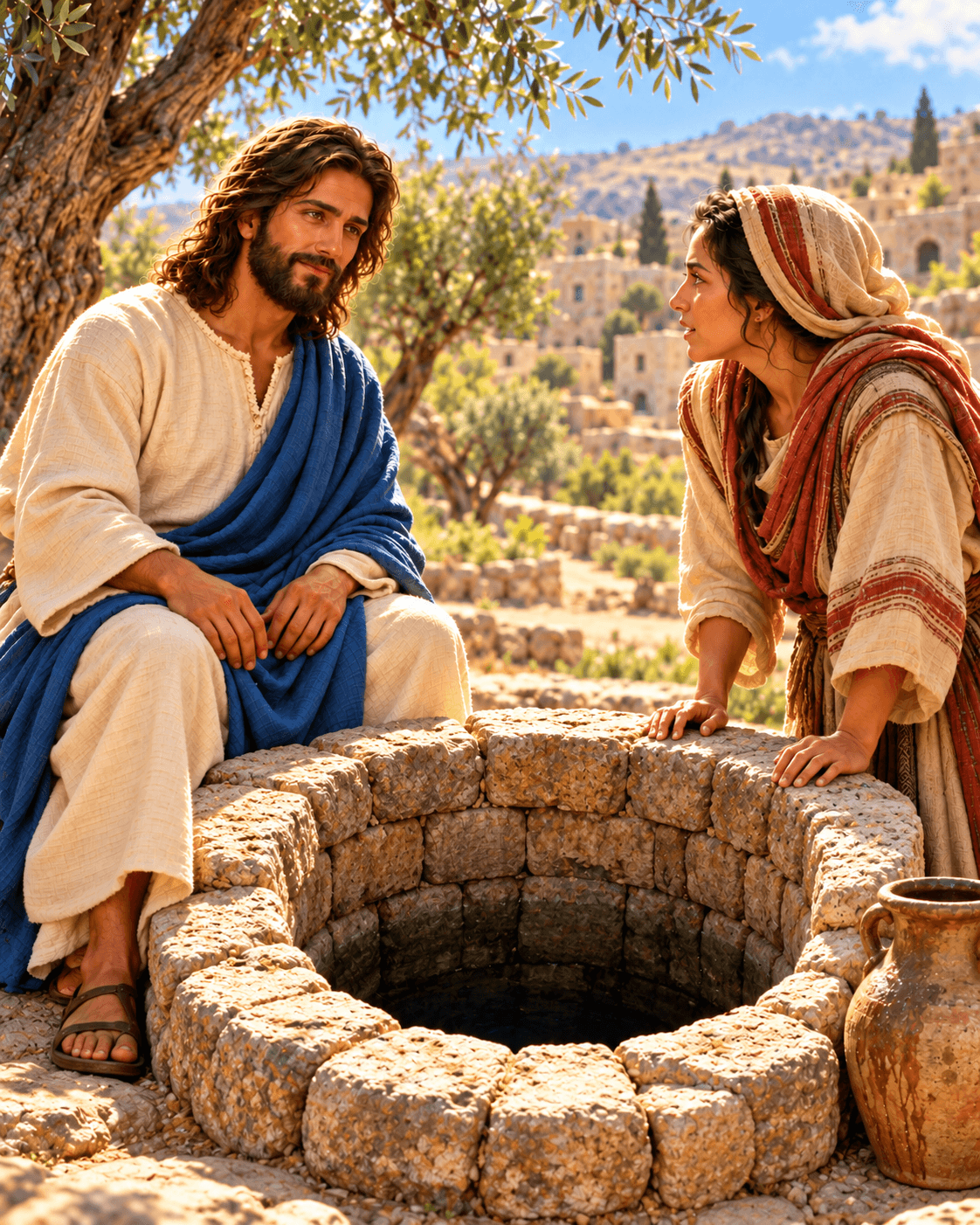
Illustrated scene from Jesus's story: The Woman at the Well (John 4:1–42)
Meet the people of the Bible
Follow their lives in order, with illustrated scenes and Bible passages that tell their stories.
 Jesus

Photo: Photochrom print, Library of Congress Prints and Photographs Division (LCCN 2002725045). License: Public domain in the United States; Library of Congress states no known restrictions on publication. Source. Location: Nazareth, Israel; print preserved by the Library of Congress. Resized for the web.
Explore the places of the Bible
See where biblical events happened, why each place matters, and what archaeology helps us understand.
Nazareth
The small town in Galilee where Jesus grew up.
Get full access with one subscription
Explore the people and places of the Bible. Read summaries of every book, with images and clear explanations covering every chapter. Access all these features and our Bible study tools with one subscription.
See PlansAsk AI about John 4:6
Ask a question about this verse and get a clear answer, with Bible references you can read for yourself.
Every Bible book, explained chapter by chapter
Explore summaries of every book of the Bible, with images and easy-to-understand explanations covering every chapter.
Keep studying John 4:6
Key themes
Related topics
At a Glance — the Book of John
- Author
- John the apostle
- Written
- Around AD 85-95
- Genre
- Gospel
- Original Audience
- All believers
Frequently Asked Questions
Quick, clear answers about this verse
What does John 4:6 mean?
John 4:6 describes Jesus resting by Jacob's well after a long journey, highlighting His humanity and weariness. This setting is significant as it prepares for His encounter with the Samaritan woman, emphasizing themes of divine purpose and social barriers.
What is the significance of Jacob's well in John 4:6?
Jacob's well connects Jesus to the history of the Israelites, as Jacob is a key patriarch. It symbolizes the deep roots of faith and the importance of heritage in the context of Jesus' ministry.
How does John 4:6 relate to the theme of spiritual thirst?
In John 4:6, Jesus' weariness and the setting by the well foreshadow His conversation about spiritual thirst and living water. This encounter highlights His mission to offer salvation and fulfillment to all people.
Daily Verse — straight to your inbox
A verse and a 2-sentence plain-English explanation, every morning. Free. Unsubscribe anytime.