New Testament
John 9:17
Read the Bible in clear, modern English—easy to understand, faithful to the meaning, and written for everyday readers.
So they said to the blind man again, "What do you say about him, since he opened your eyes?" He said, "He is a prophet."
Compare translations
They say unto the blind man again, What sayest thou of him, that he hath opened thine eyes? He said, He is a prophet.
What John 9:17 means
Plain-English insight for readers
In this verse, the religious leaders question the man who was born blind after he received his sight from Jesus. They want to know his opinion about Jesus, who performed this miracle. The blind man confidently responds that Jesus is a prophet, indicating that he recognizes Jesus as someone sent by God with divine authority. This moment highlights the man's growing understanding of Jesus' identity and the significance of the miracle he experienced. The leaders' inquiry reflects their skepticism and desire to discredit Jesus, while the blind man's acknowledgment of Jesus as a prophet shows his faith and insight. This exchange emphasizes the theme of spiritual blindness versus physical blindness, as those who can see physically may still be blind to the truth about Jesus, while the formerly blind man sees clearly who Jesus is. His declaration also sets the stage for further discussions about faith, authority, and the nature of Jesus' works.
How to apply John 9:17 to your life
This verse encourages us to reflect on our understanding of Jesus. Like the blind man, we are called to recognize and declare who Jesus is in our lives. Our experiences with Him can deepen our faith and help us share our testimony with others, even in the face of skepticism.
Curated for this public verse page. John Summary
Learn the Bible through its people and places
Get to know the people in Scripture through illustrated stories, and explore the places where they lived and traveled.
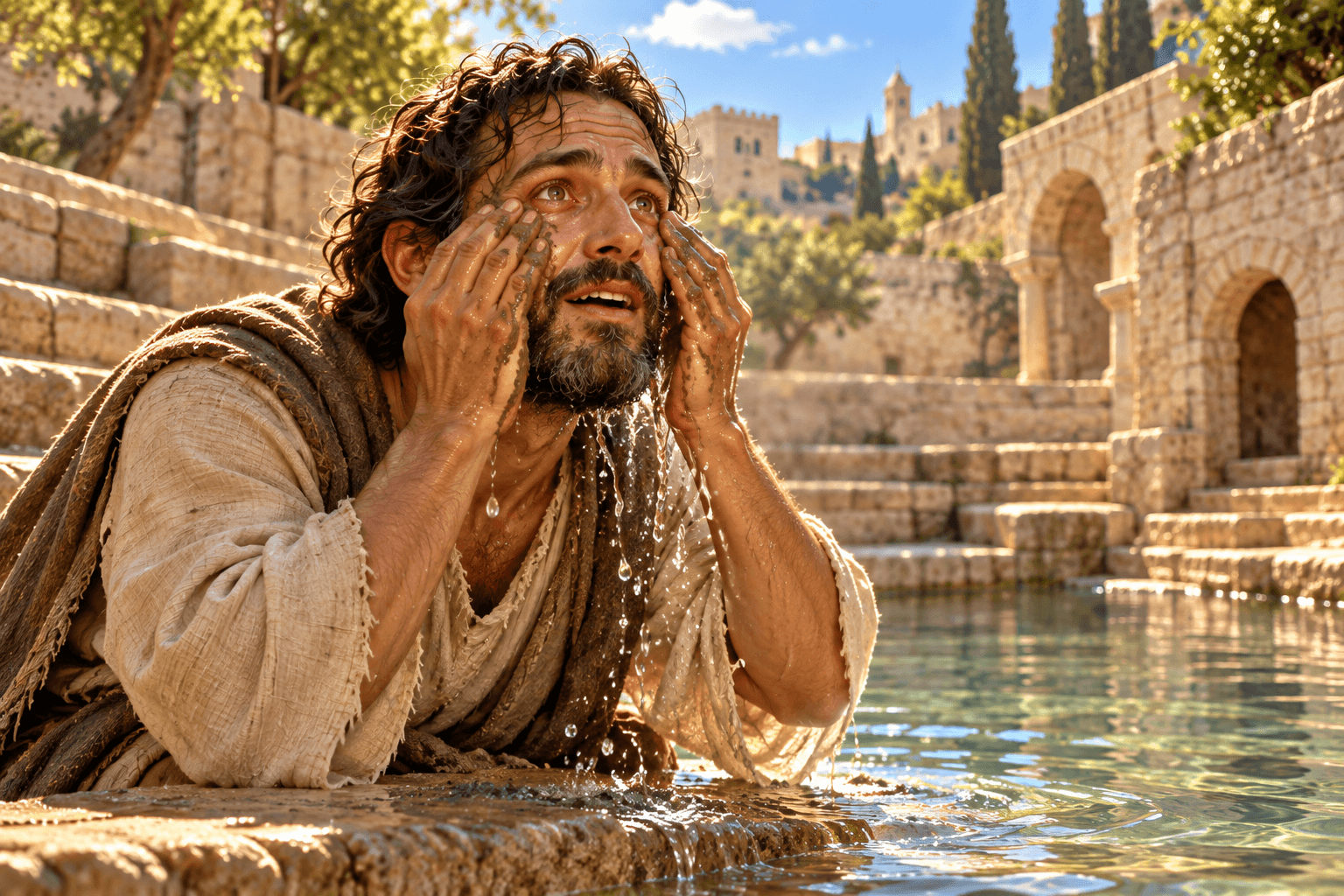
Illustrated scene from Jesus's story: Healing a Man Born Blind (John 9:1–41)
Meet the people of the Bible
Follow their lives in order, with illustrated scenes and Bible passages that tell their stories.
 Jesus

Photo: zeevveez, via Wikimedia Commons. License: CC BY 2.0. Source. Location: Capernaum, on the northern shore of the Sea of Galilee. Resized for the web.
Explore the places of the Bible
See where biblical events happened, why each place matters, and what archaeology helps us understand.
Capernaum
Jesus' home base by the Sea of Galilee, and the town where Peter lived.
Get full access with one subscription
Explore the people and places of the Bible. Read summaries of every book, with images and clear explanations covering every chapter. Access all these features and our Bible study tools with one subscription.
See PlansAsk AI about John 9:17
Ask a question about this verse and get a clear answer, with Bible references you can read for yourself.
Every Bible book, explained chapter by chapter
Explore summaries of every book of the Bible, with images and easy-to-understand explanations covering every chapter.
Keep studying John 9:17
Related Bible verses
Key themes
Related topics
At a Glance — the Book of John
- Author
- John the apostle
- Written
- Around AD 85-95
- Genre
- Gospel
- Original Audience
- All believers
Frequently Asked Questions
Quick, clear answers about this verse
What does John 9:17 mean about Jesus being a prophet?
In John 9:17, the blind man acknowledges Jesus as a prophet after receiving his sight. This recognition signifies that he sees Jesus as someone chosen by God, possessing divine authority to perform miracles. It highlights the man's growing faith and understanding of Jesus' true identity, contrasting with the skepticism of the religious leaders who question him.
Why did the religious leaders question the blind man in John 9:17?
The religious leaders questioned the blind man to challenge the legitimacy of Jesus' miracle and to discredit Him. Their inquiry reflects their skepticism and desire to maintain their authority, as they were threatened by Jesus' growing influence and the implications of His miracles. They sought to undermine the man's testimony about Jesus to protect their own positions.
How does John 9:17 relate to the theme of spiritual blindness?
John 9:17 illustrates the theme of spiritual blindness by showing that the religious leaders, despite their physical sight, fail to recognize Jesus' true identity and authority. In contrast, the formerly blind man, who received physical sight, gains spiritual insight and acknowledges Jesus as a prophet. This exchange emphasizes that true understanding of Jesus goes beyond physical sight and requires spiritual discernment.
What can we learn from the blind man's response in John 9:17?
The blind man's response in John 9:17 teaches us the importance of recognizing and declaring who Jesus is in our lives. His confident acknowledgment of Jesus as a prophet encourages us to share our own testimonies and experiences with Him, even when faced with skepticism. It reminds us that our faith can grow through our encounters with Jesus and that we should not shy away from expressing our beliefs.
Daily Verse — straight to your inbox
A verse and a 2-sentence plain-English explanation, every morning. Free. Unsubscribe anytime.