New Testament
John 9:18
Read the Bible in clear, modern English—easy to understand, faithful to the meaning, and written for everyday readers.
But the Jews did not believe that he had been blind and received his sight until they called the parents of the man who had received his sight.
Compare translations
But the Jews did not believe concerning him, that he had been blind, and received his sight, until they called the parents of him that had received his sight.
What John 9:18 means
Plain-English insight for readers
In this verse, we see the skepticism of the Jewish leaders regarding the miracle of a man who was born blind but has now received his sight. They refuse to accept this miraculous event as genuine and instead seek to verify it by questioning the man's parents. This reflects a common theme of doubt and disbelief in the face of miraculous occurrences. The leaders' insistence on proof highlights their unwillingness to accept the truth of Jesus' power and authority. They are more focused on their preconceived notions and traditions than on the evidence before them. This situation illustrates how sometimes people can be blinded by their biases, preventing them from recognizing the truth, even when it is right in front of them. The parents' testimony is crucial, as it serves as a validation of their son's healing, yet it also puts them in a difficult position, showing the pressure and fear that can accompany standing up for the truth.
How to apply John 9:18 to your life
This verse encourages us to be open-minded and willing to accept truths that challenge our beliefs. It reminds us to seek understanding rather than dismissing experiences or testimonies that do not align with our expectations. We should strive to recognize and embrace the truth, even when it is difficult.
Curated for this public verse page. John Summary
Learn the Bible through its people and places
Get to know the people in Scripture through illustrated stories, and explore the places where they lived and traveled.
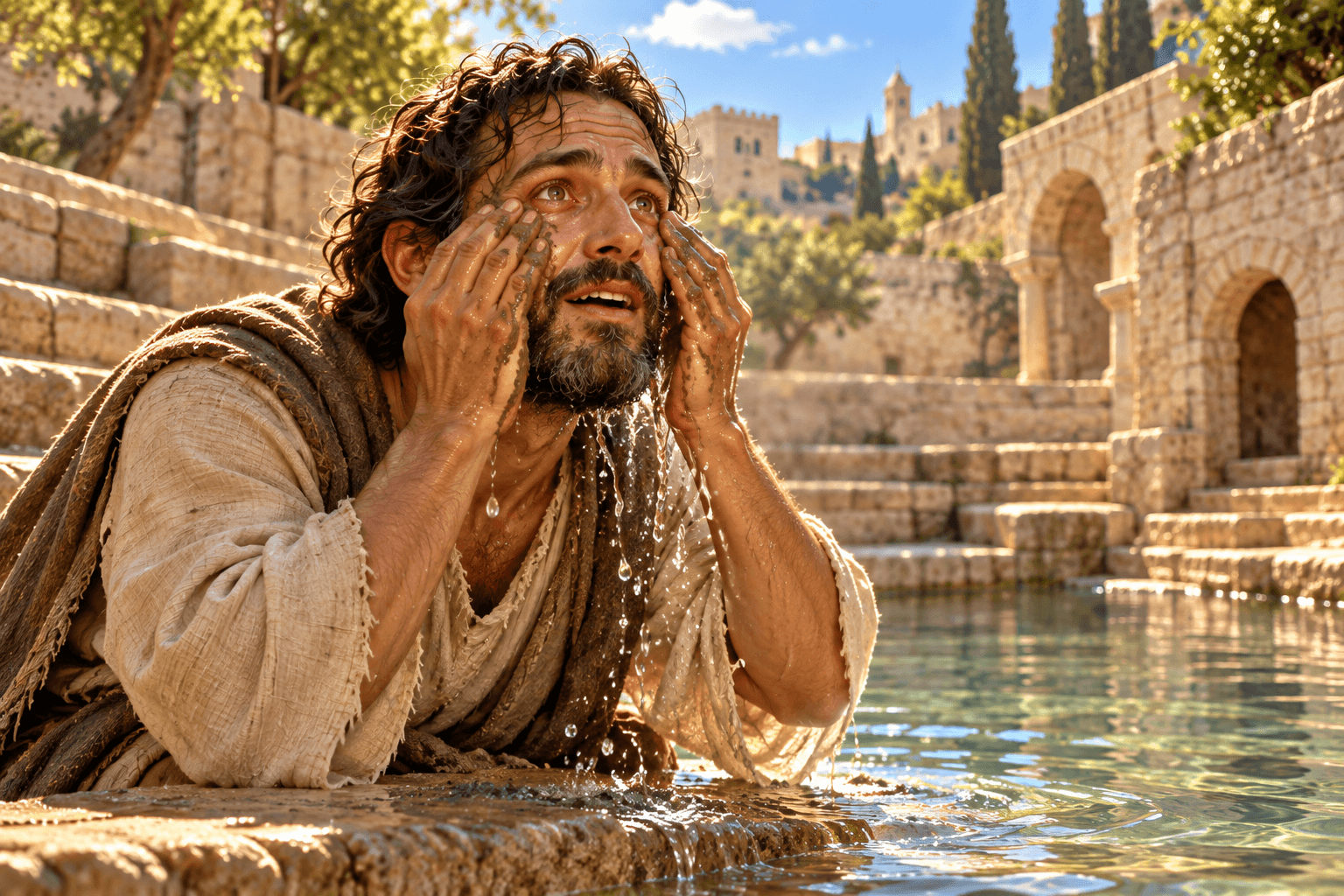
Illustrated scene from Jesus's story: Healing a Man Born Blind (John 9:1–41)
Meet the people of the Bible
Follow their lives in order, with illustrated scenes and Bible passages that tell their stories.
 Jesus

Photo: zeevveez, via Wikimedia Commons. License: CC BY 2.0. Source. Location: Capernaum, on the northern shore of the Sea of Galilee. Resized for the web.
Explore the places of the Bible
See where biblical events happened, why each place matters, and what archaeology helps us understand.
Capernaum
Jesus' home base by the Sea of Galilee, and the town where Peter lived.
Get full access with one subscription
Explore the people and places of the Bible. Read summaries of every book, with images and clear explanations covering every chapter. Access all these features and our Bible study tools with one subscription.
See PlansAsk AI about John 9:18
Ask a question about this verse and get a clear answer, with Bible references you can read for yourself.
Every Bible book, explained chapter by chapter
Explore summaries of every book of the Bible, with images and easy-to-understand explanations covering every chapter.
Keep studying John 9:18
At a Glance — the Book of John
- Author
- John the apostle
- Written
- Around AD 85-95
- Genre
- Gospel
- Original Audience
- All believers
Frequently Asked Questions
Quick, clear answers about this verse
What does John 9:18 mean?
John 9:18 highlights the disbelief of the Jewish leaders regarding the miracle of a man who was born blind but gained his sight. They doubt the authenticity of the miracle and seek confirmation from the man's parents, illustrating their skepticism and unwillingness to accept evidence that contradicts their beliefs.
What is the significance of the parents' testimony in John 9:18?
The parents' testimony in John 9:18 is significant because it serves as a validation of their son's miraculous healing. Their account is crucial for the Jewish leaders, who are looking for proof to confirm the miracle, yet it also puts the parents in a challenging position due to the pressure from the authorities.
Why did the Jews not believe the man was healed in John 9:18?
The Jews did not believe the man was healed in John 9:18 because they were skeptical of miraculous claims that contradicted their understanding and traditions. Their insistence on verifying the miracle through the man's parents reflects their biases and reluctance to accept new truths.
What themes are present in John 9:18?
John 9:18 presents themes of skepticism, miracles, truth, authority, and bias. It illustrates how preconceived notions can blind individuals to reality, as well as the challenges faced by those who testify to the truth.
Daily Verse — straight to your inbox
A verse and a 2-sentence plain-English explanation, every morning. Free. Unsubscribe anytime.