Old Testament
Jonah 2:10
Read the Bible in clear, modern English—easy to understand, faithful to the meaning, and written for everyday readers.
Then the LORD commanded the fish, and it vomited Jonah onto dry land.
Compare translations
And the LORD spake unto the fish, and it vomited out Jonah upon the dry land.
What Jonah 2:10 means
Plain-English insight for readers
In Jonah 2:10, we see a pivotal moment where God commands the fish that had swallowed Jonah to release him. This act signifies God's authority over creation and His ability to intervene in dire situations. Jonah, who had been in the belly of the fish for three days and nights, is now given a second chance. The fish's action of vomiting Jonah onto dry land symbolizes not only physical deliverance but also spiritual renewal. Jonah's experience in the fish was a time of reflection and prayer, leading to his eventual obedience to God's call. This verse highlights the theme of redemption and the power of God to save, even in the most hopeless circumstances. It serves as a reminder that no matter how far one strays, God is always ready to restore and redirect those who turn back to Him.
How to apply Jonah 2:10 to your life
This verse encourages us to trust in God's power to rescue us from difficult situations. It reminds us that even when we feel lost or trapped, turning to God in prayer can lead to restoration. We should be open to His guidance and ready to follow His will.
Curated for this public verse page. Jonah Summary
Learn the Bible through its people and places
Get to know the people in Scripture through illustrated stories, and explore the places where they lived and traveled.
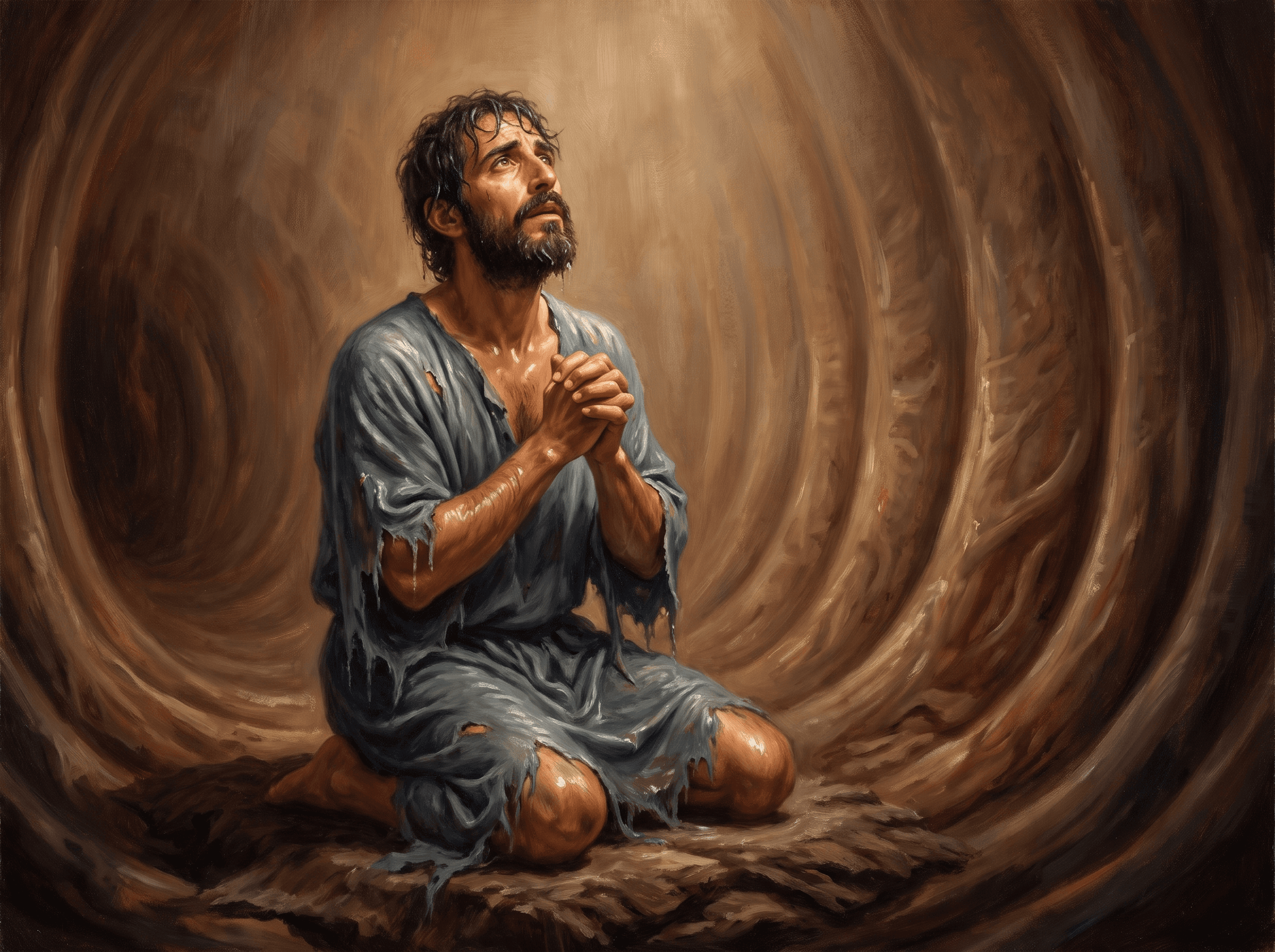
Illustrated scene from Jonah's story: Inside the Great Fish (Jonah 1:17–2:10)
Meet the people of the Bible
Follow their lives in order, with illustrated scenes and Bible passages that tell their stories.
 Jonah

Photo: Photochrom print, Library of Congress Prints and Photographs Division (LCCN 2002724987). License: Public domain in the United States; Library of Congress states no known restrictions on publication. Source. Location: Hebron, West Bank; print preserved by the Library of Congress. Resized for the web.
Explore the places of the Bible
See where biblical events happened, why each place matters, and what archaeology helps us understand.
Hebron
Where Abraham lived and buried Sarah, and where David was first made king.
Get full access with one subscription
Explore the people and places of the Bible. Read summaries of every book, with images and clear explanations covering every chapter. Access all these features and our Bible study tools with one subscription.
See PlansAsk AI about Jonah 2:10
Ask a question about this verse and get a clear answer, with Bible references you can read for yourself.
Every Bible book, explained chapter by chapter
Explore summaries of every book of the Bible, with images and easy-to-understand explanations covering every chapter.
Keep studying Jonah 2:10
Related Bible verses
Key themes
Related topics
At a Glance — the Book of Jonah
- Author
- Traditionally attributed to Jonah
- Written
- Around 760 BC
- Genre
- Prophetic narrative
- Original Audience
- Israelites and Gentile nations
Frequently Asked Questions
Quick, clear answers about this verse
What does Jonah 2:10 teach about God's authority?
Jonah 2:10 illustrates God's supreme authority over all creation, including the fish that swallowed Jonah. By commanding the fish to release Jonah, God demonstrates His power to intervene in dire situations, emphasizing that nothing is beyond His control. This verse reassures believers that God can orchestrate events for their deliverance, showcasing His sovereignty in both natural and supernatural realms.
How does Jonah's experience relate to redemption?
In Jonah 2:10, Jonah's release from the fish symbolizes redemption and a second chance. After spending three days in the belly of the fish, Jonah reflects on his disobedience and turns back to God in prayer. His eventual return to dry land signifies not only physical deliverance but also spiritual renewal, highlighting the theme that God offers forgiveness and new beginnings to those who repent and seek Him.
What can we learn about prayer from Jonah 2:10?
Jonah 2:10 emphasizes the importance of prayer during difficult times. While in the fish, Jonah prayed and sought God's help, which led to his deliverance. This teaches us that turning to God in prayer, especially when we feel trapped or lost, can lead to restoration and guidance. It encourages believers to maintain a prayerful attitude, trusting that God hears and responds to their cries for help.
Why is Jonah's vomiting onto dry land significant?
The act of the fish vomiting Jonah onto dry land in Jonah 2:10 is significant as it represents both physical and spiritual deliverance. It marks the end of Jonah's time of trial and signifies a fresh start. This moment illustrates God's mercy and willingness to restore those who turn back to Him, reinforcing the idea that no situation is too dire for God's intervention.
Daily Verse — straight to your inbox
A verse and a 2-sentence plain-English explanation, every morning. Free. Unsubscribe anytime.