Old Testament
Joshua 3:8
Read the Bible in clear, modern English—easy to understand, faithful to the meaning, and written for everyday readers.
Command the priests carrying the ark of the covenant: 'When you reach the edge of the Jordan River, stand still in the river.'
Compare translations
And thou shalt command the priests that bear the ark of the covenant, saying, When ye are come to the brink of the water of Jordan, ye shall stand still in Jordan.
What Joshua 3:8 means
Plain-English insight for readers
In this verse, God instructs Joshua to command the priests who are carrying the Ark of the Covenant to stand still at the edge of the Jordan River. This moment is significant as it marks the beginning of the Israelites' crossing into the Promised Land. The Ark represents God's presence among His people, and by having the priests stand in the river, it demonstrates their faith and obedience to God's command. The act of standing still in the water symbolizes trust in God's power to part the waters, allowing the Israelites to cross safely. This event is a pivotal moment in their journey, showcasing God's guidance and the importance of following His instructions. It emphasizes the need for leaders to act in faith and for the people to trust in God's promises, even when faced with seemingly impossible situations.
How to apply Joshua 3:8 to your life
This verse encourages us to trust in God's guidance, especially when facing challenges. Just as the priests had to stand firm in faith, we too should remain steadfast in our beliefs and follow God's direction, even when the path ahead seems daunting.
Curated for this public verse page. Joshua Summary
Learn the Bible through its people and places
Get to know the people in Scripture through illustrated stories, and explore the places where they lived and traveled.

Illustrated scene from Joshua's story: Crossing the Jordan (Joshua 3:1–4:24)
Meet the people of the Bible
Follow their lives in order, with illustrated scenes and Bible passages that tell their stories.
 Joshua
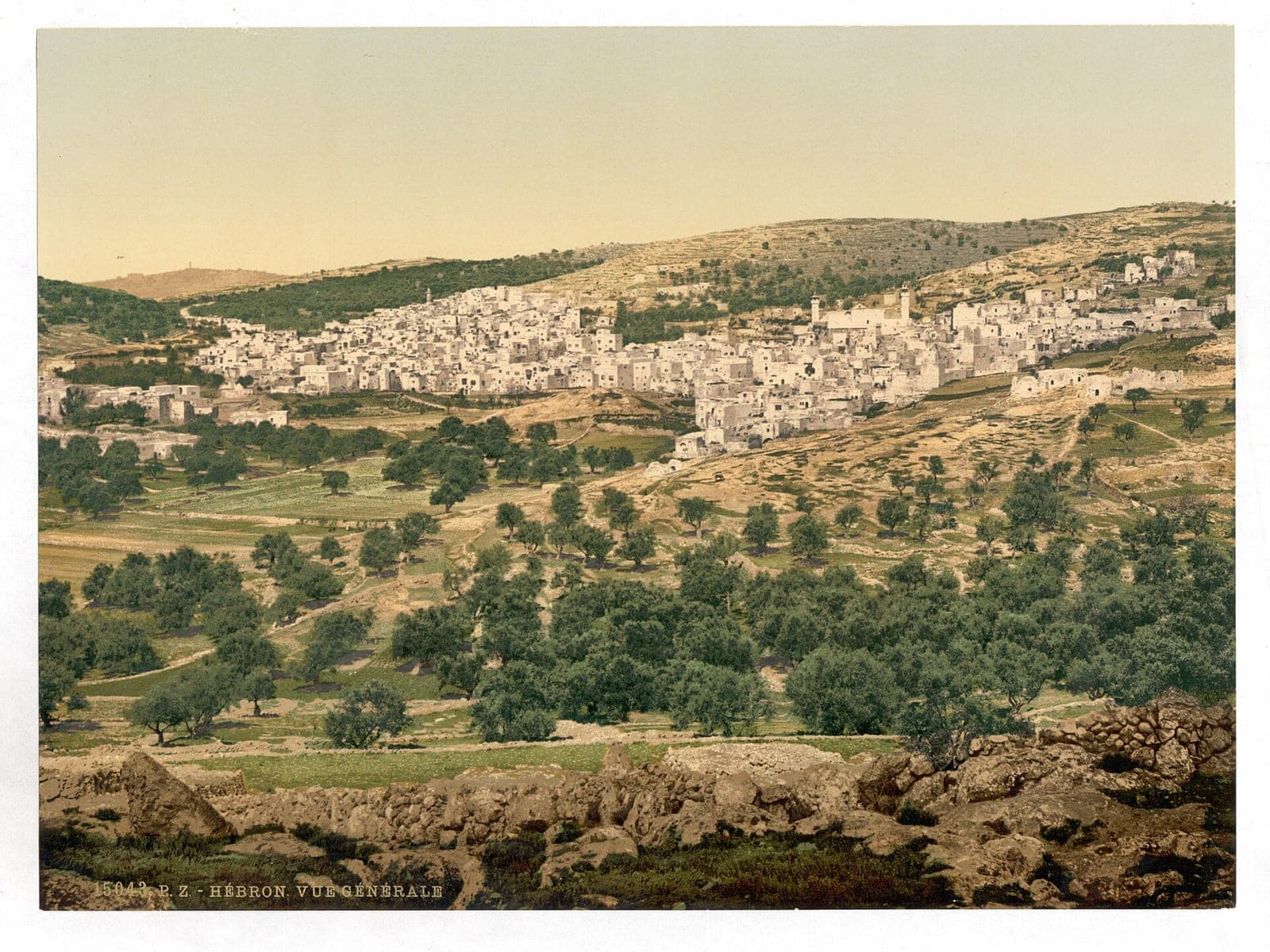
Photo: Photochrom print, Library of Congress Prints and Photographs Division (LCCN 2002724987). License: Public domain in the United States; Library of Congress states no known restrictions on publication. Source. Location: Hebron, West Bank; print preserved by the Library of Congress. Resized for the web.
Explore the places of the Bible
See where biblical events happened, why each place matters, and what archaeology helps us understand.
Hebron
Where Abraham lived and buried Sarah, and where David was first made king.
Get full access with one subscription
Explore the people and places of the Bible. Read summaries of every book, with images and clear explanations covering every chapter. Access all these features and our Bible study tools with one subscription.
See PlansAsk AI about Joshua 3:8
Ask a question about this verse and get a clear answer, with Bible references you can read for yourself.
Every Bible book, explained chapter by chapter
Explore summaries of every book of the Bible, with images and easy-to-understand explanations covering every chapter.
Keep studying Joshua 3:8
Related Bible verses
Related topics
At a Glance — the Book of Joshua
- Author
- Traditionally attributed to Joshua and later compilers
- Written
- Around 1400-1370 BC
- Genre
- Historical narrative
- Original Audience
- The Israelites entering Canaan
Frequently Asked Questions
Quick, clear answers about this verse
What does Joshua 3:8 teach about faith?
Joshua 3:8 illustrates the importance of faith in God's promises. The priests were commanded to stand in the Jordan River, which required them to trust that God would perform a miracle by parting the waters. This act of standing still symbolizes a deep faith that God will provide a way, even when circumstances seem impossible. It encourages believers to act on their faith and trust in God's timing and power.
Why is the Ark of the Covenant significant in this verse?
The Ark of the Covenant represents God's presence among the Israelites. In Joshua 3:8, the priests carrying the Ark are instructed to stand in the Jordan River, signifying that God's presence goes before His people. This moment emphasizes the importance of God's guidance in their journey and highlights the Ark as a symbol of His covenant and faithfulness to His promises.
How can we apply Joshua 3:8 to our lives today?
Joshua 3:8 encourages us to trust in God's guidance during challenging times. Just as the priests had to stand firm in faith at the river's edge, we are called to remain steadfast in our beliefs and follow God's direction, even when the path ahead seems uncertain. This verse reminds us that obedience to God's commands can lead to miraculous outcomes in our lives.
What role does leadership play in Joshua 3:8?
In Joshua 3:8, leadership is exemplified through Joshua's obedience to God's command and his instruction to the priests. Effective leadership involves guiding others in faith and demonstrating trust in God's plans. This verse highlights the responsibility of leaders to act in faith, set an example for others, and encourage their followers to trust in God's promises.
Daily Verse — straight to your inbox
A verse and a 2-sentence plain-English explanation, every morning. Free. Unsubscribe anytime.