Old Testament
Leviticus 8:30
Read the Bible in clear, modern English—easy to understand, faithful to the meaning, and written for everyday readers.
Moses took some of the anointing oil and some of the blood from the altar and sprinkled it on Aaron and his garments, and on his sons and their garments. In this way he set apart Aaron and his garments, and his sons and their garments, as holy.
Compare translations
And Moses took of the anointing oil, and of the blood which was upon the altar, and sprinkled it upon Aaron, and upon his garments, and upon his sons, and upon his sons’ garments with him; and sanctified Aaron, and his garments, and his sons, and his sons’ garments with him.
What Leviticus 8:30 means
Plain-English insight for readers
In this verse, Moses performs a significant ritual to consecrate Aaron and his sons as priests. He uses anointing oil and blood from the altar, which are symbols of holiness and purification. By sprinkling these on Aaron and his garments, as well as on his sons and their garments, Moses sets them apart for their sacred duties. This act signifies that they are chosen by God to serve in the tabernacle and perform priestly functions. The use of oil represents the Holy Spirit's empowerment, while the blood symbolizes atonement and the seriousness of their role. This ritual emphasizes the importance of being made holy before serving God, highlighting the need for purity and dedication in spiritual leadership.
How to apply Leviticus 8:30 to your life
This verse reminds us of the importance of being set apart for God's work. Just as Aaron and his sons were consecrated, we too are called to live holy lives dedicated to serving God. We should seek to purify our hearts and actions in our daily lives.
Curated for this public verse page. Leviticus Summary
Learn the Bible through its people and places
Get to know the people in Scripture through illustrated stories, and explore the places where they lived and traveled.
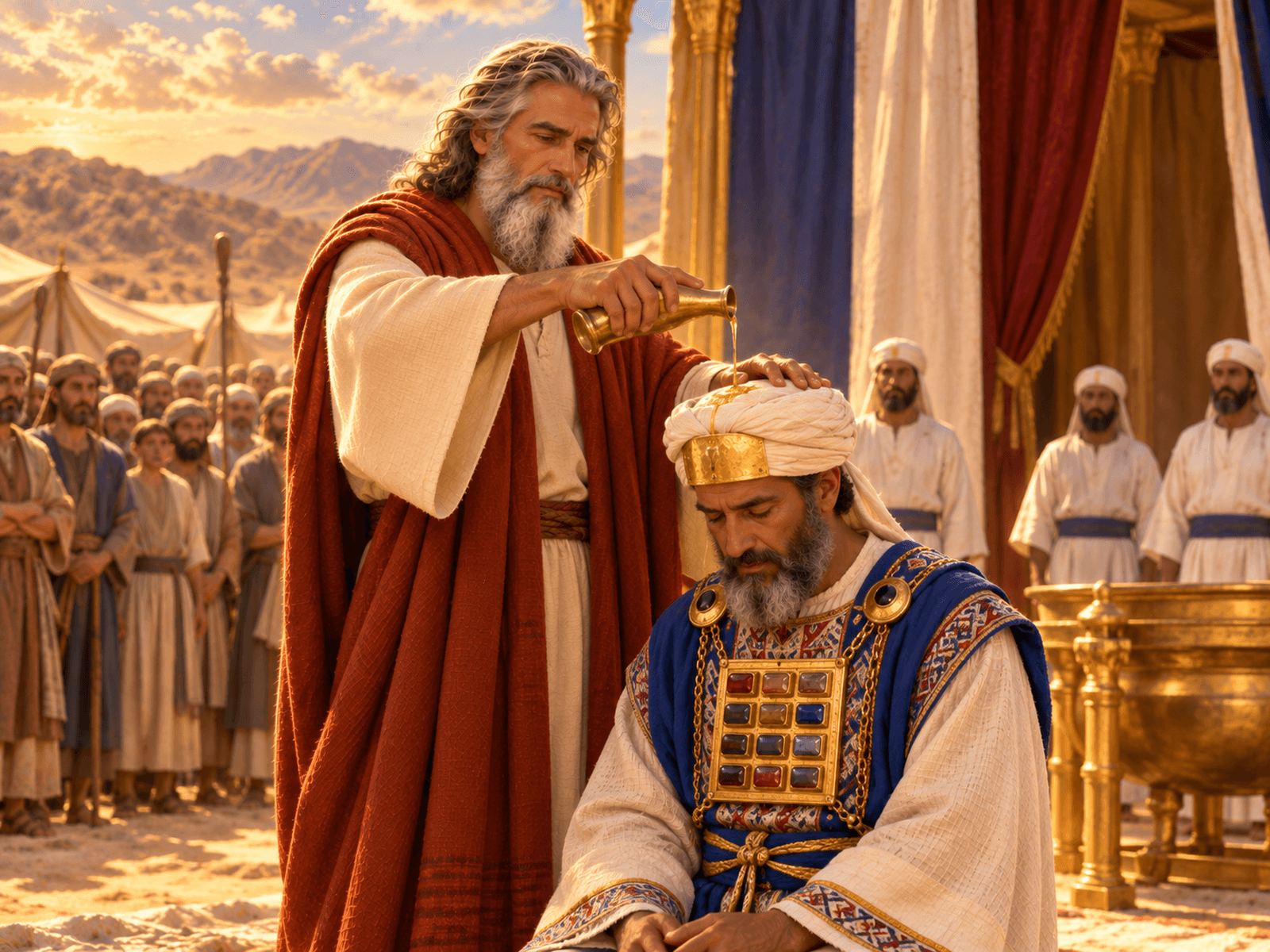
Illustrated scene from Moses's story: Aaron and His Sons Become Priests (Leviticus 8:1–9:24)
Meet the people of the Bible
Follow their lives in order, with illustrated scenes and Bible passages that tell their stories.
 Moses

Photo: U.S. Army photo by Spc. Samantha R. Ciaramitaro, via DVIDS and Wikimedia Commons. License: Public domain in the United States — U.S. federal-government work. Source. Location: Great Ziggurat, Ur Archaeological City (Tell el-Mukayyar), Dhi Qar Governorate, Iraq. Resized for the web.
Explore the places of the Bible
See where biblical events happened, why each place matters, and what archaeology helps us understand.
Ur
The city Abram's family left to travel toward Canaan.
Get full access with one subscription
Explore the people and places of the Bible. Read summaries of every book, with images and clear explanations covering every chapter. Access all these features and our Bible study tools with one subscription.
See PlansAsk AI about Leviticus 8:30
Ask a question about this verse and get a clear answer, with Bible references you can read for yourself.
Every Bible book, explained chapter by chapter
Explore summaries of every book of the Bible, with images and easy-to-understand explanations covering every chapter.
Keep studying Leviticus 8:30
Related Bible verses
Key themes
Related topics
At a Glance — the Book of Leviticus
- Author
- Traditionally attributed to Moses
- Written
- Around 1400 BC
- Genre
- Law (Pentateuch)
- Original Audience
- The Israelites in the wilderness
Frequently Asked Questions
Quick, clear answers about this verse
What does Leviticus 8:30 mean?
Leviticus 8:30 describes Moses consecrating Aaron and his sons as priests by sprinkling them with anointing oil and blood from the altar. This act signifies their setting apart for sacred duties and highlights the importance of holiness in serving God.
What is the significance of anointing oil in Leviticus 8:30?
In Leviticus 8:30, anointing oil symbolizes the empowerment of the Holy Spirit and the setting apart of Aaron and his sons for their priestly roles. It represents their dedication to God and the sacred responsibilities they are about to undertake.
What does the blood represent in Leviticus 8:30?
The blood in Leviticus 8:30 symbolizes atonement and the seriousness of the priestly role. It signifies purification and the need for holiness when approaching God, emphasizing the gravity of their service.
How can we apply Leviticus 8:30 to our lives today?
Leviticus 8:30 encourages us to seek holiness and dedicate ourselves to God's work. Just as Aaron and his sons were set apart, we are called to live lives that reflect purity and commitment in our spiritual journeys.
Daily Verse — straight to your inbox
A verse and a 2-sentence plain-English explanation, every morning. Free. Unsubscribe anytime.