New Testament
Luke 1:36
Read the Bible in clear, modern English—easy to understand, faithful to the meaning, and written for everyday readers.
"And listen — your relative Elisabeth has also conceived a son in her old age. She who was called barren is now in her 6th month."
Compare translations
And, behold, thy cousin Elisabeth, she hath also conceived a son in her old age: and this is the sixth month with her, who was called barren.
What Luke 1:36 means
Plain-English insight for readers
In this verse, the angel Gabriel informs Mary that her relative Elisabeth, who was previously thought to be unable to have children, is now six months pregnant. This news serves as a sign of God's miraculous power and ability to fulfill His promises, even in seemingly impossible situations. Elisabeth's pregnancy is significant because it highlights God's intervention in the lives of those who are considered barren or hopeless. The mention of Elisabeth's advanced age emphasizes the miraculous nature of her conception, reinforcing the theme that with God, nothing is impossible. This moment also connects Mary to a larger narrative of divine action, as both women are part of God's plan for salvation. The angel's message encourages Mary to trust in God's plan and serves as a reminder that God can work through anyone, regardless of their circumstances or societal expectations.
How to apply Luke 1:36 to your life
This verse encourages us to trust in God's ability to work miracles in our lives, even when situations seem hopeless. It reminds us that God can bring about change and fulfillment of His promises, urging us to have faith in His timing and plans.
Curated for this public verse page. Luke Summary
Learn the Bible through its people and places
Get to know the people in Scripture through illustrated stories, and explore the places where they lived and traveled.
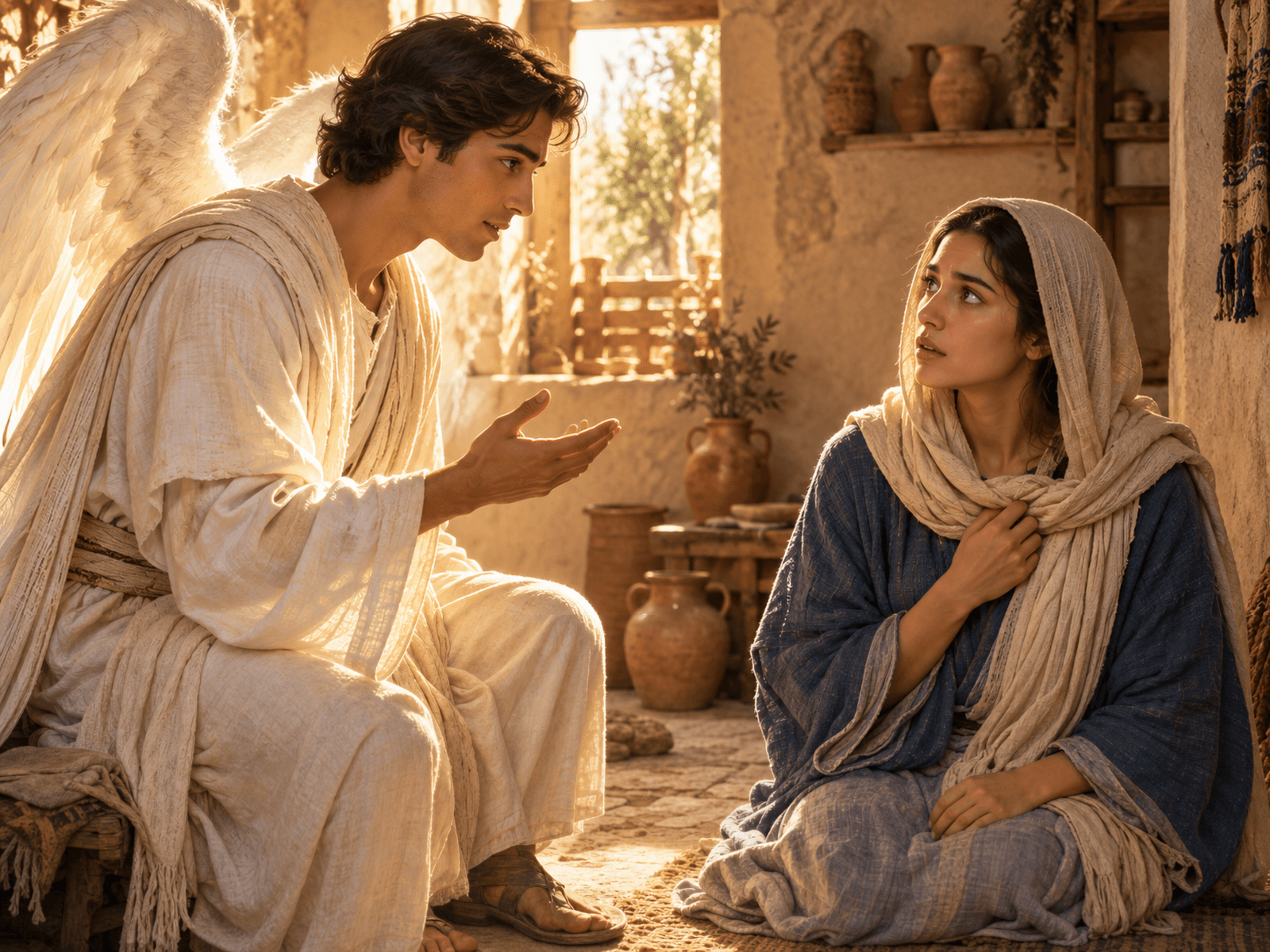
Illustrated scene from Jesus's story: An Angel Visits Mary (Luke 1:26–38)
Meet the people of the Bible
Follow their lives in order, with illustrated scenes and Bible passages that tell their stories.
 Jesus
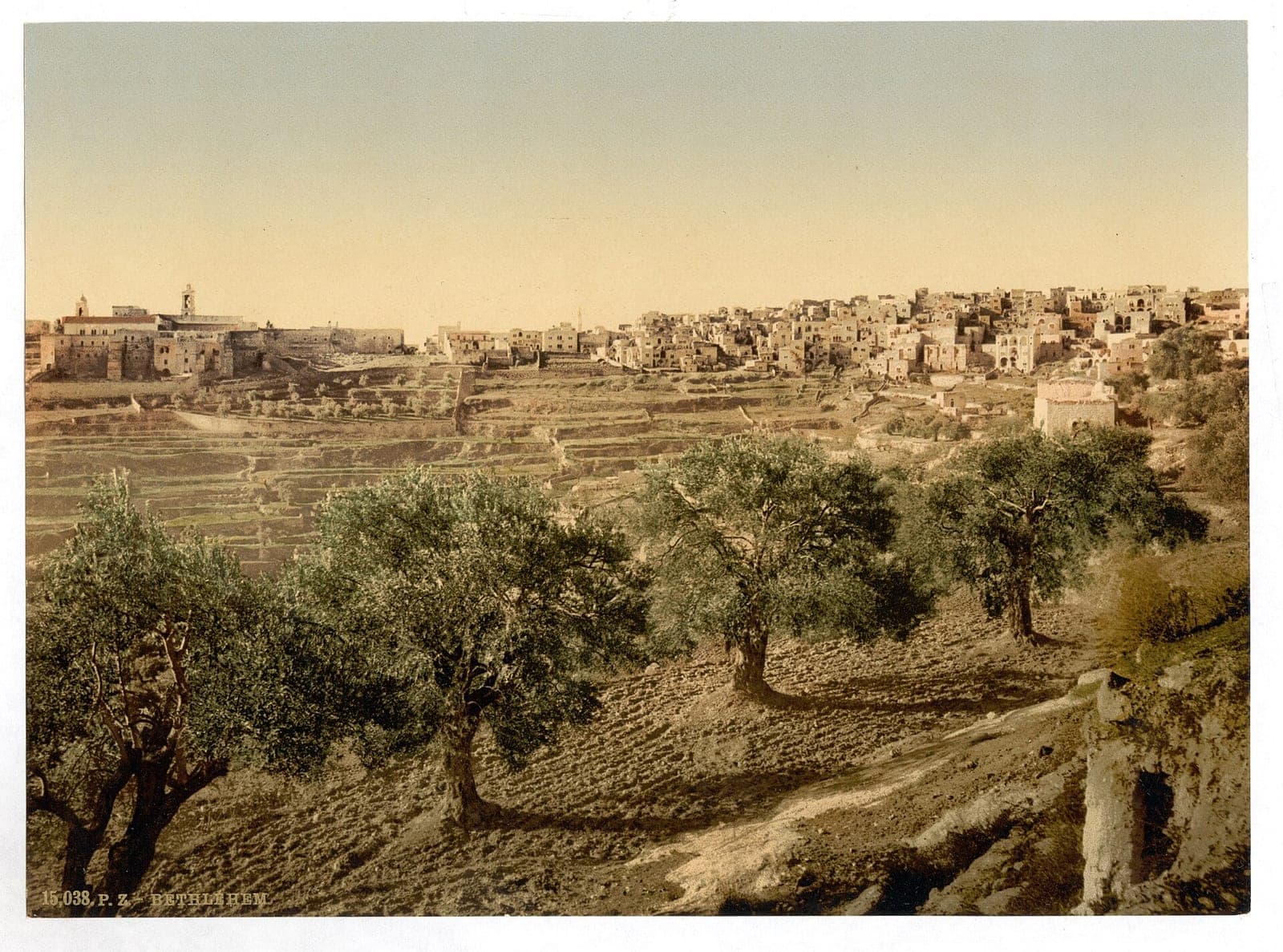
Photo: Photochrom print, Library of Congress Prints and Photographs Division (LCCN 2002724966). License: Public domain in the United States; Library of Congress states no known restrictions on publication. Source. Location: Bethlehem, West Bank; print preserved by the Library of Congress. Resized for the web.
Explore the places of the Bible
See where biblical events happened, why each place matters, and what archaeology helps us understand.
Bethlehem
David's hometown, and the town where Jesus was born.
Get full access with one subscription
Explore the people and places of the Bible. Read summaries of every book, with images and clear explanations covering every chapter. Access all these features and our Bible study tools with one subscription.
See PlansAsk AI about Luke 1:36
Ask a question about this verse and get a clear answer, with Bible references you can read for yourself.
Every Bible book, explained chapter by chapter
Explore summaries of every book of the Bible, with images and easy-to-understand explanations covering every chapter.
Keep studying Luke 1:36
Related Bible verses
Key themes
Related topics
At a Glance — the Book of Luke
- Author
- Luke the physician
- Written
- Around AD 60-62
- Genre
- Gospel and history
- Original Audience
- Gentile Christians (addressed to Theophilus)
Frequently Asked Questions
Quick, clear answers about this verse
What does Luke 1:36 mean?
Luke 1:36 means that the angel Gabriel is telling Mary that her relative Elisabeth, who was thought to be unable to have children, is now six months pregnant. This highlights God's miraculous power and ability to fulfill His promises.
What is the significance of Elisabeth's pregnancy in Luke 1:36?
Elisabeth's pregnancy is significant because it demonstrates God's intervention in what seemed impossible, as she was considered barren and of advanced age. It serves as a sign of hope and a reminder that God can work miracles.
What does 'who was called barren' mean in Luke 1:36?
'Who was called barren' refers to Elisabeth's previous inability to conceive children, which made her pregnancy a miraculous event. It underscores the theme that God can change circumstances that seem impossible.
How does Luke 1:36 relate to faith?
Luke 1:36 relates to faith by encouraging believers to trust in God's ability to perform miracles, even when situations appear hopeless. It shows that faith in God's promises can lead to unexpected blessings.
Daily Verse — straight to your inbox
A verse and a 2-sentence plain-English explanation, every morning. Free. Unsubscribe anytime.