New Testament
Luke 1:55
Read the Bible in clear, modern English—easy to understand, faithful to the meaning, and written for everyday readers.
just as he promised our ancestors — to Abraham and his descendants forever."
Compare translations
As he spake to our fathers, to Abraham, and to his seed for ever.
What Luke 1:55 means
Plain-English insight for readers
In this verse, Mary reflects on God's faithfulness to His promises made to Abraham and his descendants. The mention of 'ancestors' emphasizes the continuity of God's covenant throughout generations. Mary acknowledges that God's promises are not just for a moment but are everlasting, extending to all of Abraham's descendants. This highlights the importance of faith and trust in God's word, as He fulfills His promises over time. The verse serves as a reminder that God's plans are rooted in history and that He remains committed to His people. It also connects the New Testament narrative to the Old Testament, showing that the coming of Jesus is part of a larger divine plan that began with Abraham. This assurance of God's faithfulness encourages believers to hold onto hope and trust in His promises, knowing that they are part of a long-standing covenant that spans generations.
How to apply Luke 1:55 to your life
This verse encourages us to trust in God's promises, knowing that He is faithful to fulfill them. In our lives, we can reflect on God's past faithfulness and hold onto hope for the future. Remembering His promises can strengthen our faith during challenging times.
Curated for this public verse page. Luke Summary
Learn the Bible through its people and places
Get to know the people in Scripture through illustrated stories, and explore the places where they lived and traveled.

Illustrated scene from Mary, Jesus' mother's story: Mary's Song of Praise (Luke 1:46–56)
Meet the people of the Bible
Follow their lives in order, with illustrated scenes and Bible passages that tell their stories.
 Mary, Jesus' mother
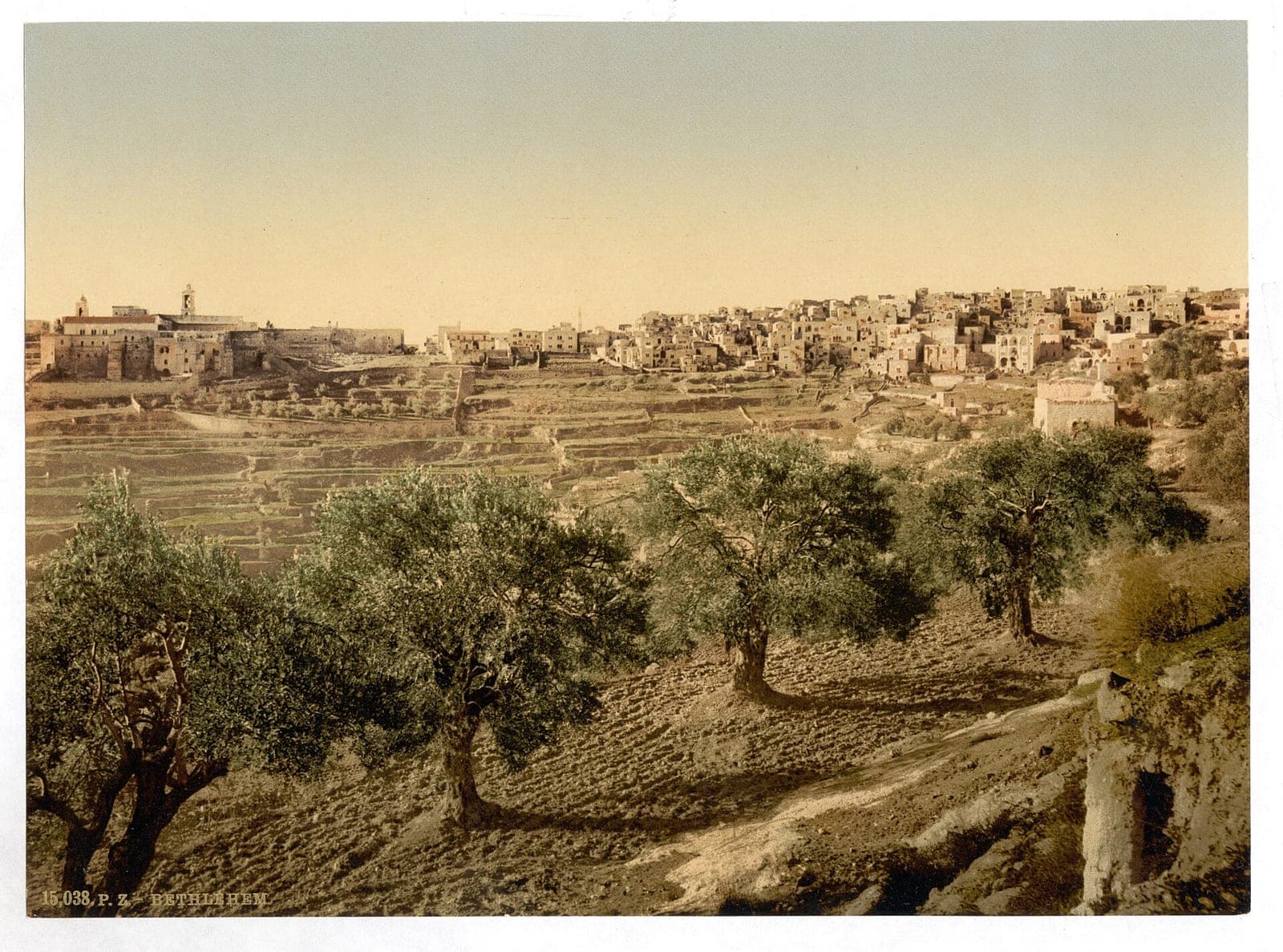
Photo: Photochrom print, Library of Congress Prints and Photographs Division (LCCN 2002724966). License: Public domain in the United States; Library of Congress states no known restrictions on publication. Source. Location: Bethlehem, West Bank; print preserved by the Library of Congress. Resized for the web.
Explore the places of the Bible
See where biblical events happened, why each place matters, and what archaeology helps us understand.
Bethlehem
David's hometown, and the town where Jesus was born.
Get full access with one subscription
Explore the people and places of the Bible. Read summaries of every book, with images and clear explanations covering every chapter. Access all these features and our Bible study tools with one subscription.
See PlansAsk AI about Luke 1:55
Ask a question about this verse and get a clear answer, with Bible references you can read for yourself.
Every Bible book, explained chapter by chapter
Explore summaries of every book of the Bible, with images and easy-to-understand explanations covering every chapter.
Keep studying Luke 1:55
Related Bible verses
Related topics
At a Glance — the Book of Luke
- Author
- Luke the physician
- Written
- Around AD 60-62
- Genre
- Gospel and history
- Original Audience
- Gentile Christians (addressed to Theophilus)
Frequently Asked Questions
Quick, clear answers about this verse
What does Luke 1:55 mean about God's promises?
Luke 1:55 emphasizes God's unwavering faithfulness to the promises made to Abraham and his descendants. It highlights that God's covenant is not limited to a single moment but extends through generations, assuring believers that His plans are rooted in history and continue to unfold.
How does Luke 1:55 connect to the Old Testament?
This verse connects to the Old Testament by referencing God's covenant with Abraham, illustrating that the arrival of Jesus is part of a larger divine plan initiated long ago. It shows that God's promises are consistent and enduring, linking the New Testament narrative to the foundational stories of faith.
What can we learn from Mary’s reflection in Luke 1:55?
Mary's reflection in Luke 1:55 teaches us about the importance of recognizing and trusting in God's faithfulness. It encourages believers to remember God's past promises and to maintain hope for the future, reinforcing the idea that God is committed to His people across generations.
How can Luke 1:55 inspire hope in difficult times?
Luke 1:55 can inspire hope by reminding us that God's promises are everlasting and that He has been faithful throughout history. In challenging times, reflecting on His past faithfulness can strengthen our trust and encourage us to hold onto hope, knowing that we are part of a long-standing covenant.
Daily Verse — straight to your inbox
A verse and a 2-sentence plain-English explanation, every morning. Free. Unsubscribe anytime.