New Testament
Luke 11:29
Read the Bible in clear, modern English—easy to understand, faithful to the meaning, and written for everyday readers.
As the crowds grew larger, Jesus began to say, "This is an evil generation. It seeks a sign, but no sign will be given to it except the sign of Jonah the prophet."
Compare translations
And when the people were gathered thick together, he began to say, This is an evil generation: they seek a sign; and there shall no sign be given it, but the sign of Jonas the prophet.
What Luke 11:29 means
Plain-English insight for readers
In this verse, Jesus addresses a large crowd that is demanding miraculous signs to prove His authority and message. He labels this generation as 'evil' because they are focused on seeking signs rather than having faith. Jesus refers to the 'sign of Jonah,' which symbolizes His own death and resurrection, indicating that this is the only sign they will receive. The mention of Jonah connects to the prophet who spent three days in the belly of a great fish, paralleling Jesus' own time in the grave. This statement emphasizes the importance of faith over signs and miracles, suggesting that true belief comes from understanding and accepting His message rather than waiting for proof. Jesus' words challenge the crowd to reflect on their faith and the nature of their requests, urging them to seek a deeper relationship with God rather than mere spectacle.
How to apply Luke 11:29 to your life
This verse encourages us to examine our own faith. Are we seeking signs and wonders, or are we willing to trust in God's word and His promises? True faith often requires believing without seeing, and we should focus on deepening our relationship with God rather than seeking proof of His existence.
Curated for this public verse page. Luke Summary
Explore more of the Bible
Learn the Bible through its people and places
Get to know the people in Scripture through illustrated stories, and explore the places where they lived and traveled.
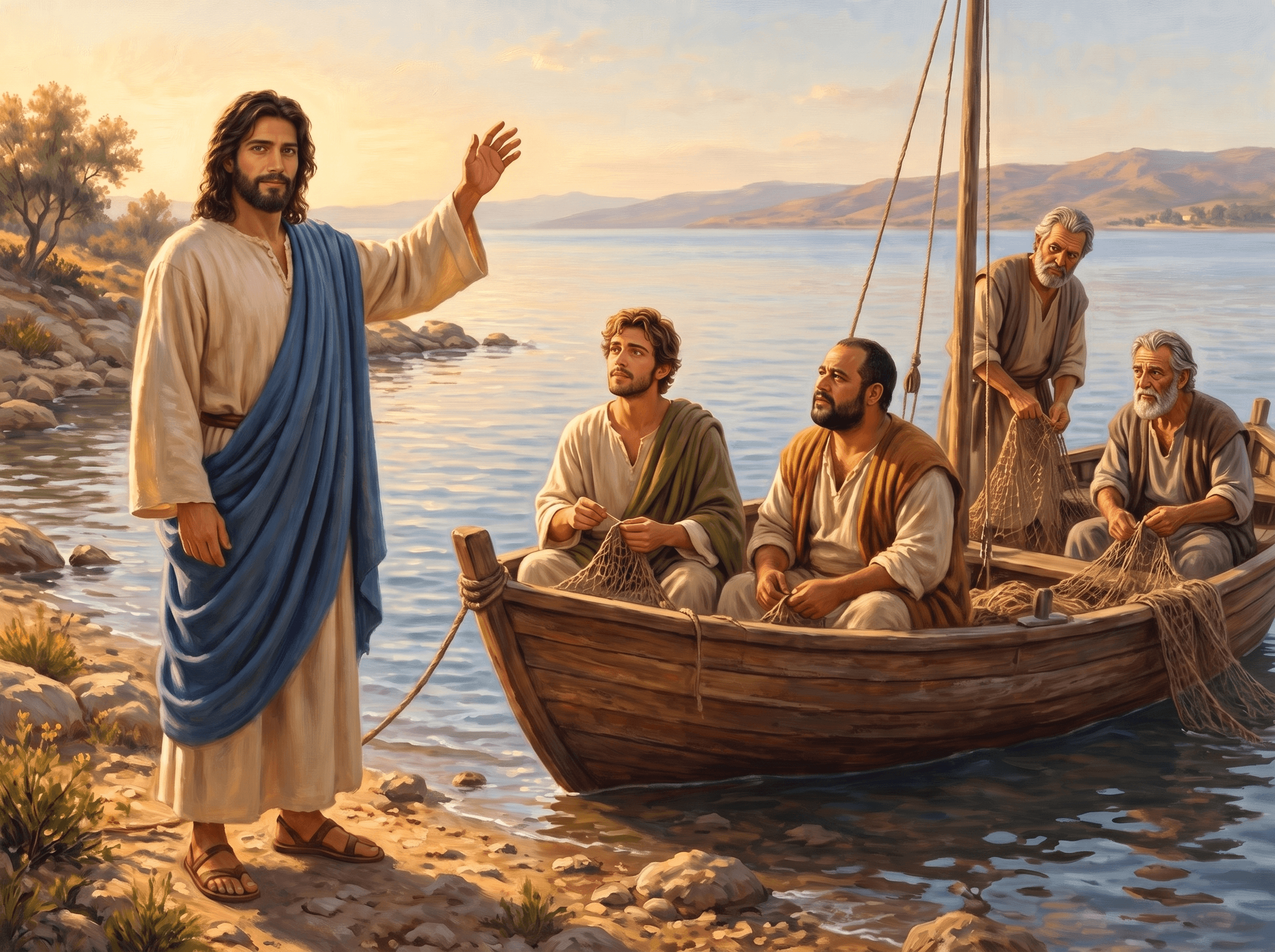
Illustrated scene from John the Apostle's story: Mending Their Nets (Mark 1:19–20)
Meet the people of the Bible
Follow their lives in order, with illustrated scenes and Bible passages that tell their stories.
 John the Apostle

Photo: Photochrom print, Library of Congress Prints and Photographs Division (LCCN 2002725045). License: Public domain in the United States; Library of Congress states no known restrictions on publication. Source. Location: Nazareth, Israel; print preserved by the Library of Congress. Resized for the web.
Explore the places of the Bible
See where biblical events happened, why each place matters, and what archaeology helps us understand.
Nazareth
The small town in Galilee where Jesus grew up.
Get full access with one subscription
Explore the people and places of the Bible. Read summaries of every book, with images and clear explanations covering every chapter. Access all these features and our Bible study tools with one subscription.
See PlansAsk AI about Luke 11:29
Ask a question about this verse and get a clear answer, with Bible references you can read for yourself.
Fuller verse explanations
Explore what a verse means, what was happening around it, and how it connects to other Bible passages.
Plain Meaning
Jesus looks at the growing crowd and calls that generation evil. Their problem is that they keep demanding a miraculous sign before they will believe. Jesus refuses to give them one — except for one: the sign of Jonas the prophet. The next verse explains what that sign is: just as Jonas was a sign to the Ninevites, Jesus will be a sign to this generation.
Read It in Context
Just before this, some in the crowd had demanded a sign from heaven (verse 16), even after watching Jesus cast out a devil. Jesus had already answered the accusation that he worked by Beelzebub. Now, with the crowd pressing in, he turns to address their demand for a sign directly.
The full Clear view adds what to notice, common misreadings, and the passage that best explains this one — for Luke 11:29 and any verse in the Bible.
Every Bible book, explained chapter by chapter
Explore summaries of every book of the Bible, with images and easy-to-understand explanations covering every chapter.
Keep studying Luke 11:29
Related Bible verses
Key themes
Related topics
At a Glance — the Book of Luke
- Author
- Luke the physician
- Written
- Around AD 60-62
- Genre
- Gospel and history
- Original Audience
- Gentile Christians (addressed to Theophilus)
Frequently Asked Questions
Quick, clear answers about this verse
What does Jesus mean by 'this is an evil generation'?
When Jesus refers to 'this is an evil generation,' He is criticizing the crowd for their lack of faith and their constant demand for miraculous signs. He sees their insistence on needing proof of His authority as a sign of spiritual blindness and moral failure, indicating that true faith should not rely on visible signs but rather on trust in God's word.
What is the 'sign of Jonah' that Jesus mentions?
The 'sign of Jonah' refers to the story of the prophet Jonah, who spent three days in the belly of a great fish. Jesus uses this analogy to foreshadow His own death and resurrection, indicating that just as Jonah was in the fish for three days, He would be in the grave for three days before rising again. This sign serves as a powerful message about His authority and the fulfillment of God's plan.
Why does Jesus refuse to give more signs to the people?
Jesus refuses to give more signs because He wants to emphasize that faith should not be based on miraculous proof. He believes that the demand for signs reflects a lack of genuine belief and understanding. Instead, He points to the 'sign of Jonah' as the only sign they will receive, encouraging the crowd to seek a deeper faith rather than relying on spectacles.
How can we apply the message of this verse to our lives today?
This verse challenges us to reflect on our own faith. We should ask ourselves if we are seeking signs and wonders to validate our beliefs or if we are willing to trust in God's promises without needing proof. It encourages us to deepen our relationship with God through faith and understanding rather than waiting for miraculous signs to affirm our beliefs.
Daily Verse — straight to your inbox
A verse and a 2-sentence plain-English explanation, every morning. Free. Unsubscribe anytime.