New Testament
Luke 18:38
Read the Bible in clear, modern English—easy to understand, faithful to the meaning, and written for everyday readers.
He shouted, "Jesus, Son of David, have mercy on me!"
Compare translations
And he cried, saying, Jesus, thou son of David, have mercy on me.
What Luke 18:38 means
Plain-English insight for readers
In this verse, a blind man is calling out to Jesus, recognizing Him as the 'Son of David,' a title that signifies Jesus' royal lineage and messianic role. The blind man is desperate for help and acknowledges Jesus' power to heal. His cry for mercy reflects a deep understanding of his need and faith in Jesus' compassion. By addressing Jesus in this way, he shows that he believes Jesus can change his situation. The act of shouting indicates urgency and determination, as he does not let the crowd silence him. This moment highlights the importance of faith and persistence in seeking help from God, even when faced with obstacles. The blind man's plea serves as a reminder that acknowledging our need for mercy is the first step toward receiving healing and restoration from God.
How to apply Luke 18:38 to your life
When facing challenges, we should boldly approach Jesus with our needs, just like the blind man. Acknowledging our weaknesses and asking for mercy can lead to transformation. Don't let obstacles discourage you from seeking help; persistence in prayer is key.
Curated for this public verse page. Luke Summary
Learn the Bible through its people and places
Get to know the people in Scripture through illustrated stories, and explore the places where they lived and traveled.

Illustrated scene from Jesus's story: Blind Bartimaeus (Luke 18:35–43)
Meet the people of the Bible
Follow their lives in order, with illustrated scenes and Bible passages that tell their stories.
 Jesus
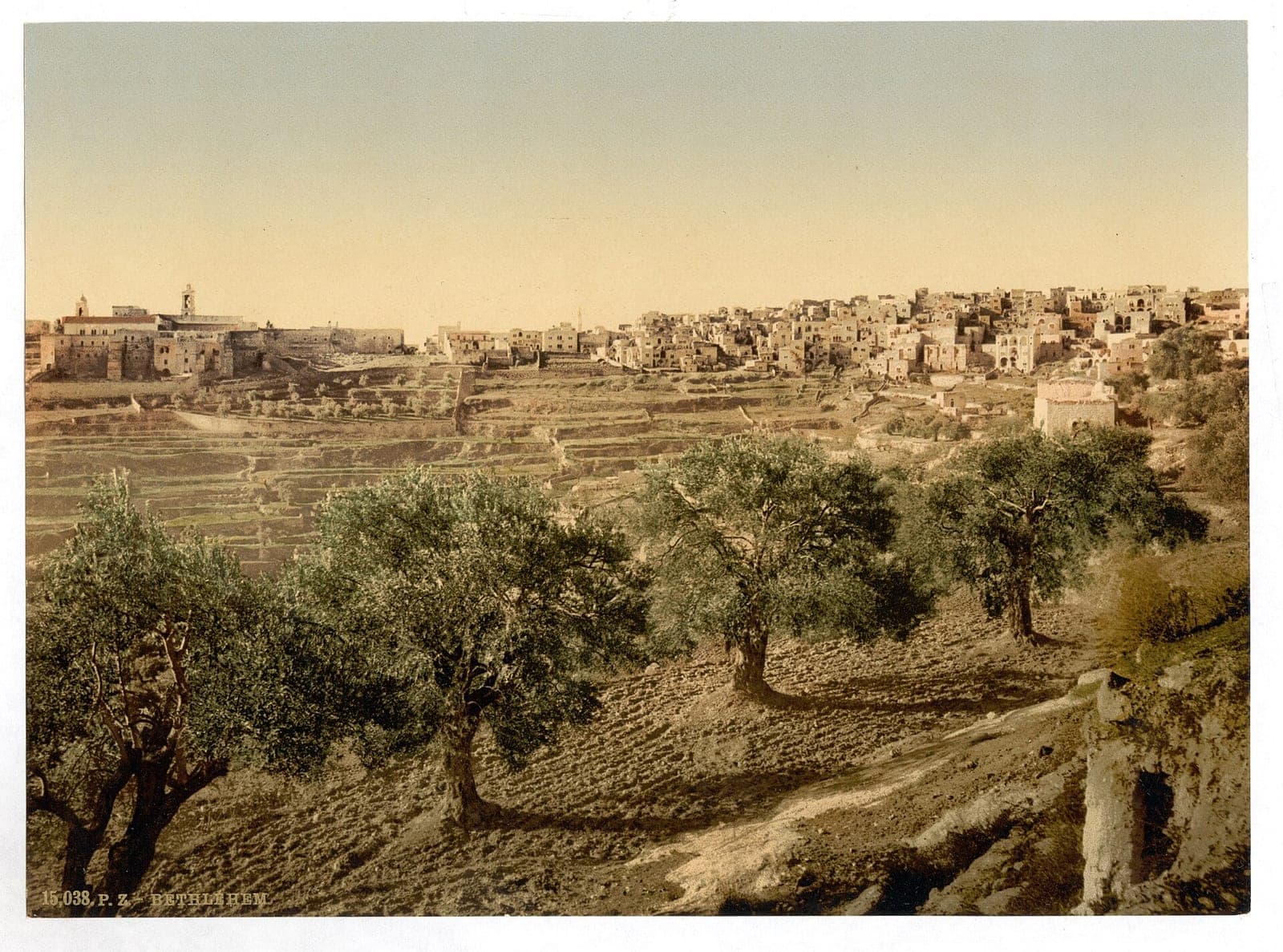
Photo: Photochrom print, Library of Congress Prints and Photographs Division (LCCN 2002724966). License: Public domain in the United States; Library of Congress states no known restrictions on publication. Source. Location: Bethlehem, West Bank; print preserved by the Library of Congress. Resized for the web.
Explore the places of the Bible
See where biblical events happened, why each place matters, and what archaeology helps us understand.
Bethlehem
David's hometown, and the town where Jesus was born.
Get full access with one subscription
Explore the people and places of the Bible. Read summaries of every book, with images and clear explanations covering every chapter. Access all these features and our Bible study tools with one subscription.
See PlansAsk AI about Luke 18:38
Ask a question about this verse and get a clear answer, with Bible references you can read for yourself.
Every Bible book, explained chapter by chapter
Explore summaries of every book of the Bible, with images and easy-to-understand explanations covering every chapter.
Keep studying Luke 18:38
Related Bible verses
Related topics
At a Glance — the Book of Luke
- Author
- Luke the physician
- Written
- Around AD 60-62
- Genre
- Gospel and history
- Original Audience
- Gentile Christians (addressed to Theophilus)
Frequently Asked Questions
Quick, clear answers about this verse
What does the title 'Son of David' mean in Luke 18:38?
The title 'Son of David' signifies Jesus' royal lineage and messianic role. It acknowledges Him as the promised Messiah from the line of David, which was a significant expectation in Jewish tradition. By calling Jesus this title, the blind man recognizes His authority and power to heal, showing his faith in Jesus' ability to change his circumstances.
Why did the blind man shout for Jesus in Luke 18:38?
The blind man shouted for Jesus out of desperation and faith. He was aware of his need for healing and believed that Jesus could help him. His loud cry reflects urgency and determination, demonstrating that he was not going to let the crowd silence him. This act of shouting emphasizes the importance of boldly seeking help from God, especially in times of need.
What can we learn about faith from Luke 18:38?
Luke 18:38 teaches us that faith often requires boldness and persistence. The blind man's unwavering cry for mercy illustrates that true faith is not passive; it actively seeks out Jesus, even in the face of obstacles. This encourages us to approach God with our needs confidently, trusting in His compassion and willingness to help.
How does Luke 18:38 relate to seeking help in prayer?
This verse highlights the importance of approaching Jesus with our needs, much like the blind man did. It reminds us that acknowledging our weaknesses and asking for mercy is essential in prayer. Just as the blind man persisted despite the crowd, we too should remain steadfast in our prayers, believing that God hears us and is ready to respond to our cries for help.
Daily Verse — straight to your inbox
A verse and a 2-sentence plain-English explanation, every morning. Free. Unsubscribe anytime.