New Testament
Luke 24:39
Read the Bible in clear, modern English—easy to understand, faithful to the meaning, and written for everyday readers.
Look at my hands and my feet — it's really me. Touch me and see for yourselves. A spirit doesn't have flesh and bones like I do."
Compare translations
Behold my hands and my feet, that it is I myself: handle me, and see; for a spirit hath not flesh and bones, as ye see me have.
What Luke 24:39 means
Plain-English insight for readers
In this verse, Jesus is addressing His disciples after His resurrection. He invites them to examine His physical body, showing them His hands and feet, which bear the marks of His crucifixion. This invitation serves to prove that He is not just a spirit or ghost, but has truly risen in a physical form. By encouraging them to touch Him, Jesus reassures them of His reality and the truth of His resurrection. This moment is significant as it emphasizes the tangible nature of His resurrection, affirming that He conquered death in a real, bodily way. The disciples' doubts are addressed through this physical evidence, reinforcing their faith and understanding of who Jesus is. This encounter highlights the importance of physical evidence in faith and the reality of Jesus' resurrection, which is central to Christian belief.
How to apply Luke 24:39 to your life
This verse encourages believers to seek tangible evidence of their faith. Just as Jesus invited His disciples to touch Him, we can explore our faith through prayer, scripture, and community. Engaging with our beliefs in a real and personal way can strengthen our understanding and trust in God.
Curated for this public verse page. Luke Summary
Learn the Bible through its people and places
Get to know the people in Scripture through illustrated stories, and explore the places where they lived and traveled.
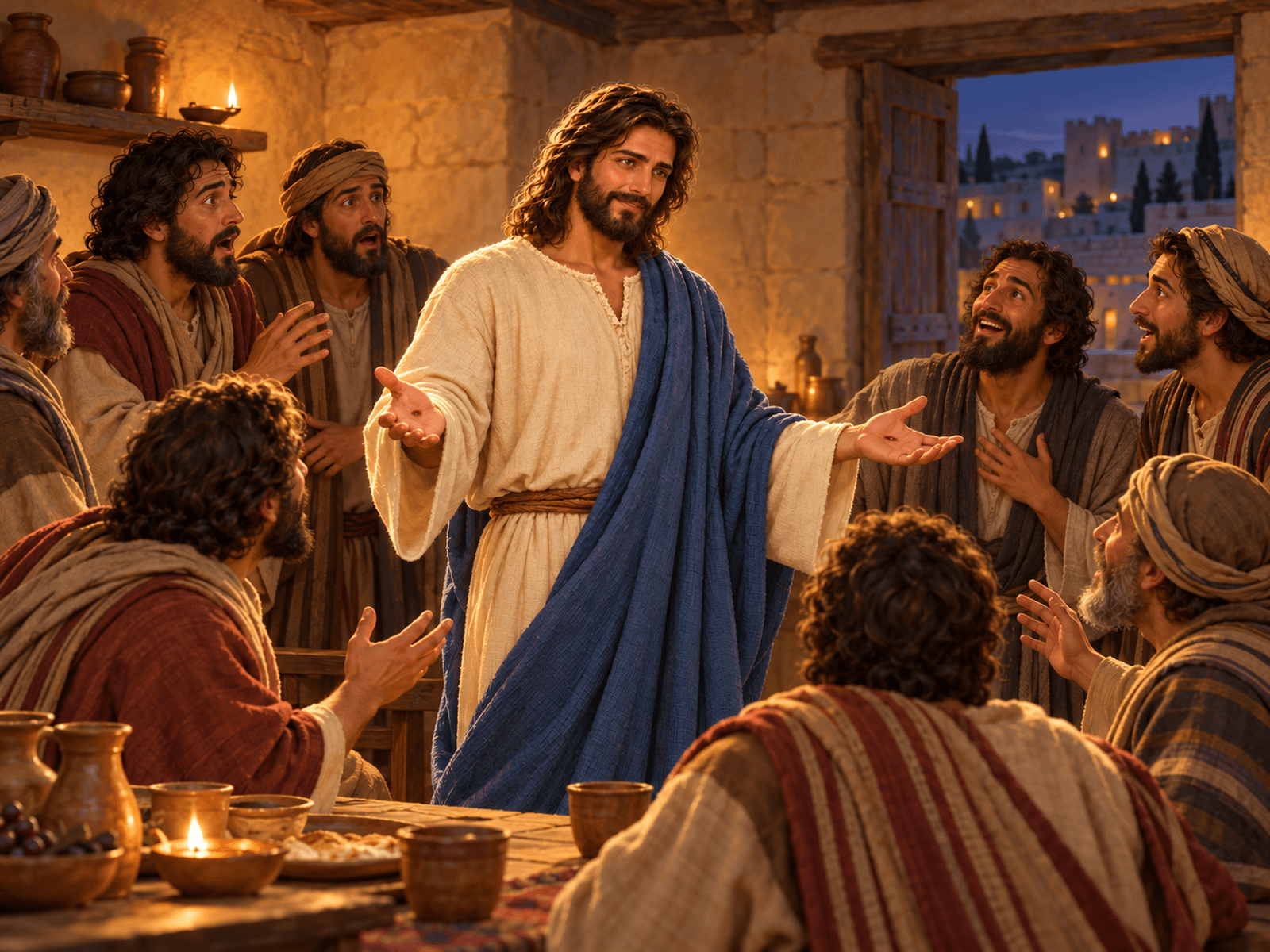
Illustrated scene from Jesus's story: Jesus Appears to His Disciples (Luke 24:36–49)
Meet the people of the Bible
Follow their lives in order, with illustrated scenes and Bible passages that tell their stories.
 Jesus

Photo: Photochrom print, Library of Congress Prints and Photographs Division (LCCN 2002725045). License: Public domain in the United States; Library of Congress states no known restrictions on publication. Source. Location: Nazareth, Israel; print preserved by the Library of Congress. Resized for the web.
Explore the places of the Bible
See where biblical events happened, why each place matters, and what archaeology helps us understand.
Nazareth
The small town in Galilee where Jesus grew up.
Get full access with one subscription
Explore the people and places of the Bible. Read summaries of every book, with images and clear explanations covering every chapter. Access all these features and our Bible study tools with one subscription.
See PlansAsk AI about Luke 24:39
Ask a question about this verse and get a clear answer, with Bible references you can read for yourself.
Every Bible book, explained chapter by chapter
Explore summaries of every book of the Bible, with images and easy-to-understand explanations covering every chapter.
Keep studying Luke 24:39
Related Bible verses
Key themes
Related topics
At a Glance — the Book of Luke
- Author
- Luke the physician
- Written
- Around AD 60-62
- Genre
- Gospel and history
- Original Audience
- Gentile Christians (addressed to Theophilus)
Frequently Asked Questions
Quick, clear answers about this verse
What does Luke 24:39 mean?
In Luke 24:39, Jesus is showing His disciples that He has truly risen from the dead in a physical body, not just as a spirit. He invites them to touch Him and see the marks of His crucifixion, emphasizing the reality of His resurrection.
What is the significance of Jesus inviting the disciples to touch Him in Luke 24:39?
Jesus' invitation to touch Him in Luke 24:39 serves to reassure the disciples of His physical resurrection. It addresses their doubts and confirms that He is not a ghost, but has truly conquered death in a tangible way.
What does 'a spirit doesn't have flesh and bones' mean in Luke 24:39?
The phrase 'a spirit doesn't have flesh and bones' in Luke 24:39 highlights the difference between a physical being and a spirit. Jesus is affirming that His resurrection is real and bodily, not merely a spiritual experience.
How does Luke 24:39 relate to the concept of faith?
Luke 24:39 illustrates the importance of physical evidence in faith. By allowing His disciples to see and touch Him, Jesus provides tangible proof of His resurrection, which strengthens their belief and understanding.
Daily Verse — straight to your inbox
A verse and a 2-sentence plain-English explanation, every morning. Free. Unsubscribe anytime.