New Testament
Luke 3:31
Read the Bible in clear, modern English—easy to understand, faithful to the meaning, and written for everyday readers.
the son of Melea, the son of Menan, the son of Mattatha, the son of Nathan, the son of David,
Compare translations
Which was the son of Melea, which was the son of Menan, which was the son of Mattatha, which was the son of Nathan, which was the son of David,
What Luke 3:31 means
Plain-English insight for readers
In this verse, Luke provides a genealogy of Jesus, tracing His lineage back to King David. This lineage is significant because it fulfills the Old Testament prophecies that the Messiah would come from David's line. The names listed, such as Melea, Menan, Mattatha, and Nathan, highlight the historical and familial connections that establish Jesus' rightful place in Jewish heritage. By emphasizing Jesus' descent from David, Luke underscores His identity as the promised Savior. This genealogy serves not only to authenticate Jesus' claim to the throne of David but also to connect Him to the broader narrative of God's covenant with Israel. Each name represents a link in the chain of God's plan for redemption, showing that Jesus is the culmination of centuries of expectation and prophecy.
How to apply Luke 3:31 to your life
Understanding Jesus' genealogy helps us appreciate the significance of His birth and mission. It reminds us that God works through history and families to fulfill His promises. We can trust that God is faithful to His word and plan in our lives as well.
Curated for this public verse page. Luke Summary
Explore more of the Bible
Learn the Bible through its people and places
Get to know the people in Scripture through illustrated stories, and explore the places where they lived and traveled.

Illustrated scene from John the Apostle's story: Mending Their Nets (Mark 1:19–20)
Meet the people of the Bible
Follow their lives in order, with illustrated scenes and Bible passages that tell their stories.
 John the Apostle
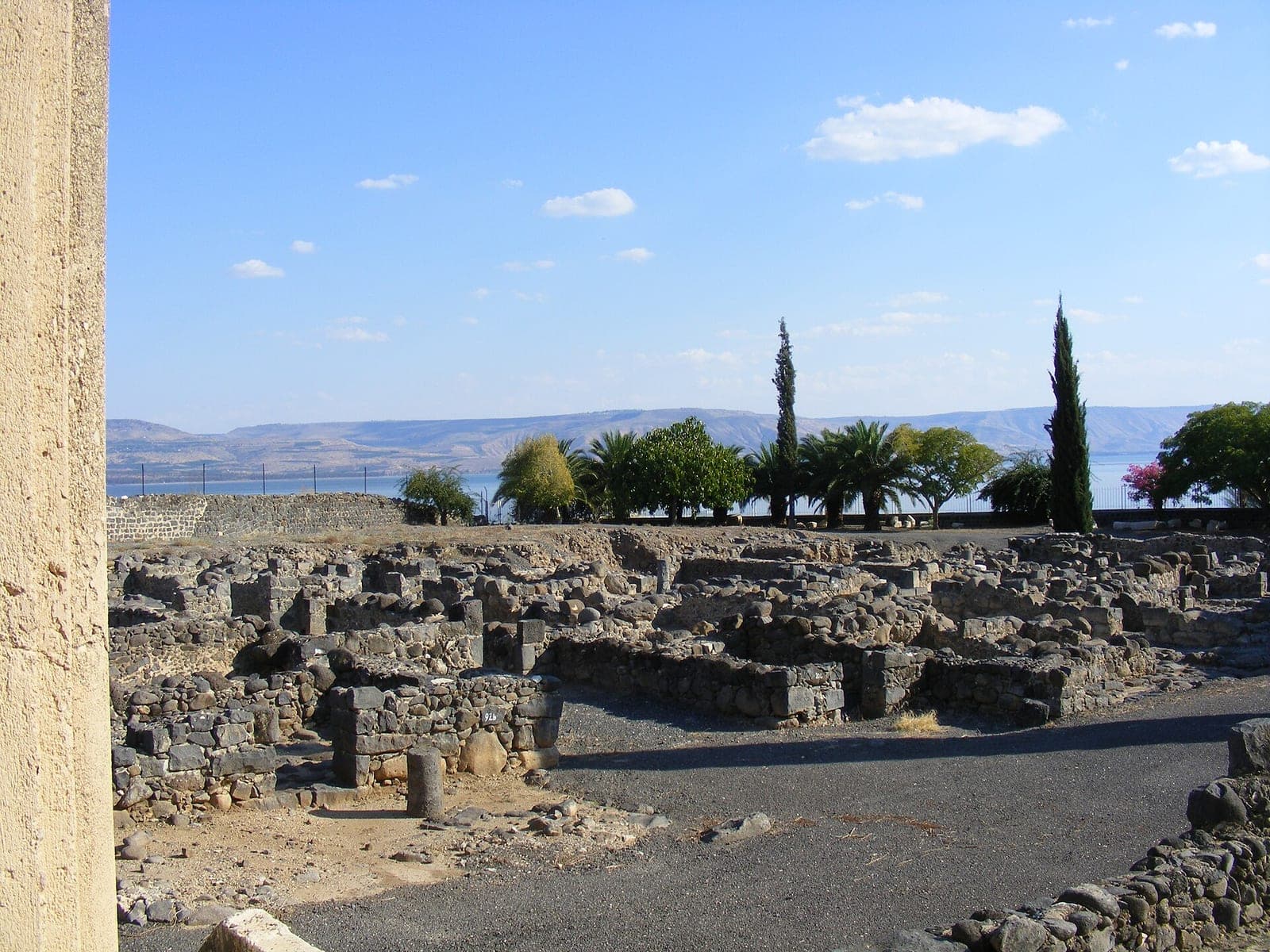
Photo: zeevveez, via Wikimedia Commons. License: CC BY 2.0. Source. Location: Capernaum, on the northern shore of the Sea of Galilee. Resized for the web.
Explore the places of the Bible
See where biblical events happened, why each place matters, and what archaeology helps us understand.
Capernaum
Jesus' home base by the Sea of Galilee, and the town where Peter lived.
Get full access with one subscription
Explore the people and places of the Bible. Read summaries of every book, with images and clear explanations covering every chapter. Access all these features and our Bible study tools with one subscription.
See PlansAsk AI about Luke 3:31
Ask a question about this verse and get a clear answer, with Bible references you can read for yourself.
Every Bible book, explained chapter by chapter
Explore summaries of every book of the Bible, with images and easy-to-understand explanations covering every chapter.
Keep studying Luke 3:31
Related topics
At a Glance — the Book of Luke
- Author
- Luke the physician
- Written
- Around AD 60-62
- Genre
- Gospel and history
- Original Audience
- Gentile Christians (addressed to Theophilus)
Frequently Asked Questions
Quick, clear answers about this verse
What does Luke 3:31 mean?
Luke 3:31 lists part of Jesus' genealogy, tracing His lineage back to King David. This connection is important as it fulfills the prophecy that the Messiah would come from David's line.
What is the significance of David in Luke 3:31?
David is significant in Luke 3:31 because he is the ancestor of Jesus, establishing Jesus' rightful claim to the throne and fulfilling Old Testament prophecies about the Messiah.
Who are the names mentioned in Luke 3:31?
The names mentioned in Luke 3:31 include Melea, Menan, Mattatha, and Nathan, which are part of the lineage that connects Jesus to King David, highlighting His historical and familial roots.
What is the purpose of the genealogy in Luke 3:31?
The genealogy in Luke 3:31 serves to authenticate Jesus' identity as the Messiah by linking Him to David, emphasizing the fulfillment of God's promises throughout history.
Daily Verse — straight to your inbox
A verse and a 2-sentence plain-English explanation, every morning. Free. Unsubscribe anytime.