New Testament
Matthew 14:20
Read the Bible in clear, modern English—easy to understand, faithful to the meaning, and written for everyday readers.
Everyone ate until they were full, and when they collected the leftovers, there were 12 baskets full of broken pieces.
Compare translations
And they did all eat, and were filled: and they took up of the fragments that remained twelve baskets full.
What Matthew 14:20 means
Plain-English insight for readers
In this verse, we see the miraculous feeding of the 5,000, where Jesus provided enough food for everyone present. After everyone had eaten and was satisfied, the disciples collected the leftover pieces, which filled 12 baskets. This shows not only Jesus' ability to perform miracles but also His concern for abundance and waste. The number of baskets signifies that there was more than enough to meet the needs of the crowd, emphasizing God's provision. The act of gathering leftovers also teaches us about stewardship and the importance of not wasting resources. This miracle illustrates that with faith, even a small amount can be multiplied to meet great needs, highlighting the power of Jesus and His compassion for people. It serves as a reminder that God can provide for us in ways we might not expect, and that we should trust in His ability to meet our needs.
How to apply Matthew 14:20 to your life
This verse encourages us to trust in God's provision, especially in times of need. It reminds us that even small offerings can be multiplied for great purposes. We should also practice good stewardship by not wasting resources and being grateful for what we have.
Curated for this public verse page. Matthew Summary
Learn the Bible through its people and places
Get to know the people in Scripture through illustrated stories, and explore the places where they lived and traveled.
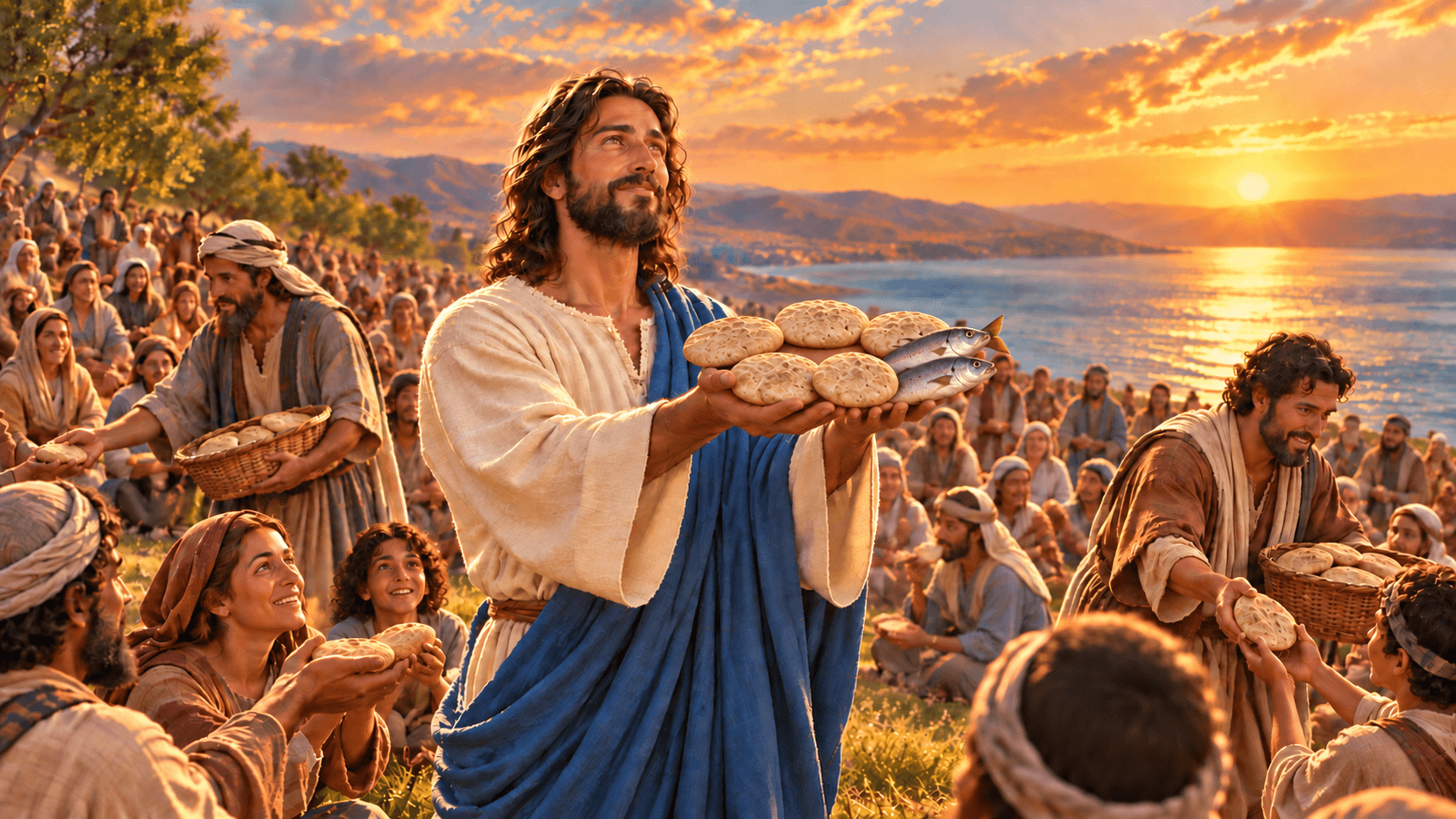
Illustrated scene from Jesus's story: Feeding the Five Thousand (Matthew 14:13–21)
Meet the people of the Bible
Follow their lives in order, with illustrated scenes and Bible passages that tell their stories.
 Jesus

Photo: Photochrom print, Library of Congress Prints and Photographs Division (LCCN 2002725045). License: Public domain in the United States; Library of Congress states no known restrictions on publication. Source. Location: Nazareth, Israel; print preserved by the Library of Congress. Resized for the web.
Explore the places of the Bible
See where biblical events happened, why each place matters, and what archaeology helps us understand.
Nazareth
The small town in Galilee where Jesus grew up.
Get full access with one subscription
Explore the people and places of the Bible. Read summaries of every book, with images and clear explanations covering every chapter. Access all these features and our Bible study tools with one subscription.
See PlansAsk AI about Matthew 14:20
Ask a question about this verse and get a clear answer, with Bible references you can read for yourself.
Every Bible book, explained chapter by chapter
Explore summaries of every book of the Bible, with images and easy-to-understand explanations covering every chapter.
Keep studying Matthew 14:20
Related Bible verses
Key themes
At a Glance — the Book of Matthew
- Author
- Matthew the apostle
- Written
- Around AD 60-70
- Genre
- Gospel
- Original Audience
- Jewish Christians
Frequently Asked Questions
Quick, clear answers about this verse
What does Matthew 14:20 mean?
Matthew 14:20 describes the miracle where Jesus fed 5,000 people with five loaves and two fish. After everyone ate and was satisfied, the disciples collected 12 baskets of leftovers, illustrating Jesus' ability to provide abundantly.
What is the significance of the 12 baskets in Matthew 14:20?
The 12 baskets of leftovers in Matthew 14:20 symbolize God's abundant provision and care. It shows that not only did Jesus meet the immediate needs of the crowd, but there was also an excess, emphasizing the importance of stewardship.
How does Matthew 14:20 relate to faith?
Matthew 14:20 illustrates that with faith, even a small amount can be multiplied to meet great needs. It encourages believers to trust in God's ability to provide, even in seemingly impossible situations.
What lessons can we learn from Matthew 14:20?
From Matthew 14:20, we learn about trusting in God's provision, the importance of stewardship, and that even small offerings can lead to significant outcomes. It encourages gratitude for what we have and reminds us of God's care.
Daily Verse — straight to your inbox
A verse and a 2-sentence plain-English explanation, every morning. Free. Unsubscribe anytime.