New Testament
Matthew 21:27
Read the Bible in clear, modern English—easy to understand, faithful to the meaning, and written for everyday readers.
So they answered Jesus, "We don't know." He replied, "Then I'm not going to tell you by what authority I do these things either.
Compare translations
And they answered Jesus, and said, We cannot tell. And he said unto them, Neither tell I you by what authority I do these things.
What Matthew 21:27 means
Plain-English insight for readers
In this passage, Jesus is confronted by religious leaders who question His authority to teach and perform miracles. When they refuse to answer His question about the source of John the Baptist's authority, Jesus decides not to reveal His own authority either. This exchange highlights the leaders' unwillingness to acknowledge the truth and their fear of the people's reaction. By not answering, Jesus demonstrates that He will not engage with those who are insincere or evasive. The leaders' inability to provide a straightforward answer reflects their lack of understanding and commitment to God's message. This moment serves as a reminder that true authority comes from God, and those who seek to undermine it often find themselves trapped in their own contradictions. Jesus' response also emphasizes the importance of honesty and integrity in spiritual matters, as well as the consequences of rejecting divine truth.
How to apply Matthew 21:27 to your life
This passage encourages us to seek truth sincerely and to be honest in our spiritual inquiries. It reminds us that avoiding difficult questions can lead to spiritual stagnation. We should strive to understand and acknowledge God's authority in our lives, rather than shying away from it.
Curated for this public verse page. Matthew Summary
Explore more of the Bible
Learn the Bible through its people and places
Get to know the people in Scripture through illustrated stories, and explore the places where they lived and traveled.
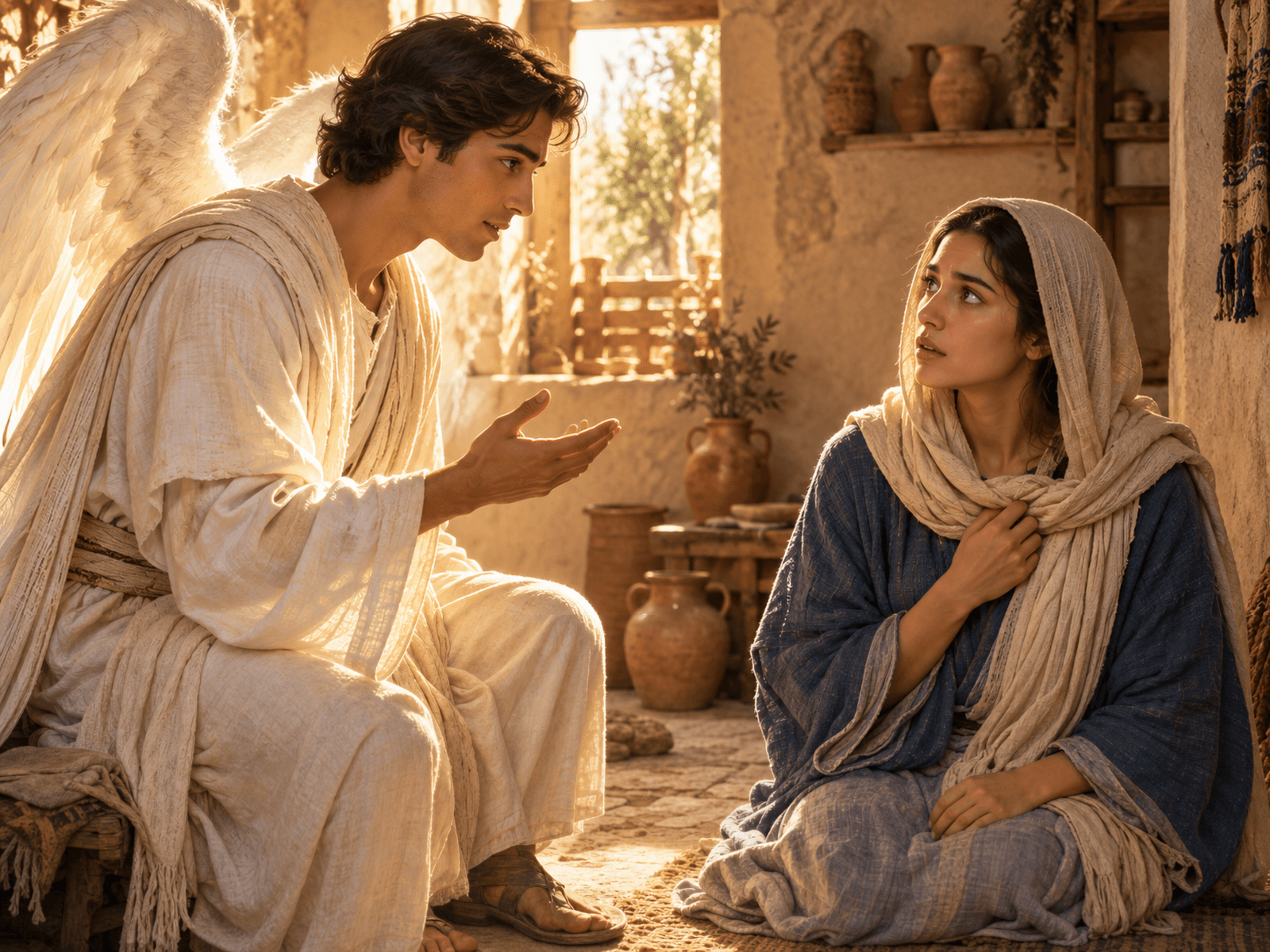
Illustrated scene from Jesus's story: An Angel Visits Mary (Luke 1:26–38)
Meet the people of the Bible
Follow their lives in order, with illustrated scenes and Bible passages that tell their stories.
 Jesus

Photo: Gary Todd (Gary Lee Todd, Ph.D.), via Wikimedia Commons. License: CC0 1.0 Universal Public Domain Dedication. Source. Location: Southern end of the Temple Mount, Jerusalem Old City. Resized for the web.
Explore the places of the Bible
See where biblical events happened, why each place matters, and what archaeology helps us understand.
Jerusalem
David's capital, the city of the temple, and the place where Jesus died and rose again.
Get full access with one subscription
Explore the people and places of the Bible. Read summaries of every book, with images and clear explanations covering every chapter. Access all these features and our Bible study tools with one subscription.
See PlansAsk AI about Matthew 21:27
Ask a question about this verse and get a clear answer, with Bible references you can read for yourself.
Every Bible book, explained chapter by chapter
Explore summaries of every book of the Bible, with images and easy-to-understand explanations covering every chapter.
Keep studying Matthew 21:27
Related Bible verses
Key themes
Related topics
At a Glance — the Book of Matthew
- Author
- Matthew the apostle
- Written
- Around AD 60-70
- Genre
- Gospel
- Original Audience
- Jewish Christians
Frequently Asked Questions
Quick, clear answers about this verse
What does Matthew 21:27 teach about authority?
Matthew 21:27 illustrates the challenge of recognizing true authority. Jesus, confronted by religious leaders, highlights their refusal to acknowledge the source of John the Baptist's authority, which reflects their own spiritual blindness. By not revealing His authority, Jesus emphasizes that genuine authority comes from God and that those who evade the truth often find themselves trapped in their own contradictions.
Why did Jesus refuse to answer the religious leaders?
Jesus refused to answer the religious leaders because they were insincere and evasive in their questioning. When they could not provide a straightforward answer about John the Baptist's authority, Jesus chose not to reveal His own authority. This response underscores the importance of honesty and integrity in spiritual matters, as well as the consequences of rejecting divine truth.
What can we learn from the exchange between Jesus and the leaders?
The exchange between Jesus and the religious leaders teaches us the importance of seeking truth sincerely. It reminds us that avoiding difficult questions can lead to spiritual stagnation. We should strive to understand and acknowledge God's authority in our lives, rather than shying away from it, as this can deepen our faith and commitment to His message.
How does this verse relate to spiritual honesty?
Matthew 21:27 emphasizes the significance of spiritual honesty. The religious leaders' inability to answer Jesus reflects their lack of commitment to God's truth. Jesus' refusal to engage with their insincerity serves as a reminder that true spiritual growth requires honesty in our inquiries and a willingness to confront difficult truths about our faith.
Daily Verse — straight to your inbox
A verse and a 2-sentence plain-English explanation, every morning. Free. Unsubscribe anytime.