New Testament
Matthew 21:5
Read the Bible in clear, modern English—easy to understand, faithful to the meaning, and written for everyday readers.
"Tell the daughter of Zion: Look, your King is coming to you, humble and riding on a donkey — on a colt, the foal of a donkey."
Compare translations
Tell ye the daughter of Sion, Behold, thy King cometh unto thee, meek, and sitting upon an ass, and a colt the foal of an ass.
What Matthew 21:5 means
Plain-English insight for readers
In this verse, the prophet is conveying a message about the arrival of a significant figure, referred to as the King, who is coming to the people of Zion, a symbol for Jerusalem and the Jewish people. The King is described as humble, which contrasts with the expectations of a powerful ruler. Instead of riding a majestic horse, he rides on a donkey, specifically a young donkey, which signifies peace rather than war. This imagery fulfills an Old Testament prophecy, highlighting the nature of Jesus' mission as one of humility and service. The mention of the 'daughter of Zion' emphasizes the personal connection to the people, indicating that this King is coming for them. This moment marks the beginning of a pivotal event in the New Testament, where Jesus enters Jerusalem, setting the stage for his eventual sacrifice. The humble approach of the King invites reflection on the nature of true leadership and the values of the Kingdom of God.
How to apply Matthew 21:5 to your life
This verse encourages us to embrace humility in our own lives. It reminds us that true leadership is not about power or dominance but about serving others with love and compassion. We can reflect on how we can be humble in our daily interactions.
Curated for this public verse page. Matthew Summary
Learn the Bible through its people and places
Get to know the people in Scripture through illustrated stories, and explore the places where they lived and traveled.
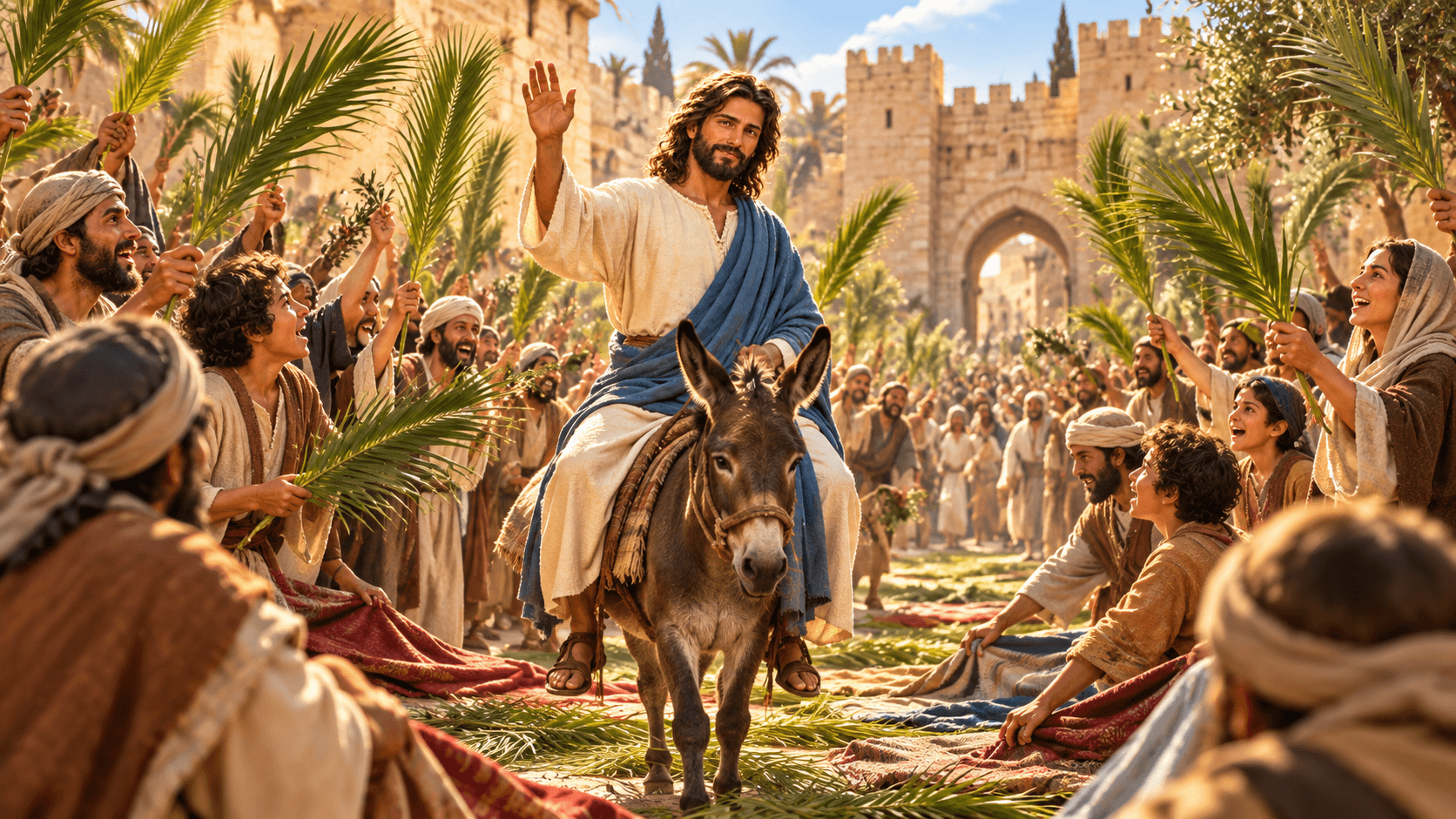
Illustrated scene from Jesus's story: The Triumphal Entry (Matthew 21:1–11)
Meet the people of the Bible
Follow their lives in order, with illustrated scenes and Bible passages that tell their stories.
 Jesus

Photo: Gary Todd (Gary Lee Todd, Ph.D.), via Wikimedia Commons. License: CC0 1.0 Universal Public Domain Dedication. Source. Location: Southern end of the Temple Mount, Jerusalem Old City. Resized for the web.
Explore the places of the Bible
See where biblical events happened, why each place matters, and what archaeology helps us understand.
Jerusalem
David's capital, the city of the temple, and the place where Jesus died and rose again.
Get full access with one subscription
Explore the people and places of the Bible. Read summaries of every book, with images and clear explanations covering every chapter. Access all these features and our Bible study tools with one subscription.
See PlansAsk AI about Matthew 21:5
Ask a question about this verse and get a clear answer, with Bible references you can read for yourself.
Every Bible book, explained chapter by chapter
Explore summaries of every book of the Bible, with images and easy-to-understand explanations covering every chapter.
Keep studying Matthew 21:5
Related Bible verses
At a Glance — the Book of Matthew
- Author
- Matthew the apostle
- Written
- Around AD 60-70
- Genre
- Gospel
- Original Audience
- Jewish Christians
Frequently Asked Questions
Quick, clear answers about this verse
What does Matthew 21:5 mean by 'daughter of Zion'?
The term 'daughter of Zion' refers to the people of Jerusalem and, more broadly, the Jewish community. It symbolizes a personal and intimate connection between the King and His people, indicating that His arrival is meant for them specifically. This phrase emphasizes the significance of the King’s coming as a fulfillment of prophecy and a moment of hope for the people.
Why is Jesus described as riding a donkey in this verse?
Jesus riding a donkey signifies humility and peace, contrasting with the traditional image of a conquering king who would ride a horse into battle. This choice reflects His mission of bringing salvation and reconciliation rather than military power. The donkey, particularly a young one, symbolizes gentleness and serves as a fulfillment of Old Testament prophecy regarding the Messiah's humble nature.
How does Matthew 21:5 fulfill Old Testament prophecy?
Matthew 21:5 fulfills the prophecy found in Zechariah 9:9, which foretells the arrival of a king who is righteous and humble, riding on a donkey. This connection highlights Jesus as the promised Messiah, emphasizing His role in God's plan for redemption and the establishment of His Kingdom. The fulfillment of this prophecy underscores the significance of Jesus' entry into Jerusalem.
What can we learn about leadership from Matthew 21:5?
Matthew 21:5 teaches us that true leadership is characterized by humility and service rather than power and dominance. Jesus' choice to enter Jerusalem on a donkey illustrates that effective leaders prioritize the well-being of others and approach their roles with compassion. This challenges us to reflect on our own leadership styles and how we can embody these values in our daily lives.
Daily Verse — straight to your inbox
A verse and a 2-sentence plain-English explanation, every morning. Free. Unsubscribe anytime.