New Testament
Matthew 24:15
Read the Bible in clear, modern English—easy to understand, faithful to the meaning, and written for everyday readers.
So when you see the abomination of desolation that the prophet Daniel spoke about, standing in the holy place — let the reader understand —
Compare translations
When ye therefore shall see the abomination of desolation, spoken of by Daniel the prophet, stand in the holy place, (whoso readeth, let him understand:)
What Matthew 24:15 means
Plain-English insight for readers
In this verse, Jesus refers to a significant prophecy from the Old Testament, specifically from the book of Daniel. The 'abomination of desolation' symbolizes a moment of great desecration and turmoil, particularly in the context of the Jewish temple. Jesus warns His followers that when they witness this event, it will signal a time of great distress and upheaval. The phrase 'let the reader understand' emphasizes the importance of recognizing the significance of this prophecy and its implications for the future. This warning serves as a call to vigilance and preparedness for the challenges that lie ahead, urging believers to be aware of the signs of the times and to respond accordingly. The mention of the 'holy place' indicates that this event will occur in a sacred space, heightening its seriousness and the urgency of the message.
How to apply Matthew 24:15 to your life
This verse encourages believers to stay alert and informed about spiritual matters and prophetic signs. It reminds us to be discerning about the events around us and to prepare our hearts for challenges. Understanding biblical prophecies can strengthen our faith and guide our actions in uncertain times.
Curated for this public verse page. Matthew Summary
Learn the Bible through its people and places
Get to know the people in Scripture through illustrated stories, and explore the places where they lived and traveled.
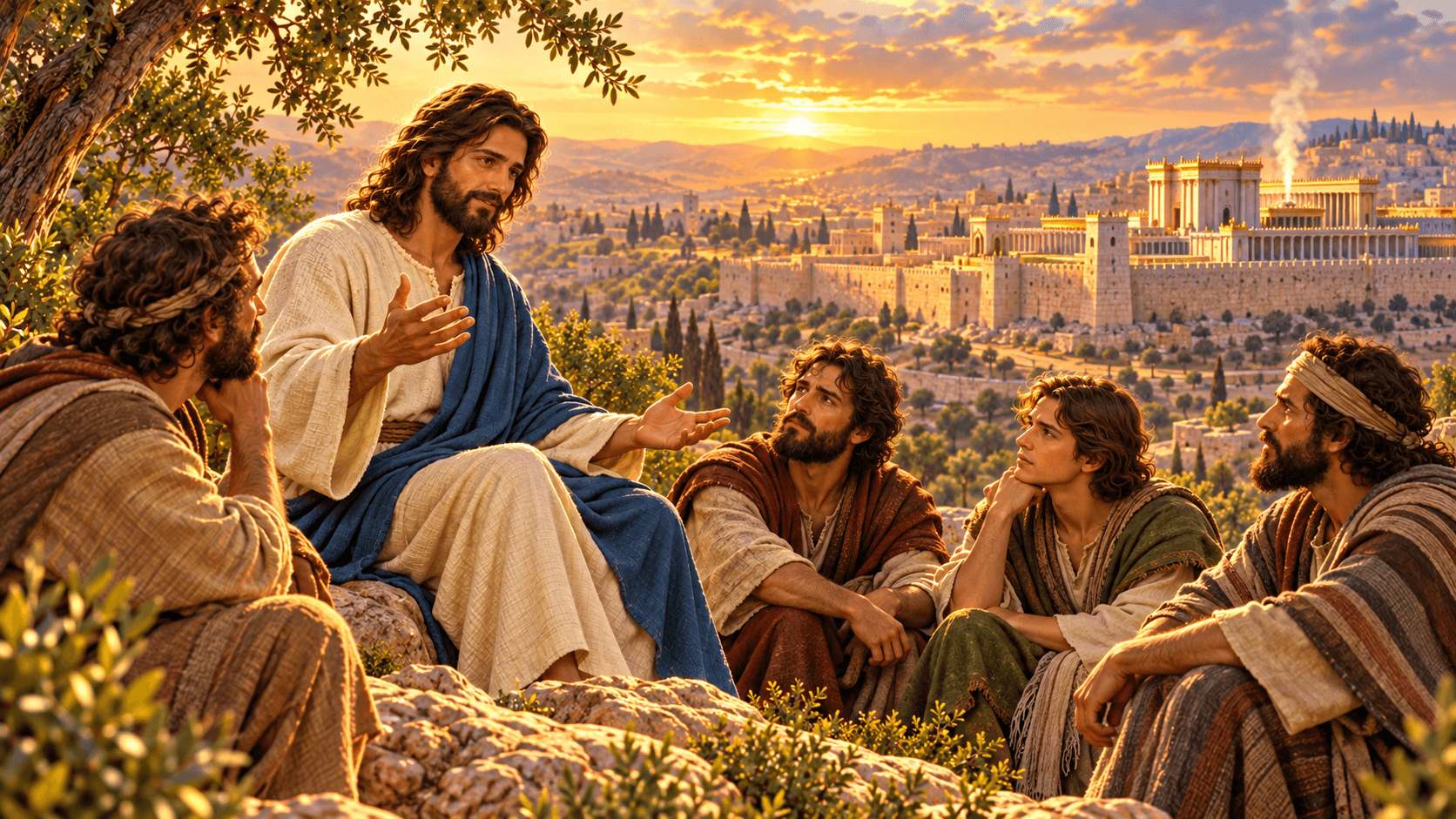
Illustrated scene from Jesus's story: Teaching on the Mount of Olives (Matthew 24:1–25:46)
Meet the people of the Bible
Follow their lives in order, with illustrated scenes and Bible passages that tell their stories.
 Jesus

Photo: zeevveez, via Wikimedia Commons. License: CC BY 2.0. Source. Location: Capernaum, on the northern shore of the Sea of Galilee. Resized for the web.
Explore the places of the Bible
See where biblical events happened, why each place matters, and what archaeology helps us understand.
Capernaum
Jesus' home base by the Sea of Galilee, and the town where Peter lived.
Get full access with one subscription
Explore the people and places of the Bible. Read summaries of every book, with images and clear explanations covering every chapter. Access all these features and our Bible study tools with one subscription.
See PlansAsk AI about Matthew 24:15
Ask a question about this verse and get a clear answer, with Bible references you can read for yourself.
Every Bible book, explained chapter by chapter
Explore summaries of every book of the Bible, with images and easy-to-understand explanations covering every chapter.
Keep studying Matthew 24:15
Related Bible verses
Related topics
At a Glance — the Book of Matthew
- Author
- Matthew the apostle
- Written
- Around AD 60-70
- Genre
- Gospel
- Original Audience
- Jewish Christians
Frequently Asked Questions
Quick, clear answers about this verse
What does Matthew 24:15 mean?
Matthew 24:15 refers to a prophecy from the book of Daniel about a significant event called the 'abomination of desolation.' This event signifies a time of great desecration in the holy place, warning believers to be vigilant and prepared for upcoming challenges.
What is the abomination of desolation in Matthew 24:15?
The 'abomination of desolation' mentioned in Matthew 24:15 symbolizes a moment of severe desecration, particularly related to the Jewish temple. It indicates a time of turmoil and distress, urging believers to recognize its significance and prepare for what lies ahead.
What does 'let the reader understand' mean in Matthew 24:15?
The phrase 'let the reader understand' in Matthew 24:15 emphasizes the importance of recognizing the significance of the prophecy. It serves as a call for believers to be aware of the signs and implications of the events described.
What is the context of Matthew 24:15?
Matthew 24:15 is part of Jesus' teachings about the end times, where He warns His followers about future tribulations. The verse specifically highlights a prophetic warning about a significant event that will occur in a sacred space, indicating the seriousness of the situation.
Daily Verse — straight to your inbox
A verse and a 2-sentence plain-English explanation, every morning. Free. Unsubscribe anytime.