New Testament
Matthew 24:49
Read the Bible in clear, modern English—easy to understand, faithful to the meaning, and written for everyday readers.
Then he starts beating the other servants and eating and drinking with drunkards.
Compare translations
And shall begin to smite his fellowservants, and to eat and drink with the drunken;
What Matthew 24:49 means
Plain-English insight for readers
In this verse, Jesus describes a servant who, after being given authority, becomes abusive and irresponsible. Instead of fulfilling his duties, he mistreats his fellow servants and indulges in excessive drinking and partying. This behavior reflects a lack of respect for his responsibilities and a disregard for the well-being of others. The verse serves as a warning about the dangers of complacency and moral decay, especially for those in positions of leadership. It highlights the consequences of neglecting one's duties and the importance of remaining vigilant and faithful in service. The servant's actions lead to a breakdown of order and trust among the servants, illustrating how one person's poor choices can affect the entire community. This passage encourages readers to reflect on their own responsibilities and the impact of their actions on others.
How to apply Matthew 24:49 to your life
This verse reminds us to take our responsibilities seriously, especially in leadership roles. We should avoid complacency and ensure our actions reflect integrity and care for others. Regular self-reflection can help us stay accountable and maintain healthy relationships within our communities.
Curated for this public verse page. Matthew Summary
Learn the Bible through its people and places
Get to know the people in Scripture through illustrated stories, and explore the places where they lived and traveled.
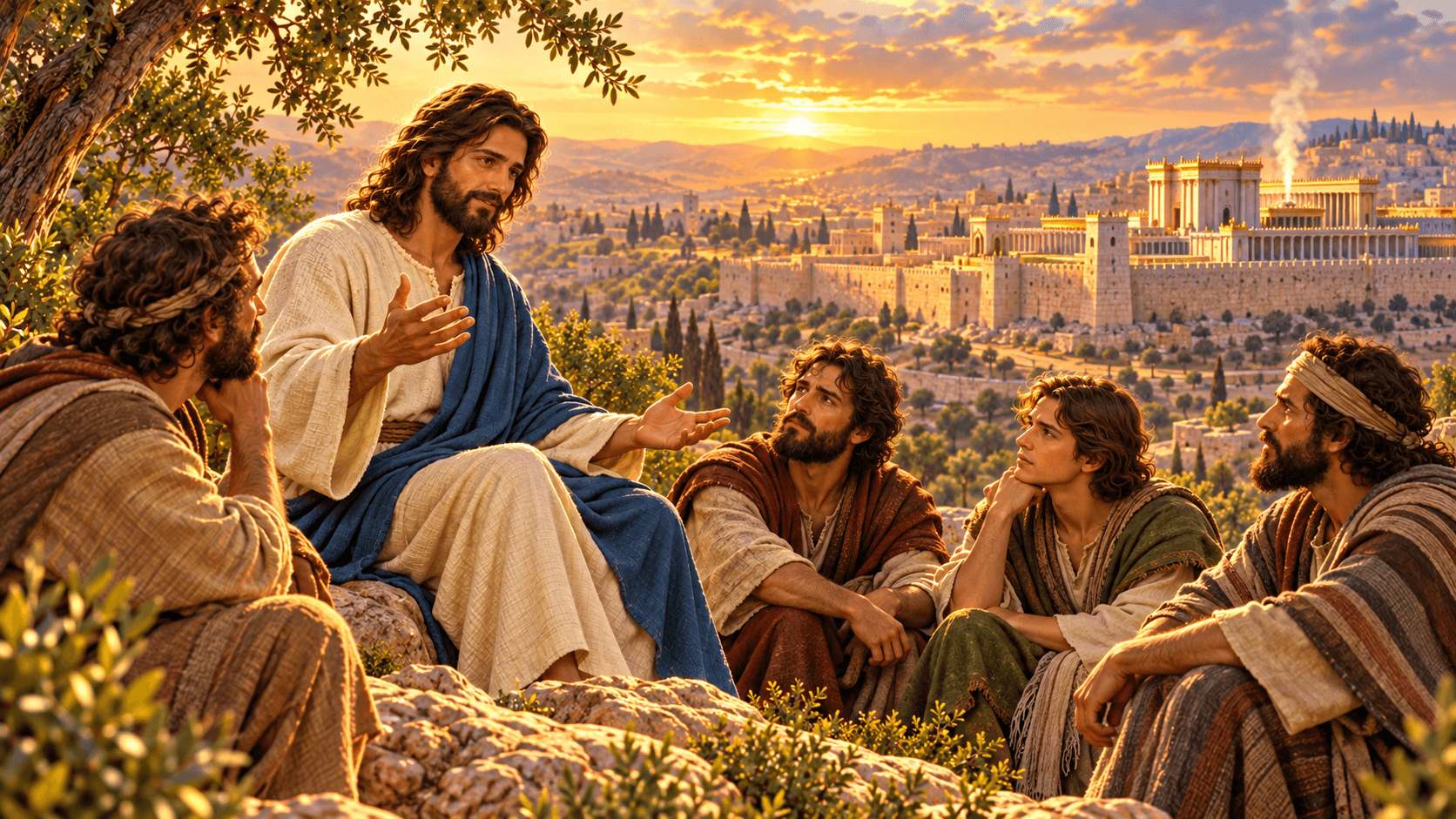
Illustrated scene from Jesus's story: Teaching on the Mount of Olives (Matthew 24:1–25:46)
Meet the people of the Bible
Follow their lives in order, with illustrated scenes and Bible passages that tell their stories.
 Jesus

Photo: zeevveez, via Wikimedia Commons. License: CC BY 2.0. Source. Location: Capernaum, on the northern shore of the Sea of Galilee. Resized for the web.
Explore the places of the Bible
See where biblical events happened, why each place matters, and what archaeology helps us understand.
Capernaum
Jesus' home base by the Sea of Galilee, and the town where Peter lived.
Get full access with one subscription
Explore the people and places of the Bible. Read summaries of every book, with images and clear explanations covering every chapter. Access all these features and our Bible study tools with one subscription.
See PlansAsk AI about Matthew 24:49
Ask a question about this verse and get a clear answer, with Bible references you can read for yourself.
Every Bible book, explained chapter by chapter
Explore summaries of every book of the Bible, with images and easy-to-understand explanations covering every chapter.
Keep studying Matthew 24:49
Related Bible verses
Key themes
Related topics
At a Glance — the Book of Matthew
- Author
- Matthew the apostle
- Written
- Around AD 60-70
- Genre
- Gospel
- Original Audience
- Jewish Christians
Frequently Asked Questions
Quick, clear answers about this verse
What does Matthew 24:49 mean?
Matthew 24:49 describes a servant who, after being entrusted with authority, becomes abusive and irresponsible. Instead of fulfilling his duties, he mistreats others and indulges in excessive drinking, highlighting the dangers of neglecting responsibilities.
What is the meaning of 'beating the other servants' in Matthew 24:49?
In Matthew 24:49, 'beating the other servants' symbolizes the abuse of power and authority. It illustrates how a leader's failure to act responsibly can lead to harm and discord within a community.
How does Matthew 24:49 relate to leadership?
Matthew 24:49 serves as a cautionary tale for leaders, showing that abusing power and neglecting responsibilities can lead to chaos and harm in a community.
What lessons can we learn from Matthew 24:49?
From Matthew 24:49, we learn the importance of accountability and integrity in our actions. It encourages us to reflect on our responsibilities and the potential consequences of our choices on others.
Daily Verse — straight to your inbox
A verse and a 2-sentence plain-English explanation, every morning. Free. Unsubscribe anytime.