New Testament
Matthew 27:12
Read the Bible in clear, modern English—easy to understand, faithful to the meaning, and written for everyday readers.
When the chief priests and elders brought their accusations against him, Jesus said nothing.
Compare translations
And when he was accused of the chief priests and elders, he answered nothing.
What Matthew 27:12 means
Plain-English insight for readers
In this verse, Jesus stands before the chief priests and elders who are accusing him of various wrongdoings. Despite the serious nature of the accusations, Jesus chooses to remain silent. This silence is significant; it shows his composure and control in a situation where he could have defended himself. By not responding, Jesus fulfills the prophecy of Isaiah 53:7, which speaks of the suffering servant who does not open his mouth in the face of his accusers. His silence also highlights the injustice of the trial, as he is innocent yet subjected to false accusations. This moment reflects Jesus' commitment to his mission and purpose, which ultimately leads to his crucifixion for the sake of humanity. His silence can be seen as a powerful statement about the nature of truth and justice, and it invites reflection on how we respond to accusations and challenges in our own lives.
How to apply Matthew 27:12 to your life
When faced with accusations or criticism, we can learn from Jesus' example of silence. Instead of reacting impulsively, we can take a moment to reflect and respond thoughtfully. This approach can help us maintain our integrity and composure, even in challenging situations.
Curated for this public verse page. Matthew Summary
Learn the Bible through its people and places
Get to know the people in Scripture through illustrated stories, and explore the places where they lived and traveled.
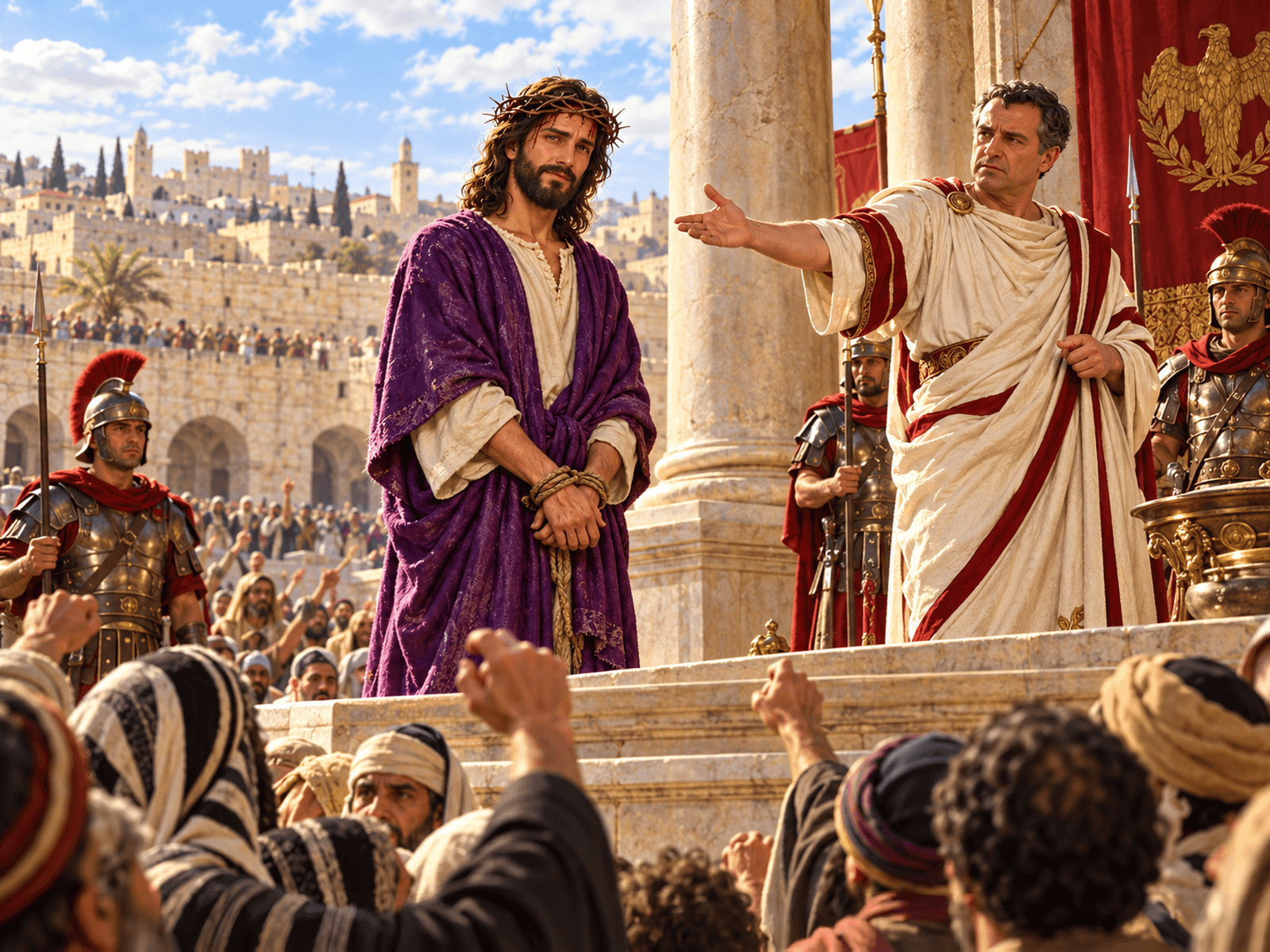
Illustrated scene from Jesus's story: On Trial Before Pilate (Matthew 27:11–31)
Meet the people of the Bible
Follow their lives in order, with illustrated scenes and Bible passages that tell their stories.
 Jesus

Photo: Photochrom print, Library of Congress Prints and Photographs Division (LCCN 2002725045). License: Public domain in the United States; Library of Congress states no known restrictions on publication. Source. Location: Nazareth, Israel; print preserved by the Library of Congress. Resized for the web.
Explore the places of the Bible
See where biblical events happened, why each place matters, and what archaeology helps us understand.
Nazareth
The small town in Galilee where Jesus grew up.
Get full access with one subscription
Explore the people and places of the Bible. Read summaries of every book, with images and clear explanations covering every chapter. Access all these features and our Bible study tools with one subscription.
See PlansAsk AI about Matthew 27:12
Ask a question about this verse and get a clear answer, with Bible references you can read for yourself.
Every Bible book, explained chapter by chapter
Explore summaries of every book of the Bible, with images and easy-to-understand explanations covering every chapter.
Keep studying Matthew 27:12
Related Bible verses
Key themes
At a Glance — the Book of Matthew
- Author
- Matthew the apostle
- Written
- Around AD 60-70
- Genre
- Gospel
- Original Audience
- Jewish Christians
Frequently Asked Questions
Quick, clear answers about this verse
What does Matthew 27:12 mean?
Matthew 27:12 describes a moment when Jesus remains silent in the face of accusations from the chief priests and elders. His silence signifies his composure and the fulfillment of prophecy, illustrating his innocence amidst false charges.
Why did Jesus remain silent in Matthew 27:12?
Jesus chose to remain silent to demonstrate control and to fulfill the prophecy of Isaiah 53:7, which speaks of a suffering servant who does not defend himself against accusations. This silence also highlights the injustice of the trial he faced.
What is the significance of silence in Matthew 27:12?
The silence of Jesus in Matthew 27:12 is significant as it reflects his strength and commitment to his mission. It serves as a powerful example of maintaining integrity in the face of false accusations and injustice.
How does Matthew 27:12 relate to the theme of injustice?
In Matthew 27:12, Jesus' silence amidst false accusations underscores the theme of injustice, as he is innocent yet subjected to wrongful charges. This moment emphasizes the unfairness of his trial and the broader implications of truth and justice.
Daily Verse — straight to your inbox
A verse and a 2-sentence plain-English explanation, every morning. Free. Unsubscribe anytime.