New Testament
Matthew 27:16
Read the Bible in clear, modern English—easy to understand, faithful to the meaning, and written for everyday readers.
At that time, they had a notorious prisoner named Barabbas.
Compare translations
And they had then a notable prisoner, called Barabbas.
What Matthew 27:16 means
Plain-English insight for readers
In Matthew 27:16, we learn about Barabbas, a prisoner known for his crimes. The term 'notorious' indicates that he was widely recognized for his wrongdoing, making him a significant figure in the narrative. This verse sets the stage for a pivotal moment in the trial of Jesus, where the crowd is given a choice between releasing Barabbas or Jesus. The choice highlights the contrasting paths of sin and righteousness, as Barabbas represents rebellion against authority while Jesus embodies obedience and sacrifice. The mention of Barabbas serves to emphasize the gravity of the decision the people faced, as they would choose to free a criminal over the innocent Son of God. This moment is crucial in understanding the events leading to the crucifixion, illustrating the theme of injustice and the fulfillment of prophecy regarding Jesus' suffering. Barabbas' presence in the story invites readers to reflect on the nature of sin and redemption, as well as the choices we make in our own lives.
How to apply Matthew 27:16 to your life
This verse encourages us to reflect on our choices and their consequences. Just as the crowd chose Barabbas over Jesus, we often face decisions that can lead us away from righteousness. We should strive to choose paths that align with our values and faith, seeking redemption and truth.
Curated for this public verse page. Matthew Summary
Learn the Bible through its people and places
Get to know the people in Scripture through illustrated stories, and explore the places where they lived and traveled.
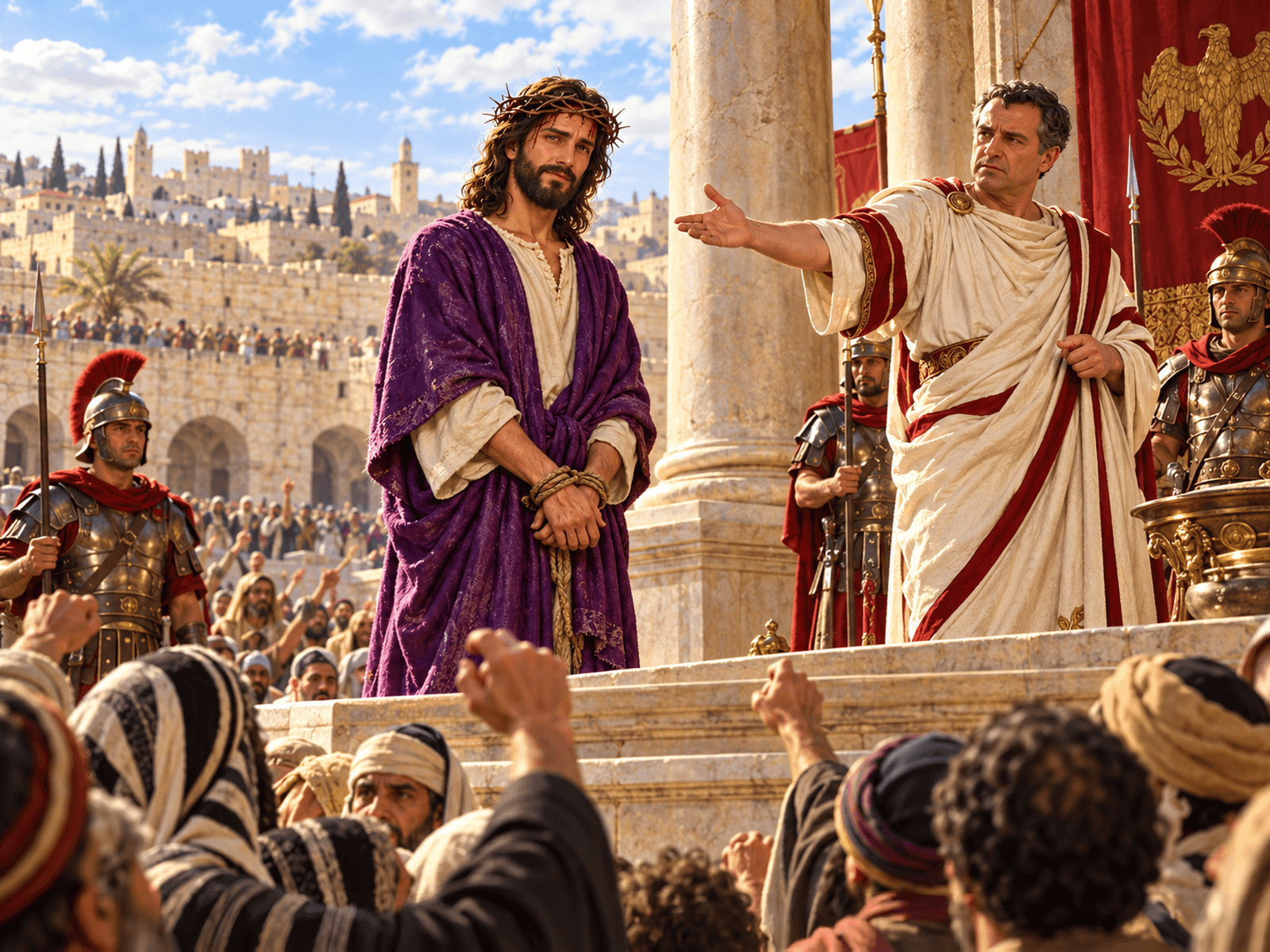
Illustrated scene from Jesus's story: On Trial Before Pilate (Matthew 27:11–31)
Meet the people of the Bible
Follow their lives in order, with illustrated scenes and Bible passages that tell their stories.
 Jesus

Photo: Photochrom print, Library of Congress Prints and Photographs Division (LCCN 2002725045). License: Public domain in the United States; Library of Congress states no known restrictions on publication. Source. Location: Nazareth, Israel; print preserved by the Library of Congress. Resized for the web.
Explore the places of the Bible
See where biblical events happened, why each place matters, and what archaeology helps us understand.
Nazareth
The small town in Galilee where Jesus grew up.
Get full access with one subscription
Explore the people and places of the Bible. Read summaries of every book, with images and clear explanations covering every chapter. Access all these features and our Bible study tools with one subscription.
See PlansAsk AI about Matthew 27:16
Ask a question about this verse and get a clear answer, with Bible references you can read for yourself.
Every Bible book, explained chapter by chapter
Explore summaries of every book of the Bible, with images and easy-to-understand explanations covering every chapter.
Keep studying Matthew 27:16
Related Bible verses
Key themes
Related topics
At a Glance — the Book of Matthew
- Author
- Matthew the apostle
- Written
- Around AD 60-70
- Genre
- Gospel
- Original Audience
- Jewish Christians
Frequently Asked Questions
Quick, clear answers about this verse
What does Matthew 27:16 mean?
Matthew 27:16 introduces Barabbas, a notorious prisoner known for his crimes. This verse highlights the choice the crowd faced between releasing a criminal or Jesus, emphasizing themes of injustice and the nature of sin.
Who is Barabbas in Matthew 27:16?
Barabbas is described as a notable prisoner in Matthew 27:16, recognized for his wrongdoing. His presence in the narrative serves to contrast with Jesus, who is innocent and represents righteousness.
What themes are present in Matthew 27:16?
Key themes in Matthew 27:16 include injustice, redemption, choice, sin, sacrifice, and prophecy. These themes are illustrated through the contrast between Barabbas and Jesus during the trial.
How does Matthew 27:16 relate to the trial of Jesus?
Matthew 27:16 sets the stage for a crucial moment in the trial of Jesus, where the crowd must choose between freeing Barabbas or condemning Jesus. This choice highlights the gravity of the situation and the nature of human decision-making.
Daily Verse — straight to your inbox
A verse and a 2-sentence plain-English explanation, every morning. Free. Unsubscribe anytime.