New Testament
Matthew 5:45
Read the Bible in clear, modern English—easy to understand, faithful to the meaning, and written for everyday readers.
Then you will truly be children of your Father in heaven. He makes his sun rise on the evil and the good alike, and sends rain on both the righteous and the unrighteous.
Compare translations
That ye may be the children of your Father which is in heaven: for he maketh his sun to rise on the evil and on the good, and sendeth rain on the just and on the unjust.
What Matthew 5:45 means
Plain-English insight for readers
In this verse, Jesus teaches that God shows kindness and generosity to everyone, regardless of their moral standing. The sun rising and rain falling are symbols of God's blessings that are given freely to both good and evil people. This illustrates that God's love is unconditional and not based on our actions. By loving and treating others well, even those who may not deserve it, we reflect the character of our heavenly Father. This call to love our enemies and be kind to all is a central theme in Jesus' teachings, emphasizing that true children of God act in love and mercy, mirroring God's own nature. It challenges us to rise above societal norms of retribution and to embrace a higher standard of love that includes everyone, regardless of their behavior.
How to apply Matthew 5:45 to your life
To embody the teachings of this verse, we should strive to show kindness to everyone, including those who may not treat us well. This can be as simple as offering a smile, helping someone in need, or forgiving those who have wronged us. By doing so, we reflect God's love in our daily lives.
Curated for this public verse page. Matthew Summary
Learn the Bible through its people and places
Get to know the people in Scripture through illustrated stories, and explore the places where they lived and traveled.
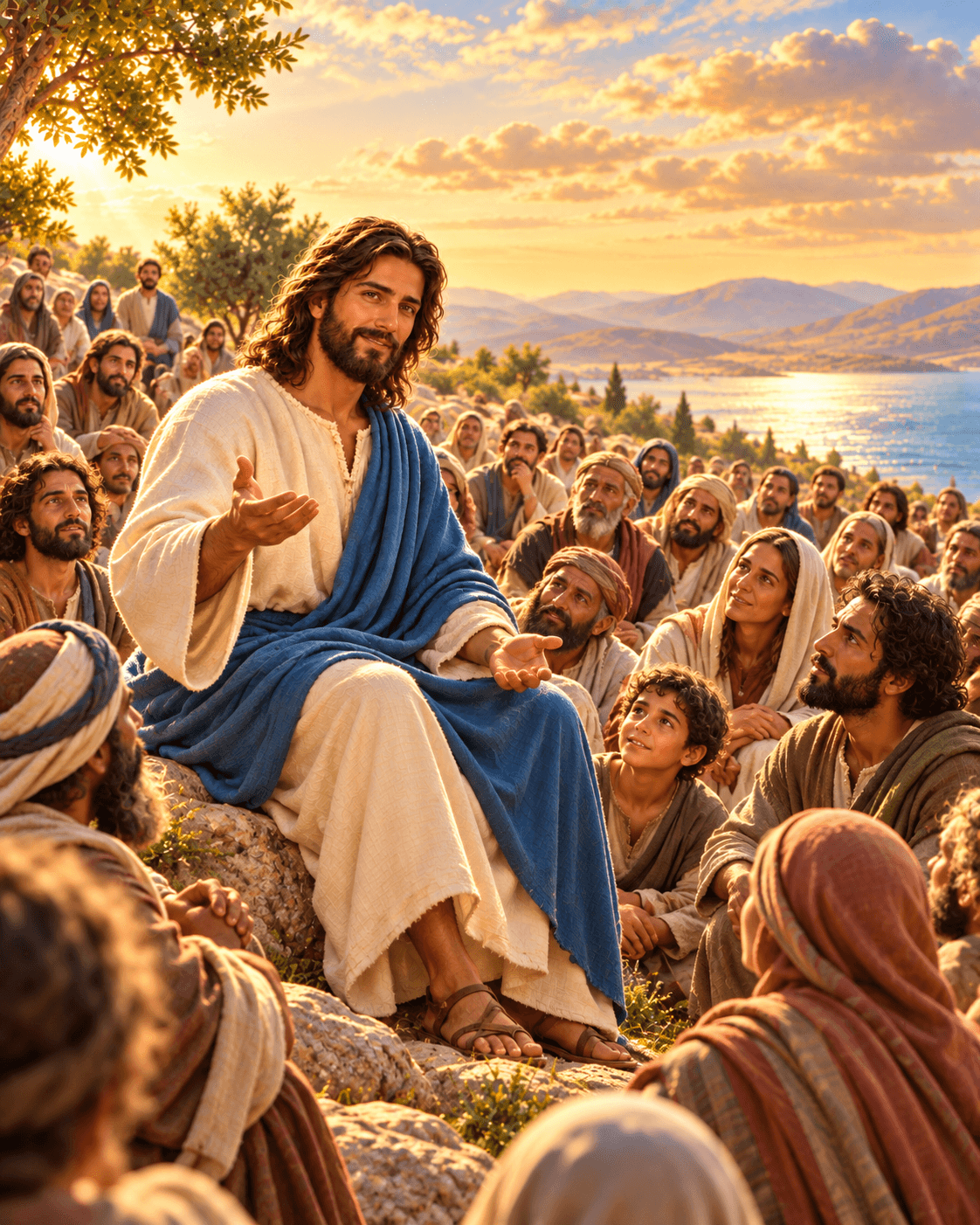
Illustrated scene from Jesus's story: The Sermon on the Mount (Matthew 5:1–7:29)
Meet the people of the Bible
Follow their lives in order, with illustrated scenes and Bible passages that tell their stories.
 Jesus

Photo: Photochrom print, Library of Congress Prints and Photographs Division (LCCN 2002725045). License: Public domain in the United States; Library of Congress states no known restrictions on publication. Source. Location: Nazareth, Israel; print preserved by the Library of Congress. Resized for the web.
Explore the places of the Bible
See where biblical events happened, why each place matters, and what archaeology helps us understand.
Nazareth
The small town in Galilee where Jesus grew up.
Get full access with one subscription
Explore the people and places of the Bible. Read summaries of every book, with images and clear explanations covering every chapter. Access all these features and our Bible study tools with one subscription.
See PlansAsk AI about Matthew 5:45
Ask a question about this verse and get a clear answer, with Bible references you can read for yourself.
Every Bible book, explained chapter by chapter
Explore summaries of every book of the Bible, with images and easy-to-understand explanations covering every chapter.
Keep studying Matthew 5:45
Related Bible verses
Key themes
Related topics
At a Glance — the Book of Matthew
- Author
- Matthew the apostle
- Written
- Around AD 60-70
- Genre
- Gospel
- Original Audience
- Jewish Christians
Frequently Asked Questions
Quick, clear answers about this verse
What does Matthew 5:45 teach about God's love?
Matthew 5:45 illustrates that God's love is unconditional and extends to everyone, regardless of their moral choices. The verse emphasizes that God provides blessings, like sunlight and rain, to both the righteous and the unrighteous, highlighting His generosity and kindness. This teaches us that we should also love and show kindness to all people, reflecting God's character in our actions.
How can I apply Matthew 5:45 in my daily life?
To apply Matthew 5:45, focus on showing kindness to everyone, including those who may not treat you well. This can involve simple acts like offering a smile, helping someone in need, or forgiving those who have wronged you. By embodying this unconditional love, you reflect God's nature and contribute to a more compassionate world.
Why does God bless both the good and the evil?
God blesses both the good and the evil to demonstrate His unconditional love and grace. Matthew 5:45 shows that His blessings are not based on our actions or moral standing, but rather on His nature as a loving Father. This serves as a reminder that everyone is deserving of kindness and that we should strive to extend that same grace to others.
What is the significance of rain and sun in this verse?
In Matthew 5:45, the sun and rain symbolize God's blessings and provision. The rising sun represents warmth and life, while rain signifies nourishment and growth. By providing these blessings to both the righteous and the unrighteous, God illustrates His impartiality and generosity, encouraging us to reflect that same spirit of kindness in our interactions with others.
Daily Verse — straight to your inbox
A verse and a 2-sentence plain-English explanation, every morning. Free. Unsubscribe anytime.