Old Testament
Numbers 14:18
Read the Bible in clear, modern English—easy to understand, faithful to the meaning, and written for everyday readers.
"'The LORD is slow to anger and overflowing with mercy, forgiving sin and rebellion. Yet he does not leave the guilty unpunished, bringing the consequences of the parents' sin upon their children to the 3rd and 4th generation.'"
Compare translations
The LORD is longsuffering, and of great mercy, forgiving iniquity and transgression, and by no means clearing the guilty, visiting the iniquity of the fathers upon the children unto the third and fourth generation.
What Numbers 14:18 means
Plain-English insight for readers
This verse highlights two important aspects of God's character: His patience and His justice. God is described as 'slow to anger,' meaning He is patient and gives people time to repent. He is also 'overflowing with mercy,' indicating His willingness to forgive those who turn back to Him. However, the verse also warns that while God forgives, He does not ignore sin. The consequences of wrongdoing can affect future generations, illustrating the seriousness of sin and its impact on families. This duality shows that God desires to forgive but also upholds justice, ensuring that actions have consequences. The mention of visiting the iniquity of the fathers upon the children emphasizes the idea that the effects of sin can ripple through generations, urging individuals to consider their actions carefully. Overall, this verse serves as a reminder of God's compassionate nature while also reinforcing the importance of accountability for one's actions.
How to apply Numbers 14:18 to your life
Understanding God's nature as both merciful and just encourages us to seek forgiveness for our wrongdoings. It also reminds us to live righteously, considering how our actions may impact future generations. We should strive to break negative cycles and foster a legacy of faith and obedience.
Curated for this public verse page. Numbers Summary
Learn the Bible through its people and places
Get to know the people in Scripture through illustrated stories, and explore the places where they lived and traveled.
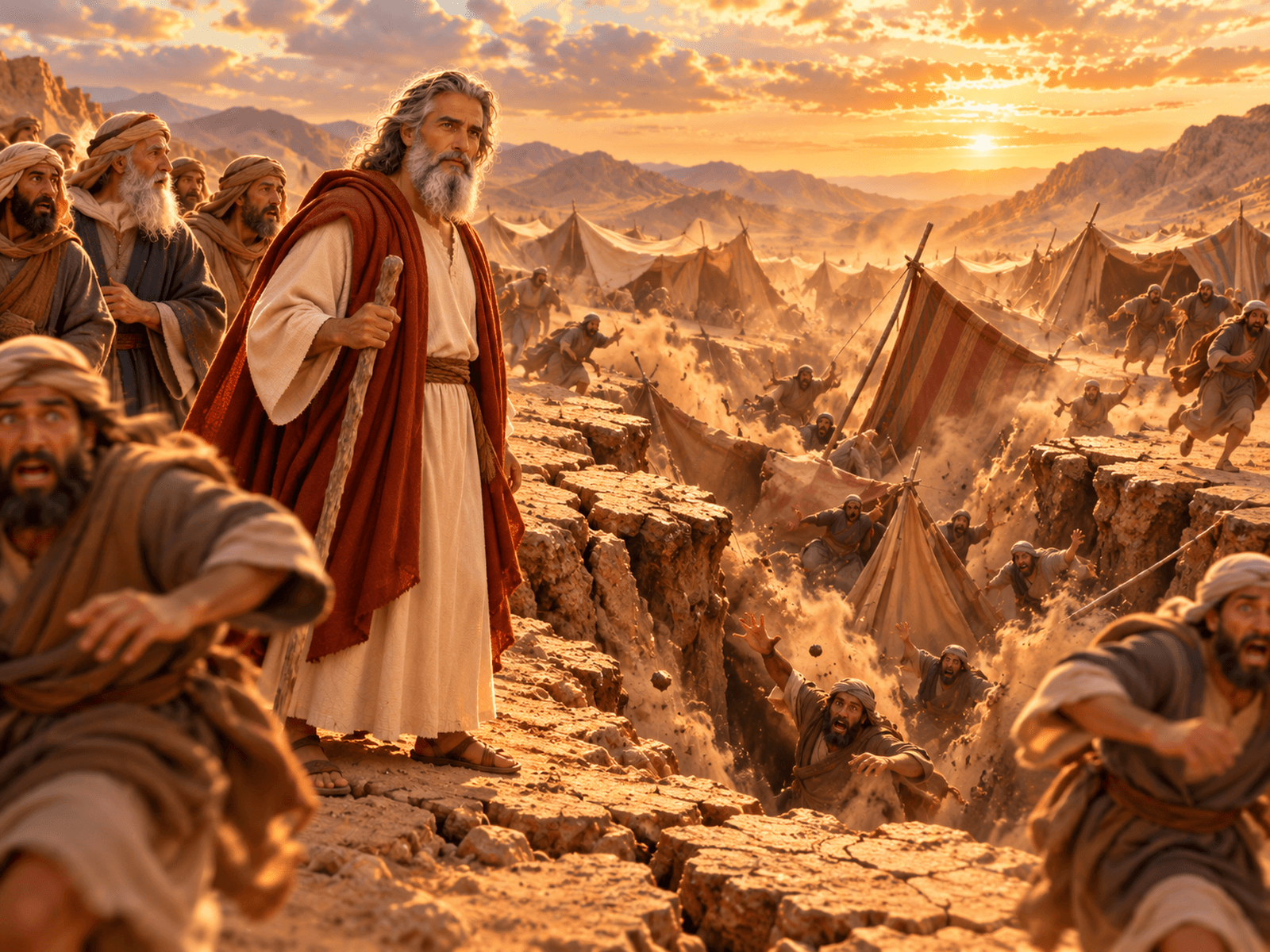
Illustrated scene from Moses's story: Israel Refuses to Enter the Land (Numbers 14:1–45)
Meet the people of the Bible
Follow their lives in order, with illustrated scenes and Bible passages that tell their stories.
 Moses

Photo: Photochrom print, Library of Congress Prints and Photographs Division (LCCN 2002725043). License: Public domain in the United States; Library of Congress states no known restrictions on publication. Source. Location: Nablus and Mount Gerizim, West Bank; print preserved by the Library of Congress. Resized for the web.
Explore the places of the Bible
See where biblical events happened, why each place matters, and what archaeology helps us understand.
Shechem
Where God promised the land to Abram, and where Joshua led Israel to renew the covenant.
Get full access with one subscription
Explore the people and places of the Bible. Read summaries of every book, with images and clear explanations covering every chapter. Access all these features and our Bible study tools with one subscription.
See PlansAsk AI about Numbers 14:18
Ask a question about this verse and get a clear answer, with Bible references you can read for yourself.
Every Bible book, explained chapter by chapter
Explore summaries of every book of the Bible, with images and easy-to-understand explanations covering every chapter.
Keep studying Numbers 14:18
Related Bible verses
Key themes
Related topics
At a Glance — the Book of Numbers
- Author
- Traditionally attributed to Moses
- Written
- Around 1400 BC
- Genre
- Law (Pentateuch)
- Original Audience
- The Israelites in the wilderness
Frequently Asked Questions
Quick, clear answers about this verse
What does Numbers 14:18 mean?
Numbers 14:18 describes God's character as both patient and just. It emphasizes His willingness to forgive those who repent, while also warning that sin has consequences that can affect future generations.
What is the meaning of 'slow to anger' in Numbers 14:18?
'Slow to anger' means that God is patient and gives people time to change their ways. It highlights His mercy and willingness to forgive rather than immediately punishing wrongdoing.
What does 'visiting the iniquity of the fathers upon the children' mean?
This phrase means that the consequences of a parent's sins can impact their children and future generations. It serves as a reminder of the serious effects of sin and the importance of living righteously.
What themes are present in Numbers 14:18?
Key themes in Numbers 14:18 include God's patience, divine mercy, forgiveness, justice, and the generational consequences of sin. It highlights the balance between God's compassion and the accountability for one's actions.
Daily Verse — straight to your inbox
A verse and a 2-sentence plain-English explanation, every morning. Free. Unsubscribe anytime.