New Testament
Revelation 6:2
Read the Bible in clear, modern English—easy to understand, faithful to the meaning, and written for everyday readers.
I looked, and there was a white horse. Its rider carried a bow, and he was given a crown. He rode out as a conqueror, bent on conquest.
Compare translations
And I saw, and behold a white horse: and he that sat on him had a bow; and a crown was given unto him: and he went forth conquering, and to conquer.
What Revelation 6:2 means
Plain-English insight for readers
In Revelation 6:2, the vision of a white horse and its rider symbolizes conquest and victory. The rider, equipped with a bow and crowned, represents a powerful figure who is set on achieving dominance. The white horse often signifies purity and righteousness, but in this context, it may also indicate a deceptive peace or false hope. The rider's mission is clear: he goes forth to conquer, suggesting a relentless pursuit of power. This imagery can be interpreted as a representation of various forces throughout history that seek to impose their will on others, often under the guise of benevolence. The passage serves as a reminder of the ongoing struggles between good and evil, and the complexities of leadership and authority in the world. It invites readers to reflect on the nature of true victory and the consequences of conquest, urging them to discern the motives behind those who seek power.
How to apply Revelation 6:2 to your life
This verse encourages us to be discerning about the leaders and movements we support. It reminds us that not all who appear righteous or benevolent are truly so. We should seek wisdom and understanding in our choices, ensuring they align with true values of justice and peace.
Curated for this public verse page. Revelation Summary
Explore more of the Bible
Learn the Bible through its people and places
Get to know the people in Scripture through illustrated stories, and explore the places where they lived and traveled.
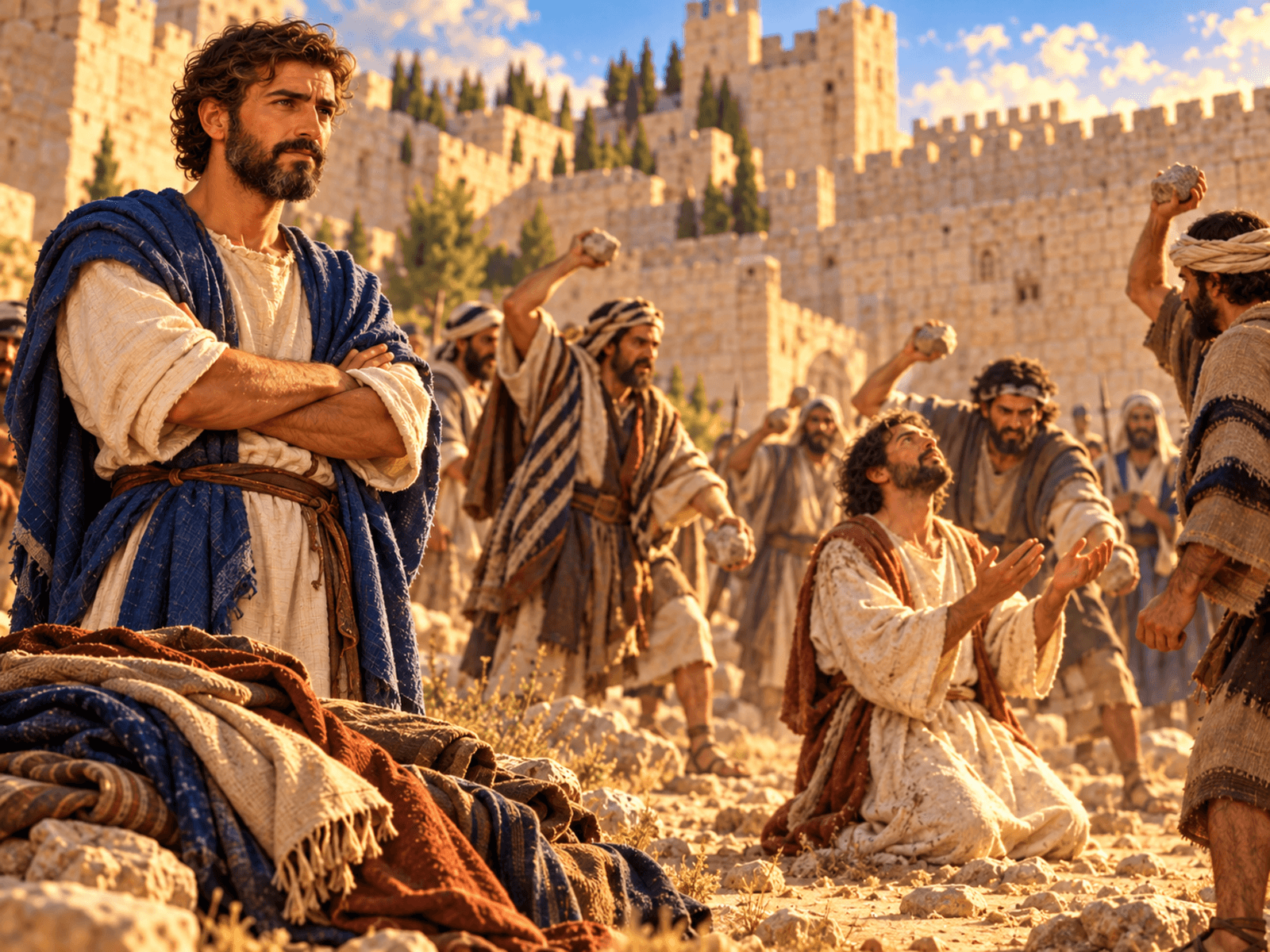
Illustrated scene from Paul's story: The Stoning of Stephen (Acts 7:57–8:2)
Meet the people of the Bible
Follow their lives in order, with illustrated scenes and Bible passages that tell their stories.
 Paul

Photo: Photochrom print, Library of Congress Prints and Photographs Division (LCCN 2002725045). License: Public domain in the United States; Library of Congress states no known restrictions on publication. Source. Location: Nazareth, Israel; print preserved by the Library of Congress. Resized for the web.
Explore the places of the Bible
See where biblical events happened, why each place matters, and what archaeology helps us understand.
Nazareth
The small town in Galilee where Jesus grew up.
Get full access with one subscription
Explore the people and places of the Bible. Read summaries of every book, with images and clear explanations covering every chapter. Access all these features and our Bible study tools with one subscription.
See PlansAsk AI about Revelation 6:2
Ask a question about this verse and get a clear answer, with Bible references you can read for yourself.
Every Bible book, explained chapter by chapter
Explore summaries of every book of the Bible, with images and easy-to-understand explanations covering every chapter.
Keep studying Revelation 6:2
Related Bible verses
At a Glance — the Book of Revelation
- Author
- John the apostle
- Written
- Around AD 95
- Genre
- Apocalyptic prophecy
- Original Audience
- The seven churches of Asia Minor
Frequently Asked Questions
Quick, clear answers about this verse
What does Revelation 6:2 mean?
Revelation 6:2 describes a vision of a rider on a white horse, symbolizing conquest and power. The rider carries a bow and is crowned, indicating authority and a mission to conquer, which can represent both literal and metaphorical struggles for dominance.
What is the significance of the white horse in Revelation 6:2?
The white horse in Revelation 6:2 often symbolizes purity and righteousness, but in this context, it may also represent deceptive peace or false hope. The rider's conquest suggests a pursuit of power that can mask underlying motives.
Who is the rider on the white horse in Revelation 6:2?
The rider on the white horse in Revelation 6:2 is often interpreted as a symbol of conquest and authority rather than a specific individual. This figure represents forces throughout history that seek to impose their will, often under the guise of benevolence.
What themes are present in Revelation 6:2?
Revelation 6:2 encompasses themes of conquest, power, deception, and authority. It highlights the complexities of leadership and the ongoing struggle between good and evil, urging readers to reflect on the nature of true victory.
Daily Verse — straight to your inbox
A verse and a 2-sentence plain-English explanation, every morning. Free. Unsubscribe anytime.