New Testament
Romans 16:7
Read the Bible in clear, modern English—easy to understand, faithful to the meaning, and written for everyday readers.
Greet Andronicus and Junia, my relatives and my fellow prisoners, who are notable among the apostles, and who were in Christ before me.
Compare translations
Salute Andronicus and Junia, my kinsmen, and my fellow-prisoners, who are of note among the apostles, who also were in Christ before me.
What Romans 16:7 means
Plain-English insight for readers
In Romans 16:7, Paul sends greetings to Andronicus and Junia, highlighting their close relationship as relatives and fellow prisoners. This indicates that they shared in the hardships of imprisonment for their faith. Paul notes that they are well-regarded among the apostles, suggesting they played a significant role in the early church. Their mention as being in Christ before Paul emphasizes their early commitment to the faith, possibly indicating that they were influential in spreading the Gospel even before Paul's conversion. This verse illustrates the importance of community and support among believers, as well as recognizing the contributions of others in the faith journey. It also reflects the inclusivity of the early church, where both men and women, like Junia, were acknowledged for their leadership and dedication to Christ.
How to apply Romans 16:7 to your life
This verse encourages us to recognize and appreciate the contributions of others in our faith community. It reminds us to support one another, especially those who have faced challenges for their beliefs. We should also strive to be faithful and influential in our own circles, just as Andronicus and Junia were.
Curated for this public verse page. Romans Summary
Explore more of the Bible
Learn the Bible through its people and places
Get to know the people in Scripture through illustrated stories, and explore the places where they lived and traveled.
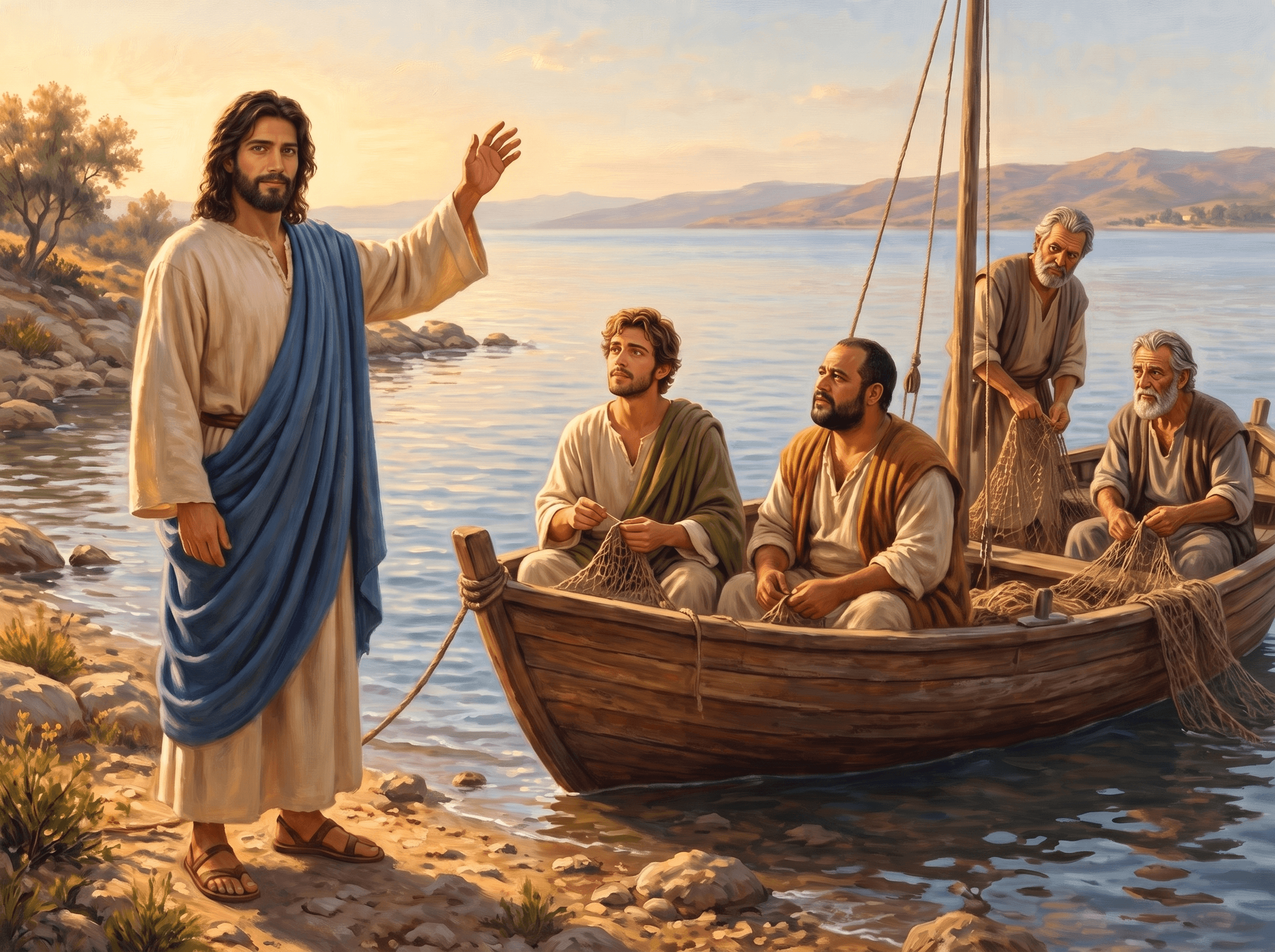
Illustrated scene from John the Apostle's story: Mending Their Nets (Mark 1:19–20)
Meet the people of the Bible
Follow their lives in order, with illustrated scenes and Bible passages that tell their stories.
 John the Apostle

Photo: Photochrom print, Library of Congress Prints and Photographs Division (LCCN 2002725045). License: Public domain in the United States; Library of Congress states no known restrictions on publication. Source. Location: Nazareth, Israel; print preserved by the Library of Congress. Resized for the web.
Explore the places of the Bible
See where biblical events happened, why each place matters, and what archaeology helps us understand.
Nazareth
The small town in Galilee where Jesus grew up.
Get full access with one subscription
Explore the people and places of the Bible. Read summaries of every book, with images and clear explanations covering every chapter. Access all these features and our Bible study tools with one subscription.
See PlansAsk AI about Romans 16:7
Ask a question about this verse and get a clear answer, with Bible references you can read for yourself.
Every Bible book, explained chapter by chapter
Explore summaries of every book of the Bible, with images and easy-to-understand explanations covering every chapter.
Keep studying Romans 16:7
Related Bible verses
Key themes
Related topics
At a Glance — the Book of Romans
- Author
- Paul the apostle
- Written
- Around AD 57
- Genre
- Letter (epistle)
- Original Audience
- Christians in Rome
Frequently Asked Questions
Quick, clear answers about this verse
What does Romans 16:7 mean?
Romans 16:7 is a greeting from Paul to Andronicus and Junia, highlighting their relationship as relatives and fellow prisoners. It emphasizes their significance among the apostles and their early commitment to Christ.
Who are Andronicus and Junia in Romans 16:7?
Andronicus and Junia are mentioned by Paul as his relatives and fellow prisoners, indicating they shared in the struggles of faith. They are recognized for their notable status among the apostles and their early belief in Christ.
What is the significance of being 'notable among the apostles' in Romans 16:7?
Being 'notable among the apostles' suggests that Andronicus and Junia had a respected role in the early church, contributing to the spread of the Gospel and supporting fellow believers.
How does Romans 16:7 reflect the inclusivity of the early church?
Romans 16:7 shows inclusivity by recognizing both Andronicus and Junia, a woman, for their contributions to the church, illustrating that leadership and dedication to Christ were acknowledged regardless of gender.
Daily Verse — straight to your inbox
A verse and a 2-sentence plain-English explanation, every morning. Free. Unsubscribe anytime.