Old Testament
Ruth 2:5
Read the Bible in clear, modern English—easy to understand, faithful to the meaning, and written for everyday readers.
Boaz asked the foreman in charge of the harvesters, "Who is that young woman?"
Compare translations
Then said Boaz unto his servant that was set over the reapers, Whose damsel is this?
What Ruth 2:5 means
Plain-English insight for readers
In Ruth 2:5, Boaz, a wealthy landowner, notices Ruth, a young woman gleaning in his fields. He inquires about her identity from the foreman overseeing the harvesters. This moment is significant as it highlights Boaz's interest in Ruth, setting the stage for their developing relationship. Ruth, a Moabite widow, is in a vulnerable position, gathering leftover grain to support herself and her mother-in-law, Naomi. Boaz's question reflects his curiosity and respect for the workers, as well as his awareness of the people in his fields. This interaction emphasizes the importance of community and the connections formed through shared labor. It also foreshadows the kindness and protection Boaz will extend to Ruth, illustrating themes of providence and redemption that are central to the story. Boaz's inquiry marks the beginning of a pivotal relationship that will lead to significant changes in both Ruth's and Naomi's lives, showcasing how God works through individuals to fulfill His plans.
How to apply Ruth 2:5 to your life
This verse encourages us to be observant and curious about those around us. Just as Boaz took the time to inquire about Ruth, we should seek to understand and support those who may be in vulnerable situations. Building connections can lead to meaningful relationships and opportunities for kindness.
Curated for this public verse page. Ruth Summary
Learn the Bible through its people and places
Get to know the people in Scripture through illustrated stories, and explore the places where they lived and traveled.
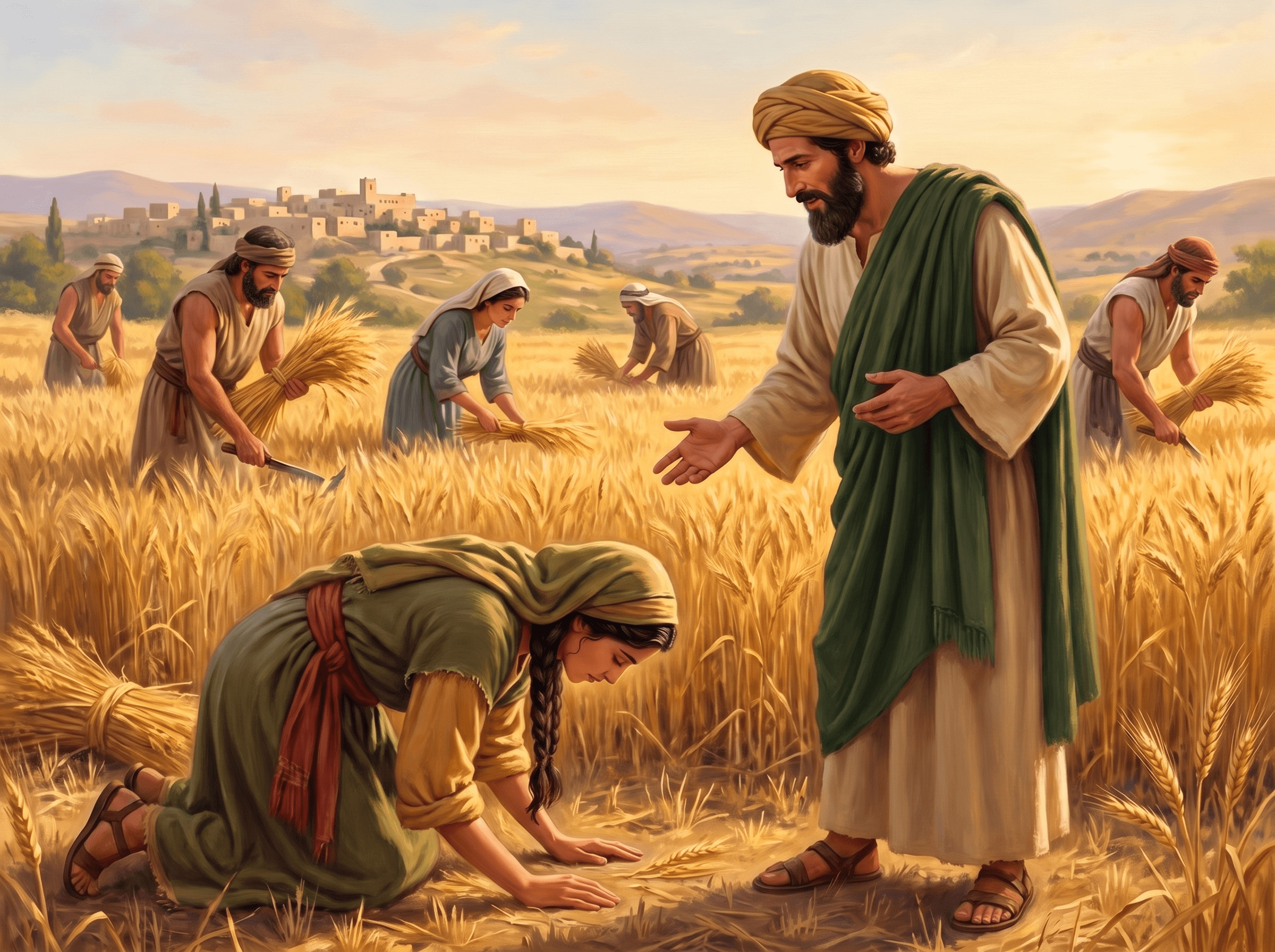
Illustrated scene from Ruth's story: Gleaning in the Field of Boaz (Ruth 2:1–16)
Meet the people of the Bible
Follow their lives in order, with illustrated scenes and Bible passages that tell their stories.
 Ruth

Photo: Deror Avi, via Wikimedia Commons. License: CC BY-SA 4.0. Source. Location: Tel Shiloh archaeological site, West Bank. Resized for the web.
Explore the places of the Bible
See where biblical events happened, why each place matters, and what archaeology helps us understand.
Shiloh
Where Israel set up the tabernacle, and where God called the boy Samuel.
Get full access with one subscription
Explore the people and places of the Bible. Read summaries of every book, with images and clear explanations covering every chapter. Access all these features and our Bible study tools with one subscription.
See PlansAsk AI about Ruth 2:5
Ask a question about this verse and get a clear answer, with Bible references you can read for yourself.
Every Bible book, explained chapter by chapter
Explore summaries of every book of the Bible, with images and easy-to-understand explanations covering every chapter.
Keep studying Ruth 2:5
At a Glance — the Book of Ruth
- Author
- Author unknown; traditionally Samuel
- Written
- Around 1050 BC
- Genre
- Historical narrative
- Original Audience
- The Israelites of the early monarchy
Frequently Asked Questions
Quick, clear answers about this verse
What does Ruth 2:5 mean?
Ruth 2:5 describes Boaz noticing Ruth, a young woman gleaning in his fields, and asking the foreman about her identity. This moment signifies Boaz's interest in Ruth and sets the stage for their future relationship.
What is the significance of Boaz's question in Ruth 2:5?
Boaz's question highlights his curiosity and respect for the workers in his fields, as well as his awareness of those around him. It marks the beginning of a pivotal relationship that will lead to kindness and protection for Ruth.
Who is the young woman mentioned in Ruth 2:5?
The young woman mentioned in Ruth 2:5 is Ruth, a Moabite widow who is gleaning in Boaz's fields to support herself and her mother-in-law, Naomi.
What themes are present in Ruth 2:5?
Ruth 2:5 presents themes of curiosity, community, kindness, vulnerability, and providence. It illustrates how connections formed through shared labor can lead to significant relationships.
Daily Verse — straight to your inbox
A verse and a 2-sentence plain-English explanation, every morning. Free. Unsubscribe anytime.