Old Testament
Ruth 2:6
Read the Bible in clear, modern English—easy to understand, faithful to the meaning, and written for everyday readers.
The foreman answered, "She's the Moabite woman who came back with Naomi from the land of Moab."
Compare translations
And the servant that was set over the reapers answered and said, It is the Moabitish damsel that came back with Naomi out of the country of Moab:
What Ruth 2:6 means
Plain-English insight for readers
In Ruth 2:6, the foreman identifies Ruth as the Moabite woman who returned to Bethlehem with Naomi after the death of her husband. This highlights Ruth's loyalty and commitment to Naomi, as she chose to leave her homeland and people to support her mother-in-law. The mention of her being a Moabite also emphasizes her foreign status in Israel, which could lead to social stigma. Despite this, Ruth's actions demonstrate her strong character and determination to provide for Naomi. The foreman's recognition of her shows that her hard work in the fields is being noticed, setting the stage for her eventual relationship with Boaz. This verse serves as a reminder of how acts of kindness and loyalty can transcend cultural boundaries and lead to unexpected blessings.
How to apply Ruth 2:6 to your life
Ruth's story encourages us to be loyal and supportive to those in need, regardless of their background. It reminds us that our actions can have a significant impact on others and that kindness can lead to new opportunities and relationships.
Curated for this public verse page. Ruth Summary
Learn the Bible through its people and places
Get to know the people in Scripture through illustrated stories, and explore the places where they lived and traveled.
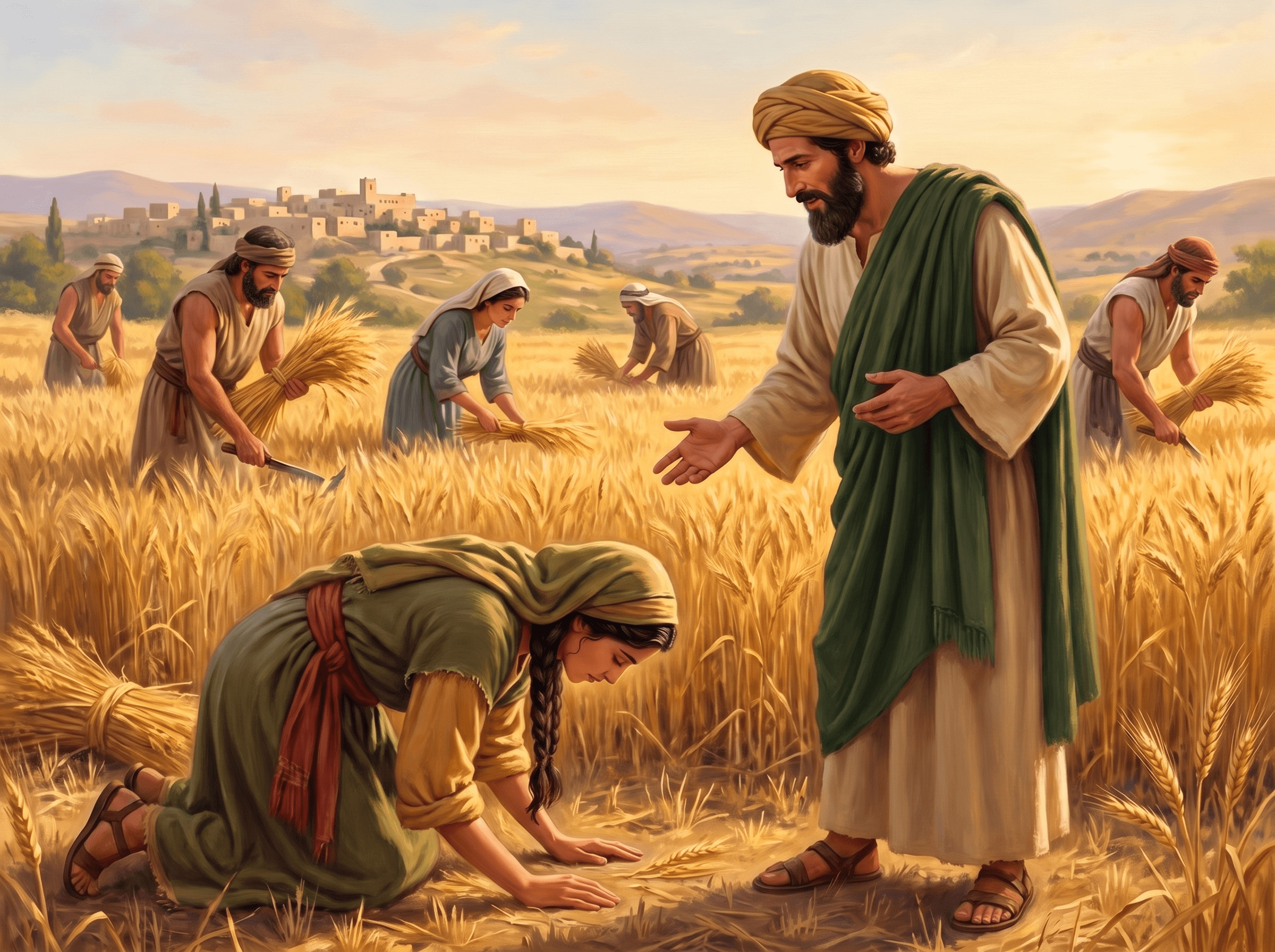
Illustrated scene from Ruth's story: Gleaning in the Field of Boaz (Ruth 2:1–16)
Meet the people of the Bible
Follow their lives in order, with illustrated scenes and Bible passages that tell their stories.
 Ruth

Photo: Deror Avi, via Wikimedia Commons. License: CC BY-SA 4.0. Source. Location: Tel Shiloh archaeological site, West Bank. Resized for the web.
Explore the places of the Bible
See where biblical events happened, why each place matters, and what archaeology helps us understand.
Shiloh
Where Israel set up the tabernacle, and where God called the boy Samuel.
Get full access with one subscription
Explore the people and places of the Bible. Read summaries of every book, with images and clear explanations covering every chapter. Access all these features and our Bible study tools with one subscription.
See PlansAsk AI about Ruth 2:6
Ask a question about this verse and get a clear answer, with Bible references you can read for yourself.
Every Bible book, explained chapter by chapter
Explore summaries of every book of the Bible, with images and easy-to-understand explanations covering every chapter.
Keep studying Ruth 2:6
Related Bible verses
Key themes
At a Glance — the Book of Ruth
- Author
- Author unknown; traditionally Samuel
- Written
- Around 1050 BC
- Genre
- Historical narrative
- Original Audience
- The Israelites of the early monarchy
Frequently Asked Questions
Quick, clear answers about this verse
Who is the Moabite woman mentioned in Ruth 2:6?
The Moabite woman referred to in Ruth 2:6 is Ruth herself. She is recognized as the woman who returned to Bethlehem with her mother-in-law, Naomi, after the death of her husband. Ruth's decision to accompany Naomi highlights her loyalty and commitment, as she left her homeland and people to support Naomi in a foreign land.
What does Ruth's foreign status signify in this verse?
Ruth's identification as a Moabite in Ruth 2:6 signifies her status as a foreigner in Israel. This distinction may carry social stigma, as Moabites were often viewed with suspicion by the Israelites. However, Ruth's actions demonstrate that loyalty and hard work can transcend cultural barriers, ultimately leading to acceptance and blessings.
How does Ruth's story relate to themes of loyalty and community?
Ruth's story exemplifies loyalty through her unwavering support for Naomi, showcasing the importance of community and relationships. By choosing to stay with Naomi, Ruth not only honors her commitment to family but also becomes part of the Israelite community, illustrating how acts of kindness can foster connections and create a sense of belonging.
What lessons can we learn from Ruth's actions in this verse?
From Ruth's actions in Ruth 2:6, we learn the importance of loyalty, hard work, and compassion. Her willingness to support Naomi despite her foreign status teaches us that our actions can positively impact others, regardless of cultural differences. It encourages us to be supportive and kind, as these qualities can lead to new opportunities and relationships.
Daily Verse — straight to your inbox
A verse and a 2-sentence plain-English explanation, every morning. Free. Unsubscribe anytime.