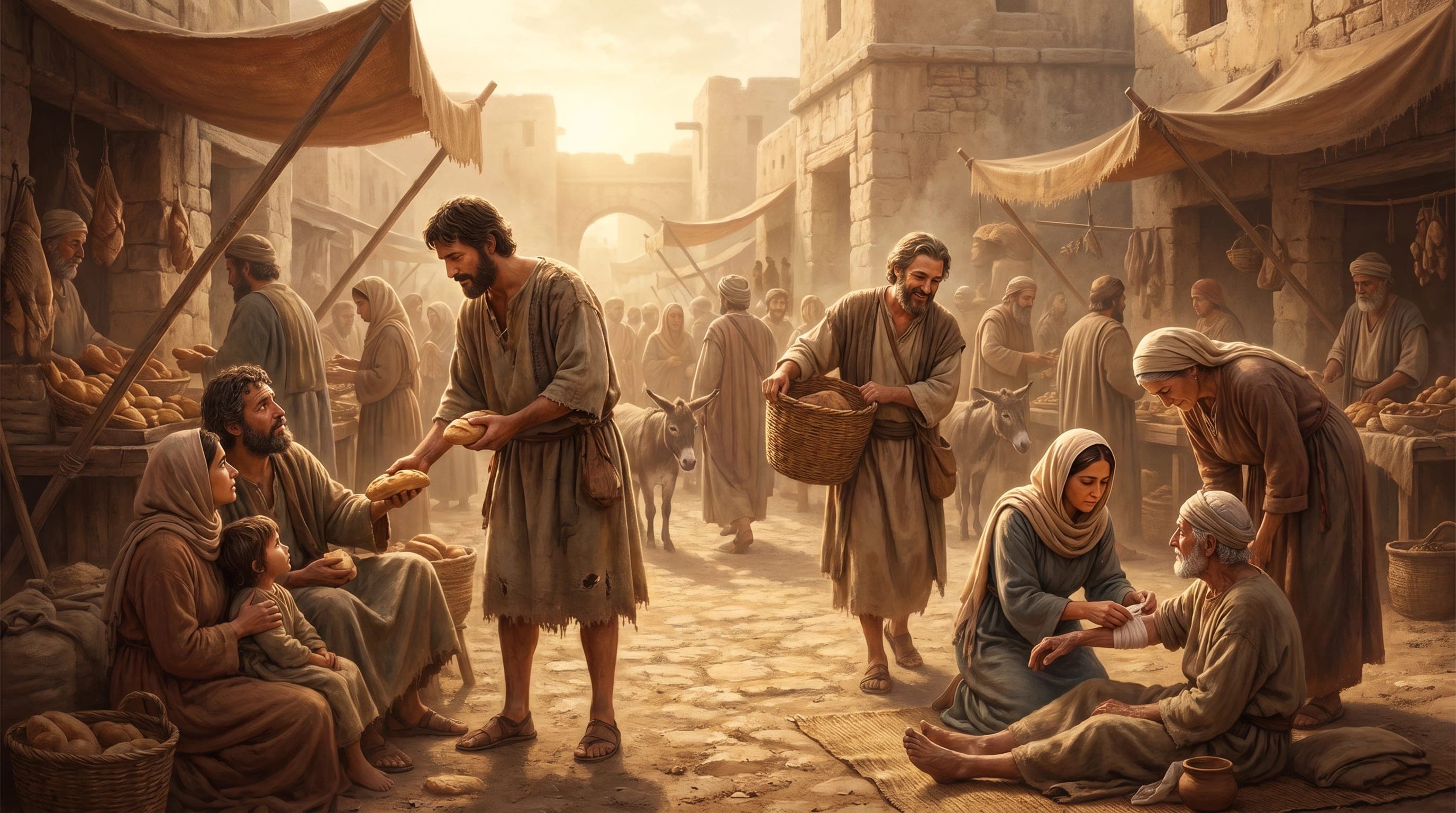
What Does James 2:17 Mean?
James 2:17 meaning explains that faith without works is dead, teaching that genuine saving faith must be accompanied by visible actions that demonstrate its reality.
Clear Bible Translation
Modern EnglishIn the same way, faith without works is dead by itself.
King James Version
Even so faith, if it hath not works, is dead, being alone.
Language, Structure, and Intent
James declares that faith without accompanying works is spiritually dead and useless. This verse establishes the principle that genuine saving faith necessarily produces visible actions that demonstrate its reality. James is not teaching salvation by works, but rather that authentic faith will inevitably manifest itself through deeds of love and obedience. The apostle uses the stark metaphor of death to emphasize that faith lacking works is not merely weak or incomplete, but entirely lifeless. James addresses Jewish Christians who may have assumed intellectual belief alone was sufficient for salvation.
James, the half-brother of Jesus and leader of the Jerusalem church, wrote to Jewish Christians dispersed throughout the Roman Empire around 45-50 AD.
James writes to Jewish Christians scattered throughout the Roman Empire, addressing practical issues in their faith communities. Immediately before this verse, James illustrates his point with a hypothetical scenario of someone offering empty words to a needy person without providing actual help. Following this declaration, James challenges readers to demonstrate their faith through actions, noting that even demons possess intellectual belief in God. This argument forms part of James's broader teaching on the necessity of works as evidence of living faith.
Read the full chapter: James 2 →
Present-Day Relevance
Genuine Christian faith must be accompanied by concrete actions that reflect God's love and character. Believers cannot claim to have saving faith while consistently failing to demonstrate compassion, generosity, or obedience in their daily lives. True faith transforms behavior and motivates believers to serve others practically.
Connected Passages
Reader Questions
- What is the historical background of James 2:17?
- James, the half-brother of Jesus and leader of the Jerusalem church, wrote to Jewish Christians dispersed throughout the Roman Empire around 45-50 AD.
- What is the main theme of James 2:17?
- The primary theme is living faith demonstrated through works. Related themes include spiritual death and authentic belief and practical Christianity.
- Where is James 2:17 in the Bible?
- James, chapter 2, verse 17. Read James 2 →
Daily Verse — straight to your inbox
A verse and a 2-sentence plain-English explanation, every morning. Free. Unsubscribe anytime.