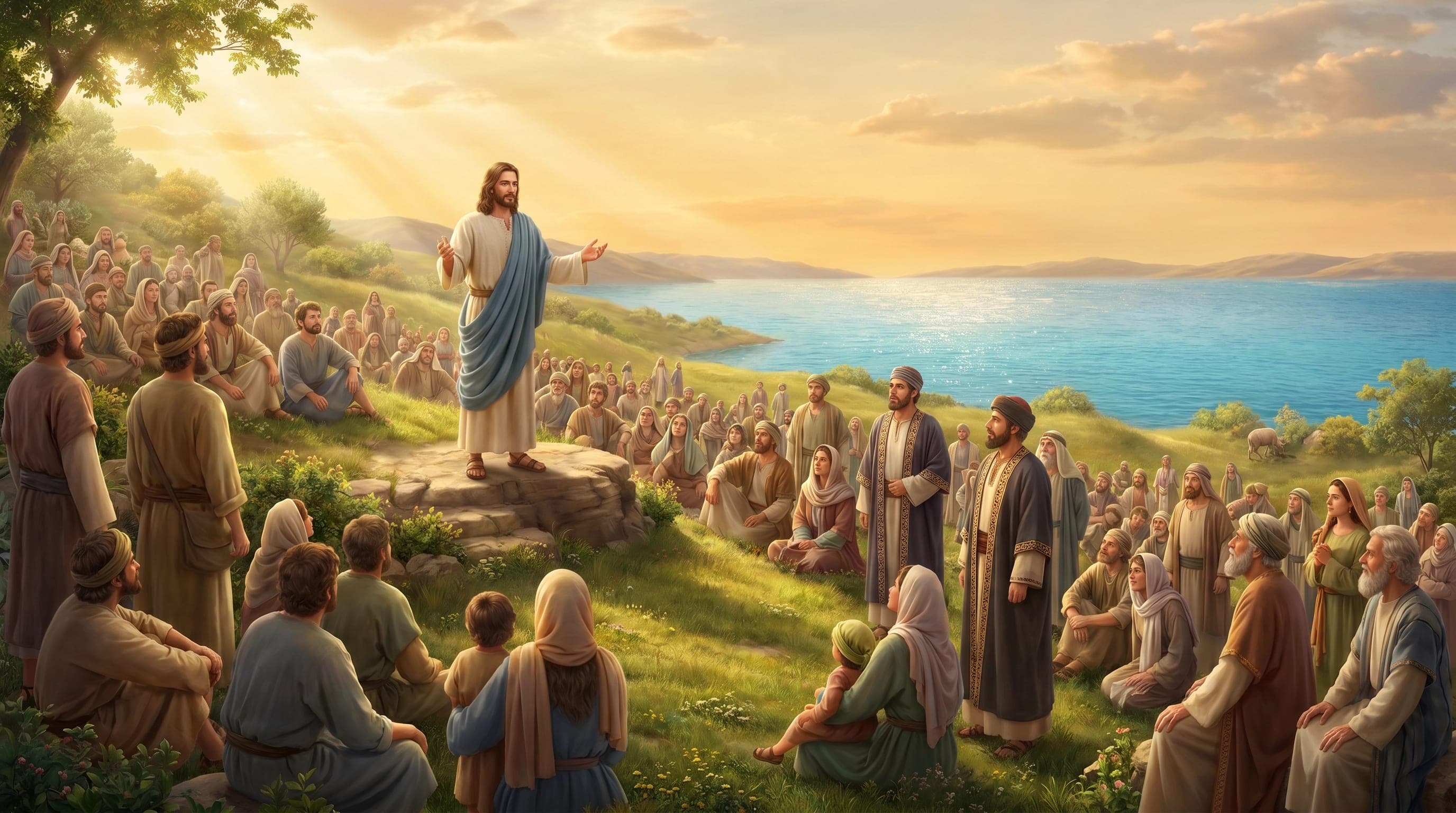
What Does Matthew 11:28 Mean?
Matthew 11:28 meaning: what kind of rest does Jesus offer and who qualifies to receive it
Clear Bible Translation
Modern EnglishCome to me, all of you who labor and are heavy laden, and I will give you rest.
King James Version
Come unto me, all ye that labour and are heavy laden, and I will give you rest.
Explanation and Context
Jesus offers supernatural rest to those crushed by life's weight and religious burdens. The Greek term κοπιάω (kopiaō) for 'labour' carries the sense of exhausting toil that brings one to the point of collapse, while φορτίζω (phortizō) for 'heavy laden' describes being loaded down like a pack animal. This invitation emerges from Jesus' critique of the Pharisees who 'bind heavy burdens and grievous to be borne' upon people (Matthew 23:4). The word ἀνάπαυσις (anapausis) for 'rest' denotes not mere cessation of work, but active refreshment and restoration of the soul. Jesus positions himself as the alternative to religious systems that exhaust rather than restore. The universal scope of 'all' breaks down every barrier of race, class, and moral standing.
This invitation follows Jesus' prayer praising the Father for revealing truth to 'babes' rather than the wise and prudent, establishing the accessibility of divine wisdom. The preceding context includes John the Baptist's doubt and Jesus' condemnation of unrepentant cities, creating a stark contrast between judgment and mercy. Jesus then declares his unique relationship with the Father and his role as revealer of divine truth. The famous 'easy yoke' teaching in verses 29-30 completes this section, contrasting Jesus' gentle authority with the crushing legalism of contemporary religious leaders.
Matthew wrote to Jewish Christians around 60-70 AD, demonstrating how Jesus fulfilled Old Testament expectations while transcending traditional religious boundaries.
People trapped in cycles of performance-based religion or overwhelming life circumstances can find genuine rest through surrendering to Christ's authority rather than trying to earn acceptance. This rest involves both immediate relief from spiritual anxiety and ongoing partnership with Jesus in daily life.
Read the full chapter: Matthew 11 →
Connected Passages
- Jeremiah 29:11 →Connects divine rest with divine sovereignty
- 1 Peter 5:7 →Connects divine rest with divine care
- Psalms 46:10 →Connects divine rest with divine sovereignty
- Revelation 3:20 →Connects divine rest with divine invitation
Reader Questions
- What is the historical background of Matthew 11:28?
- Matthew wrote to Jewish Christians around 60-70 AD, demonstrating how Jesus fulfilled Old Testament expectations while transcending traditional religious boundaries.
- What is the main theme of Matthew 11:28?
- The primary theme is divine rest. Related themes include salvation invitation and religious burden.
- Where is Matthew 11:28 in the Bible?
- Matthew, chapter 11, verse 28. Read Matthew 11 →
Daily Verse — straight to your inbox
A verse and a 2-sentence plain-English explanation, every morning. Free. Unsubscribe anytime.