Old Testament
2 Chronicles 6:1
Read the Bible in clear, modern English—easy to understand, faithful to the meaning, and written for everyday readers.
Then Solomon declared, "The LORD has said that he would dwell in thick darkness."
Compare translations
Then said Solomon, The LORD hath said that he would dwell in the thick darkness.
What 2 Chronicles 6:1 means
Plain-English insight for readers
In this moment, Solomon acknowledges a profound truth about God. He recognizes that the Lord has chosen to reside in a place that feels distant and mysterious, described as thick darkness. This darkness symbolizes God's holiness and the awe-inspiring nature of His presence. It reminds us that while God is near, He is also beyond our full understanding. Solomon's declaration highlights the contrast between human limitations and divine majesty. It invites us to reflect on the complexity of our relationship with God, who is both accessible and transcendent. This moment sets the stage for Solomon's prayer and dedication of the temple, emphasizing the importance of reverence in our approach to God. It teaches us that even in the unknown, we can find comfort in God's presence, which is both powerful and protective. Understanding this helps us appreciate the depth of our faith and the mystery of God's ways in our lives, encouraging us to seek Him earnestly, even when we cannot see clearly.
How to apply 2 Chronicles 6:1 to your life
When we feel distant from God, remember that His presence is still with us, even in the unknown. Embrace the mystery of faith and seek to understand Him more deeply. Approach God with reverence, knowing that He is both near and far, guiding us through life's uncertainties. Trust in His wisdom and love as you navigate challenges in your life. This awareness can strengthen your relationship with Him and deepen your faith journey.
Curated for this public verse page. 2 Chronicles Summary
Learn the Bible through its people and places
Get to know the people in Scripture through illustrated stories, and explore the places where they lived and traveled.
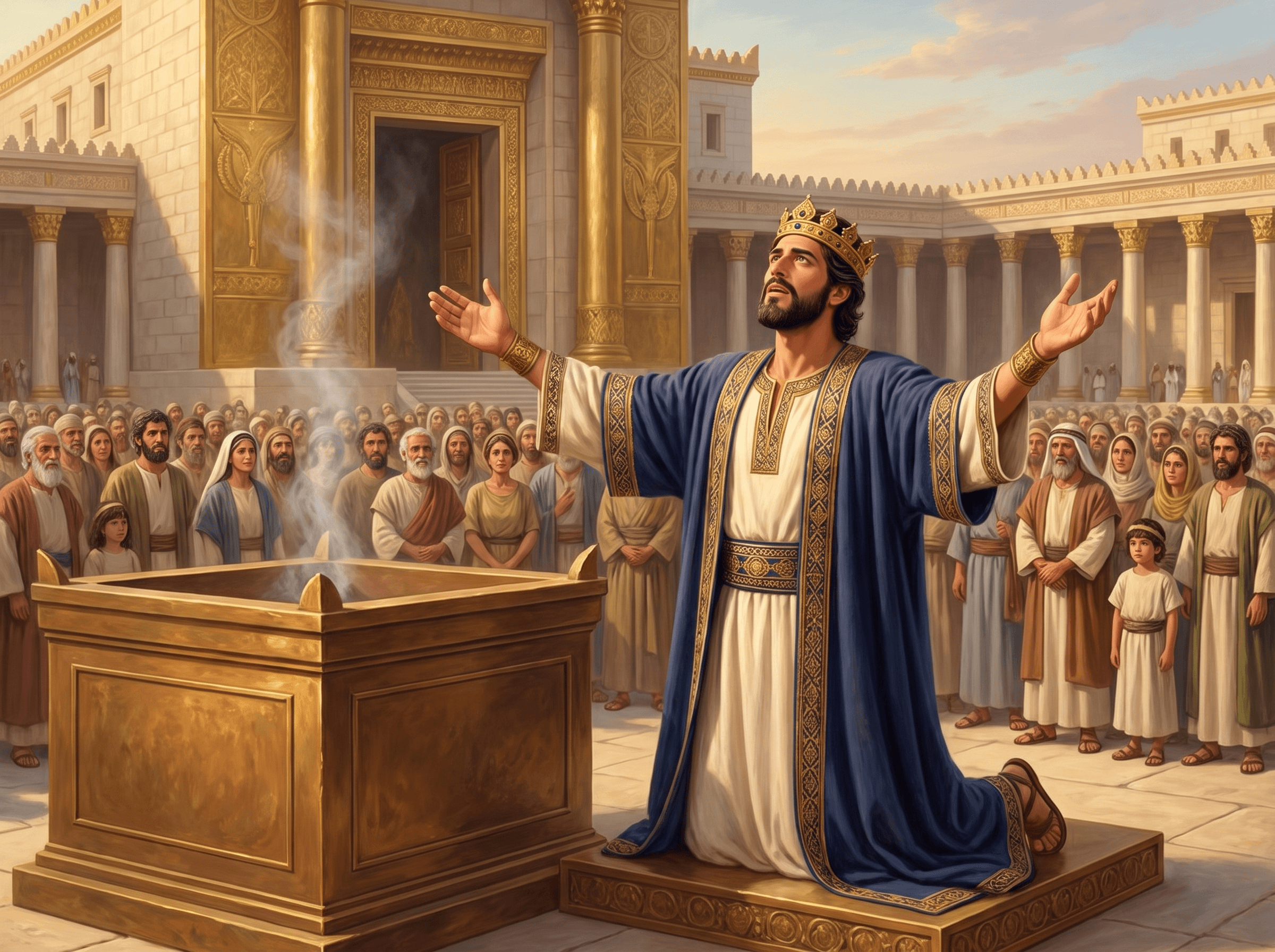
Illustrated scene from Solomon's story: The Prayer of Dedication (2 Chronicles 6:1–42)
Meet the people of the Bible
Follow their lives in order, with illustrated scenes and Bible passages that tell their stories.
 Solomon

Photo: U.S. Army photo by Spc. Samantha R. Ciaramitaro, via DVIDS and Wikimedia Commons. License: Public domain in the United States — U.S. federal-government work. Source. Location: Great Ziggurat, Ur Archaeological City (Tell el-Mukayyar), Dhi Qar Governorate, Iraq. Resized for the web.
Explore the places of the Bible
See where biblical events happened, why each place matters, and what archaeology helps us understand.
Ur
The city Abram's family left to travel toward Canaan.
Get full access with one subscription
Explore the people and places of the Bible. Read summaries of every book, with images and clear explanations covering every chapter. Access all these features and our Bible study tools with one subscription.
See PlansAsk AI about 2 Chronicles 6:1
Ask a question about this verse and get a clear answer, with Bible references you can read for yourself.
Every Bible book, explained chapter by chapter
Explore summaries of every book of the Bible, with images and easy-to-understand explanations covering every chapter.
Keep studying 2 Chronicles 6:1
Related Bible verses
Key themes
Related topics
At a Glance — the Book of 2 Chronicles
- Author
- Traditionally attributed to Ezra
- Written
- Around 430 BC
- Genre
- Historical narrative
- Original Audience
- Post-exilic Jews
Frequently Asked Questions
Quick, clear answers about this verse
How can I relate to God when He feels distant?
When God feels distant, remember that His presence is still with you, even in times of uncertainty. Embrace the mystery of faith and seek to understand Him more deeply through prayer, scripture, and reflection. Trust that God is guiding you, even when you cannot see clearly, and approach Him with reverence and openness.
Why is reverence important in my relationship with God?
Reverence is crucial because it acknowledges God's holiness and majesty. It helps us recognize our human limitations and fosters a deeper respect for His ways. Approaching God with reverence allows us to cultivate a meaningful relationship, encouraging us to seek Him earnestly and trust in His wisdom, especially during challenging times.
What can I learn from Solomon's declaration about God?
Solomon's declaration teaches us about the complexity of our relationship with God. It highlights the balance between His nearness and His transcendence. This moment encourages us to reflect on the awe of God's presence and the importance of approaching Him with humility and respect, especially as we seek to dedicate our lives to Him.
How does understanding God's mystery deepen my faith?
Understanding God's mystery can deepen your faith by encouraging you to trust Him beyond your understanding. It invites you to explore the depths of your relationship with Him, fostering a sense of wonder and reverence. This perspective helps you navigate life's uncertainties with confidence, knowing that God is both powerful and protective.
Daily Verse — straight to your inbox
A verse and a 2-sentence plain-English explanation, every morning. Free. Unsubscribe anytime.