Psalms 23:4
Even though I walk through the valley of the shadow of death, I will fear no evil, for you are with me. Your rod and your staff — they comfort me.
Psalm 23:4 meaning: "the valley of the shadow of death"
Plain-English insight for readers
Psalm 23:4 means that the LORD stays with his people in their darkest and most dangerous times, so they do not need to give in to fear: "I will fear no evil: for thou art with me." The "valley of the shadow of death" pictures a dark place where death seems close. The shepherd's rod and staff, the tools he uses to guard and guide his sheep, are what bring comfort there.
This verse expresses deep trust in God during the most difficult times. The 'valley of the shadow of death' symbolizes moments of fear, danger, or despair. Despite these challenges, the speaker feels no fear because they believe God is present with them. The 'rod and staff' are tools used by a shepherd, representing guidance and protection. This imagery reassures the believer that God provides comfort and support, even in the darkest moments of life. The verse highlights the importance of faith and the assurance that one is not alone in their struggles. It encourages individuals to rely on God's presence and care, which can bring peace and strength in times of trouble.
How to apply Psalms 23:4 to your life
In times of fear or uncertainty, remember that you are not alone. Seek comfort in your faith and trust that God is with you, guiding and protecting you. Use prayer and reflection to strengthen your relationship with God, especially during challenging moments.
In the King James Version
Yea, though I walk through the valley of the shadow of death, I will fear no evil: for thou art with me; thy rod and thy staff they comfort me.
Psalm 23:4 in context: the shepherd in the dark valley
What the verse says, and how the surrounding passage reads
Psalm 23 is, as its heading says, "A Psalm of David." It pictures the LORD as a shepherd and the writer as one of his sheep. The first three verses are calm: green pastures, still waters and right paths (Psalm 23:1–3). Verse 4 brings a sudden change. The path now runs through a dark valley. Even there, David says, "I will fear no evil: for thou art with me." The reason for his courage is not the place. It is the one who is with him in it.
The "valley of the shadow of death" is a picture, not a place on a map. It is a deep, dark valley where danger could be hiding and death seems near. It can include dying, but it covers any time of great danger, grief or fear. Notice the word "through." The valley is a road with another side, not a place to stay. The verse does not promise that God's people will never walk this road. It promises that they will not walk it alone.
The verse ends, "thy rod and thy staff they comfort me." A shepherd carried these tools to guard his sheep and to guide them. Here they are not for punishing the sheep. To a frightened sheep, seeing them meant the shepherd was near and ready to act. Right after the valley, the psalm moves to a table, an anointing and a cup that "runneth over" (23:5). It closes with "Surely goodness and mercy shall follow me all the days of my life" (23:6).
Keep exploring: Bible verses about comfort · Bible verses about fear
Ask about this verse
Tap a question to get a clear answer from Scripture.
Example answer · Premium
“What is the difference between a shepherd's rod and a shepherd's staff?”
In the Clear Bible Translation, Psalm 23:4 reads: "Even though I walk through the valley of the shadow of death, I will fear no evil, for you are with me. Your rod and your staff — they comfort me."
The rod and staff were two distinct tools a shepherd used. The rod was a short, heavy club used for defense — to protect the flock from predators and to discipline wayward sheep. The staff was a longer wooden crook with a curved hook at the end, used to guide, direct, and rescue sheep — to pull a straying sheep back to the flock or help one that had fallen. In this psalm, both together represent God's complete care: His protective power (the rod) and His gentle guidance (the staff). The point is not to distinguish them sharply but to show that the shepherd's full arsenal of care — both strength and tenderness — brings comfort to those who trust Him.
From Scripture: Psalms 23:4 · Psalms 23:1
Have a question about this verse? Explore it with ClearBible.
Premium answers your questions about any verse from Scripture itself, shows the verses it rests on, and opens Clear on every passage. You also get all 66 book summaries.
7 days free, then $99/year. Card required. Cancel anytime.
Explore more of the Bible
Learn the Bible through its people and places
Get to know the people in Scripture through illustrated stories, and explore the places where they lived and traveled.

Illustrated scene from Esther's story: Esther Becomes Queen (Esther 2:1–18)
Meet the people of the Bible
Follow their lives in order, with illustrated scenes and Bible passages that tell their stories.
 Esther
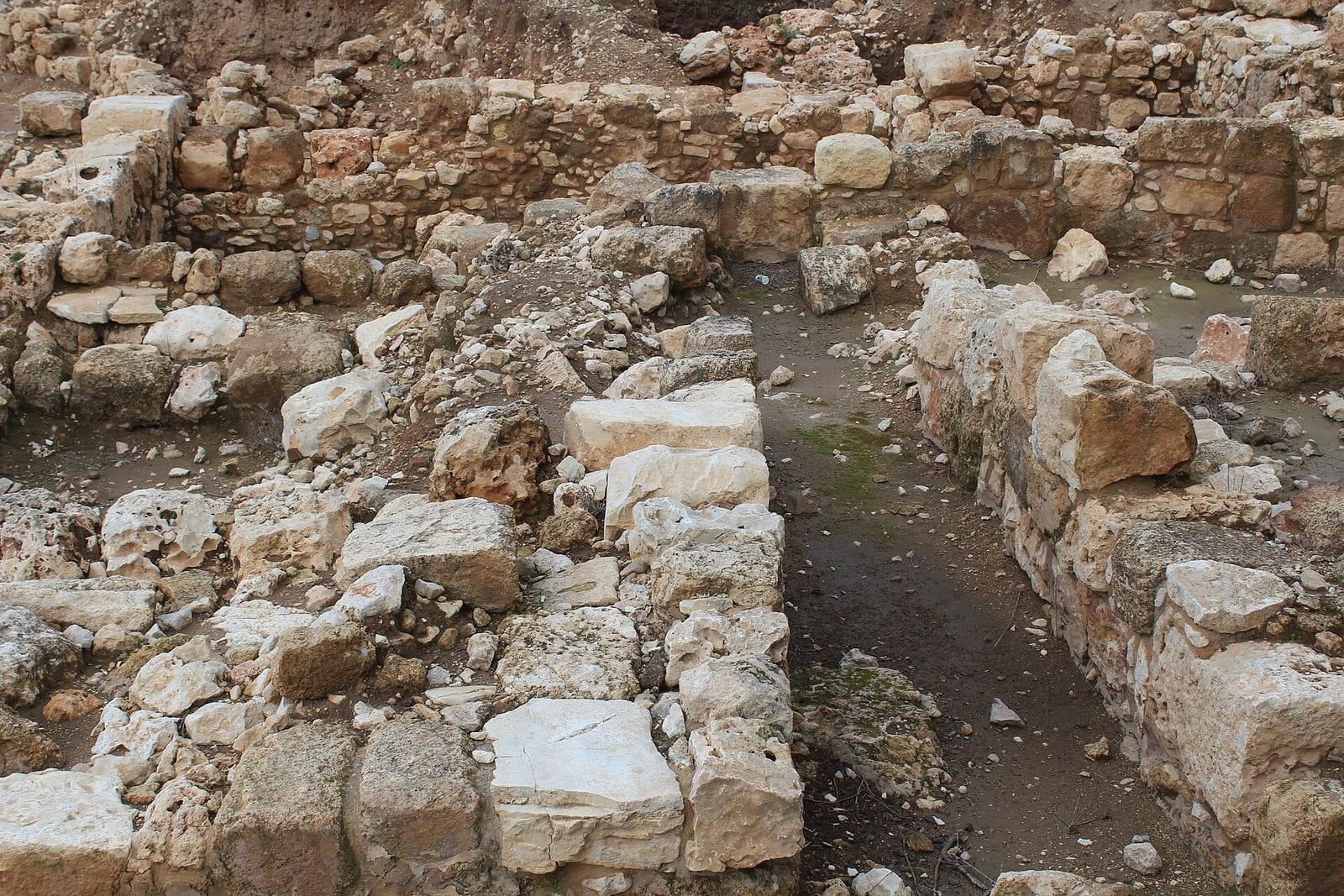
Photo: Deror Avi, via Wikimedia Commons. License: CC BY-SA 4.0. Source. Location: Tel Shiloh archaeological site, West Bank. Resized for the web.
Explore the places of the Bible
See where biblical events happened, why each place matters, and what archaeology helps us understand.
Shiloh
Where Israel set up the tabernacle, and where God called the boy Samuel.
Every Bible book, explained chapter by chapter
Explore summaries of every book of the Bible, with images and easy-to-understand explanations covering every chapter.
Keep studying Psalms 23:4
Related Bible verses
Key themes
Related topics
At a Glance — the Book of Psalms
- Author
- David, Asaph, the sons of Korah, Solomon, and others
- Written
- Around 1000-500 BC
- Genre
- Poetry and worship
- Original Audience
- Worshipers of Israel
Psalm 23:4: questions and answers
Quick, clear answers about this verse
What does Psalm 23:4 mean?
Psalm 23:4 means that the LORD stays with his people in the darkest times, so they do not have to give in to fear. David says, "I will fear no evil: for thou art with me." The danger is real, but the shepherd is there. His rod and staff, the tools he uses to protect and guide, bring comfort. The psalm then moves on to a table, an anointing and a home with God (Psalm 23:5–6).
What is "the valley of the shadow of death" in Psalm 23:4?
It is a picture of a deep, dark valley where death seems close. It can include dying, but it also covers any time of great danger, grief or fear. The words come from a shepherd's world, where a flock might pass through a narrow, shadowy valley. Our Clear Bible Translation keeps the old phrase: "Even though I walk through the valley of the shadow of death." In Psalm 23:4, the valley is a place to pass through with the shepherd, not a place to stay.
Is Psalm 23:4 only about dying?
No. Psalm 23:4 is often read at funerals, but it speaks to any dark and frightening time. The psalm is about life with the shepherd "all the days of my life" (Psalm 23:6), and the valley is one part of that path. For Christians it also speaks to death itself. Hebrews 2:15 says Jesus came to free "them who through fear of death were all their lifetime subject to bondage."
Why does Psalm 23:4 say "walk through" the valley?
Psalm 23:4 says "walk through" because the valley is a road with another side, not the end of the journey. The shepherd does not keep his sheep out of the valley. He leads them through it and stays with them: "for thou art with me." Right after the valley comes a table "in the presence of mine enemies" (Psalm 23:5). Isaiah 43:2 makes a similar promise: "When thou passest through the waters, I will be with thee."
Is the rod in Psalm 23:4 a rod of punishment?
No. In Psalm 23:4 the rod belongs to a shepherd, and it brings comfort, not fear. A shepherd used it to guard the flock from danger. Elsewhere the Bible does speak of a rod for correcting a child, as in Proverbs 13:24. But here the setting is a shepherd with his sheep. In the King James Version, Micah 7:14 uses the word in the same caring way: "Feed thy people with thy rod, the flock of thine heritage."
What does the KJV wording of Psalm 23:4 mean in plain English?
In plain English, Psalm 23:4 says: even if I walk through the darkest place, I will not be afraid of harm, because you are with me. The old words are simple. "Yea" means yes or even, "though" means even if, "thou art" means you are, and "thy" means your. Our Clear Bible Translation reads, "Even though I walk through the valley of the shadow of death, I will fear no evil, for you are with me. Your rod and your staff — they comfort me."
What comes after the dark valley in Psalm 23?
After the dark valley comes a feast. In Psalm 23:5, God prepares "a table before me in the presence of mine enemies." He anoints the guest's head with oil, and "my cup runneth over." Then verse 6 looks ahead: "Surely goodness and mercy shall follow me all the days of my life." The valley in verse 4 is real, but it is not where the psalm ends.
Daily Verse — straight to your inbox
A verse and a 2-sentence plain-English explanation, every morning. Free. Unsubscribe anytime.