Old Testament
2 Samuel 13:31
Read the Bible in clear, modern English—easy to understand, faithful to the meaning, and written for everyday readers.
The king stood up, tore his clothes, and threw himself on the ground. All his officials standing nearby tore their clothes too.
Compare translations
Then the king arose, and tare his garments, and lay on the earth; and all his servants stood by with their clothes rent.
What 2 Samuel 13:31 means
Plain-English insight for readers
In this moment of deep sorrow, the king reacts to devastating news. He stands up, a gesture of shock and grief, and tears his clothes, a traditional sign of mourning. This act symbolizes his profound pain and loss. He then throws himself on the ground, overwhelmed by emotion. His officials, witnessing the king's despair, join him in tearing their clothes, showing solidarity in grief. This scene highlights the weight of tragedy and the communal nature of mourning. It reminds us that when we face loss, it’s okay to express our feelings openly and to lean on others for support. The king's actions reflect the rawness of human emotion and the importance of community in times of distress. Mourning is a shared experience, and it’s vital to acknowledge our feelings and those of others around us. This moment serves as a powerful reminder of the impact of loss and the need for compassion in our relationships with one another. It encourages us to be present for those who are hurting.
How to apply 2 Samuel 13:31 to your life
When faced with loss, allow yourself to feel and express your emotions. Don’t hesitate to reach out to friends or family for support. Remember that mourning is a natural part of life, and sharing your pain can help you heal. Be there for others in their times of sorrow as well, offering your presence and understanding. Together, we can navigate through difficult times more easily and find comfort in each other’s company. “ “
Curated for this public verse page. 2 Samuel Summary
Learn the Bible through its people and places
Get to know the people in Scripture through illustrated stories, and explore the places where they lived and traveled.
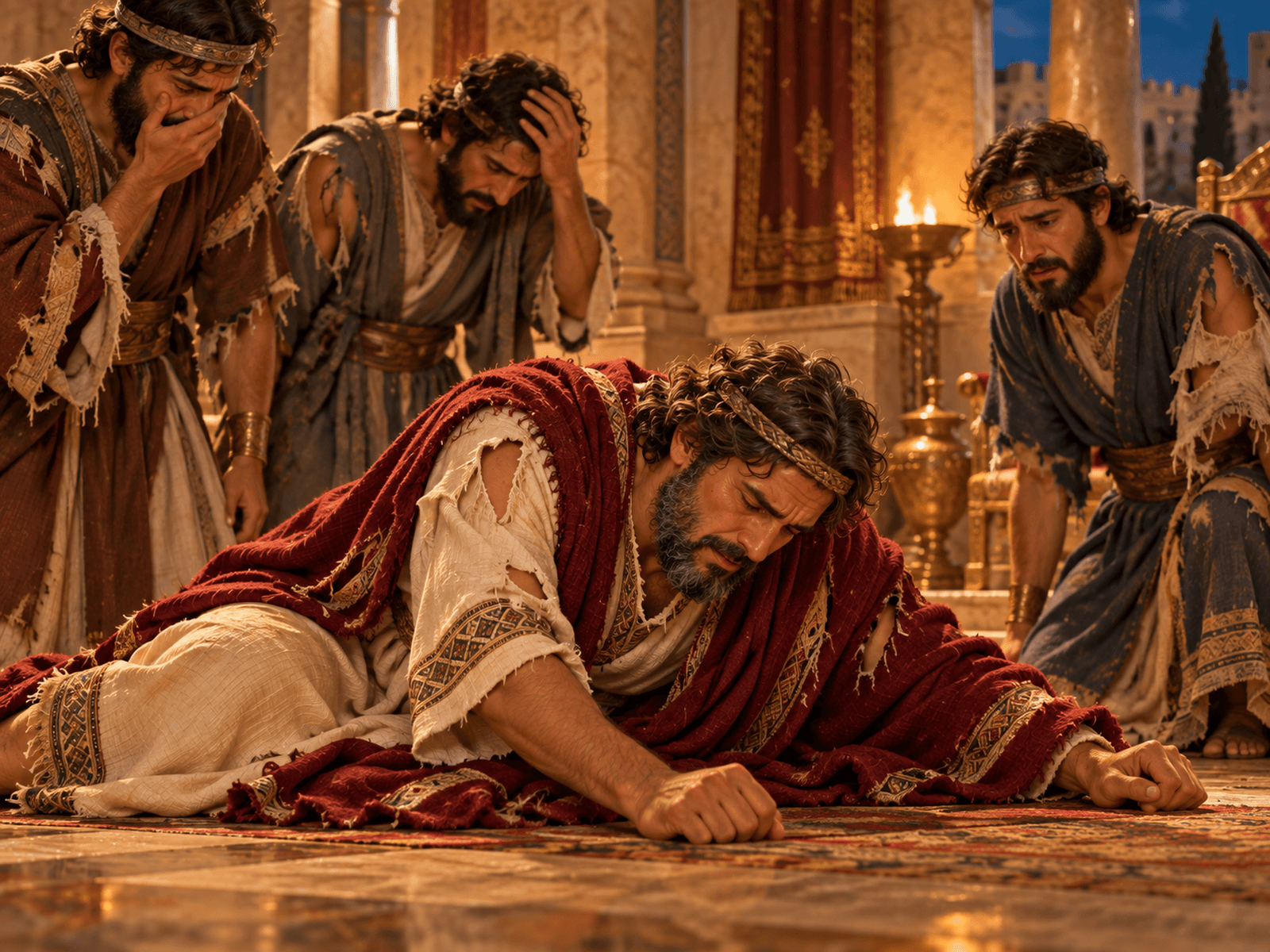
Illustrated scene from David's story: Trouble in David's House (2 Samuel 13:1–39)
Meet the people of the Bible
Follow their lives in order, with illustrated scenes and Bible passages that tell their stories.
 David

Photo: Photochrom print, Library of Congress Prints and Photographs Division (LCCN 2002724987). License: Public domain in the United States; Library of Congress states no known restrictions on publication. Source. Location: Hebron, West Bank; print preserved by the Library of Congress. Resized for the web.
Explore the places of the Bible
See where biblical events happened, why each place matters, and what archaeology helps us understand.
Hebron
Where Abraham lived and buried Sarah, and where David was first made king.
Get full access with one subscription
Explore the people and places of the Bible. Read summaries of every book, with images and clear explanations covering every chapter. Access all these features and our Bible study tools with one subscription.
See PlansAsk AI about 2 Samuel 13:31
Ask a question about this verse and get a clear answer, with Bible references you can read for yourself.
Every Bible book, explained chapter by chapter
Explore summaries of every book of the Bible, with images and easy-to-understand explanations covering every chapter.
Keep studying 2 Samuel 13:31
Related Bible verses
At a Glance — the Book of 2 Samuel
- Author
- Traditionally attributed to Samuel, Nathan, and Gad
- Written
- Around 930 BC
- Genre
- Historical narrative
- Original Audience
- The Israelites of the early monarchy
Frequently Asked Questions
Quick, clear answers about this verse
What does 2 Samuel 13:31 mean?
2 Samuel 13:31 describes King David's reaction to the news of his son Absalom's actions. His tearing of clothes and falling to the ground symbolize deep grief and mourning, reflecting the intense emotional pain he is experiencing.
What is the significance of tearing clothes in 2 Samuel 13:31?
Tearing clothes in 2 Samuel 13:31 is a traditional expression of mourning and sorrow. It signifies a deep emotional response to tragedy and loss, showing that the king and his officials are united in their grief.
How does 2 Samuel 13:31 relate to grief?
2 Samuel 13:31 highlights the rawness of grief and the importance of expressing emotions during times of loss. It shows that mourning is a shared experience, where individuals come together to support one another.
What can we learn from 2 Samuel 13:31?
From 2 Samuel 13:31, we learn that it is important to acknowledge and express our feelings during times of loss. The verse encourages us to seek support from others and to be present for those who are grieving.
Daily Verse — straight to your inbox
A verse and a 2-sentence plain-English explanation, every morning. Free. Unsubscribe anytime.