New Testament
Acts 13:28
Read the Bible in clear, modern English—easy to understand, faithful to the meaning, and written for everyday readers.
Even though they found no grounds for a death sentence, they asked Pilate to have him executed.
Compare translations
And though they found no cause of death in him, yet desired they Pilate that he should be slain.
What Acts 13:28 means
Plain-English insight for readers
In this moment, the leaders of the people were faced with a troubling decision. They had examined the evidence and found no reason to condemn the man they were accusing. Despite this, they still insisted that he be put to death. This highlights a deep conflict between justice and the pressure of public opinion. The leaders chose to ignore the truth because they were swayed by the crowd's demands. It shows how fear and desire for control can lead to unjust actions. This moment serves as a reminder of the importance of standing up for what is right, even when it is unpopular. It challenges us to reflect on our own choices and the influence of others on our decisions. Are we willing to speak the truth, even when it’s difficult or goes against the majority? This story encourages us to seek justice and integrity in our lives, regardless of external pressures or expectations. It’s a call to be courageous in our convictions and to prioritize truth over convenience or popularity.
How to apply Acts 13:28 to your life
In our daily lives, we often face situations where we must choose between what is right and what is popular. This passage encourages us to prioritize truth and justice, even when it’s challenging. Reflect on your decisions and consider the influence of those around you. Stand firm in your beliefs and values, regardless of external pressures. Speak up for what is right, even if it’s not the easy choice. Your courage can inspire others.
Curated for this public verse page. Acts Summary
Learn the Bible through its people and places
Get to know the people in Scripture through illustrated stories, and explore the places where they lived and traveled.
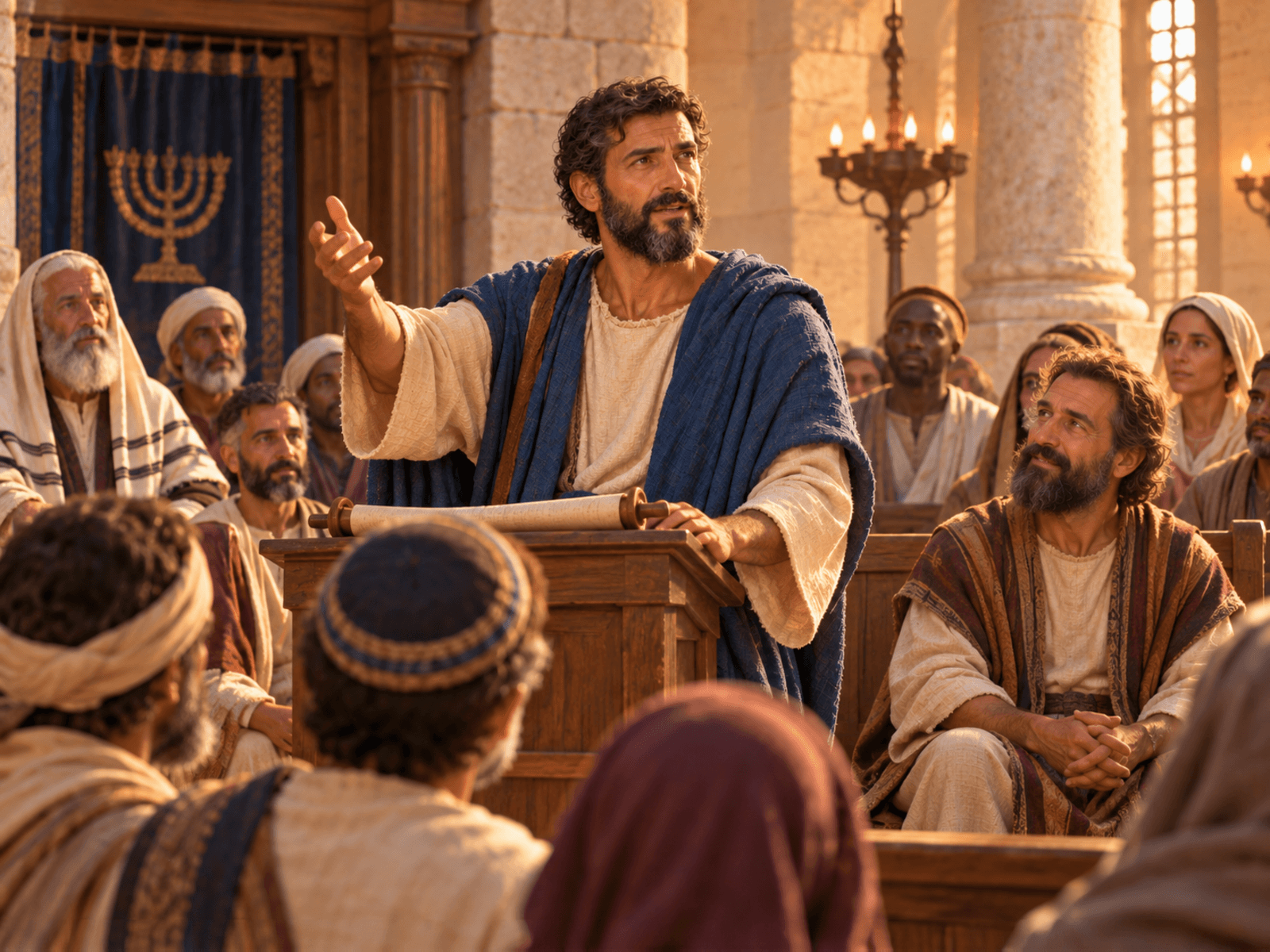
Illustrated scene from Paul's story: A Light for the Gentiles (Acts 13:13–52)
Meet the people of the Bible
Follow their lives in order, with illustrated scenes and Bible passages that tell their stories.
 Paul

Photo: Photochrom print, Library of Congress Prints and Photographs Division (LCCN 2002725045). License: Public domain in the United States; Library of Congress states no known restrictions on publication. Source. Location: Nazareth, Israel; print preserved by the Library of Congress. Resized for the web.
Explore the places of the Bible
See where biblical events happened, why each place matters, and what archaeology helps us understand.
Nazareth
The small town in Galilee where Jesus grew up.
Get full access with one subscription
Explore the people and places of the Bible. Read summaries of every book, with images and clear explanations covering every chapter. Access all these features and our Bible study tools with one subscription.
See PlansAsk AI about Acts 13:28
Ask a question about this verse and get a clear answer, with Bible references you can read for yourself.
Every Bible book, explained chapter by chapter
Explore summaries of every book of the Bible, with images and easy-to-understand explanations covering every chapter.
Keep studying Acts 13:28
Related Bible verses
At a Glance — the Book of Acts
- Author
- Luke the physician
- Written
- Around AD 62
- Genre
- Historical narrative
- Original Audience
- Gentile Christians (addressed to Theophilus)
Frequently Asked Questions
Quick, clear answers about this verse
What does Acts 13:28 mean?
Acts 13:28 describes how the leaders found no valid reason to condemn Jesus to death but still pressured Pilate to execute him. This highlights the conflict between justice and the influence of public opinion.
What is the significance of the crowd's influence in Acts 13:28?
The crowd's influence in Acts 13:28 shows how public pressure can lead to unjust decisions. Despite knowing the truth, the leaders chose to act against it due to fear of the crowd's demands.
What does the phrase 'no grounds for a death sentence' imply in Acts 13:28?
The phrase 'no grounds for a death sentence' implies that the leaders could not find any legitimate reason to justify Jesus' execution, yet they still sought his death, reflecting a moral failure.
How does Acts 13:28 relate to themes of justice and integrity?
Acts 13:28 relates to themes of justice and integrity by showing how the leaders compromised their values under pressure, reminding us of the importance of standing up for what is right, even when it is unpopular.
Daily Verse — straight to your inbox
A verse and a 2-sentence plain-English explanation, every morning. Free. Unsubscribe anytime.