Old Testament
Deuteronomy 2:26
Read the Bible in clear, modern English—easy to understand, faithful to the meaning, and written for everyday readers.
From the wilderness of Kedemoth, I sent messengers to King Sihon of Heshbon with an offer of peace. The message said,
Compare translations
And I sent messengers out of the wilderness of Kedemoth unto Sihon king of Heshbon with words of peace, saying,
What Deuteronomy 2:26 means
Plain-English insight for readers
In this passage, we see a moment of diplomacy as messengers are sent from the wilderness of Kedemoth to King Sihon of Heshbon. The intent is to establish peace rather than conflict. This reflects a desire for cooperation and understanding, rather than aggression. The message is straightforward, emphasizing the importance of communication in resolving disputes. It shows that even in challenging situations, there is an opportunity to seek peaceful solutions. This approach can lead to better relationships and outcomes. The act of reaching out demonstrates courage and wisdom, as it prioritizes dialogue over warfare. Ultimately, this moment serves as a reminder that peace is often worth pursuing, even when faced with potential hostility. It encourages us to consider how we can approach our own conflicts with a mindset geared towards resolution and harmony, rather than escalation. By choosing peace, we can create a more positive environment for ourselves and those around us.
How to apply Deuteronomy 2:26 to your life
In our daily lives, we often face conflicts that can escalate if not handled carefully. Like the messengers, we should strive to communicate openly and seek peaceful resolutions. This can lead to stronger relationships and a more harmonious environment. Remember, choosing peace can transform difficult situations into opportunities for growth and understanding. Take the first step towards resolution today by reaching out to someone.
Curated for this public verse page. Deuteronomy Summary
Learn the Bible through its people and places
Get to know the people in Scripture through illustrated stories, and explore the places where they lived and traveled.
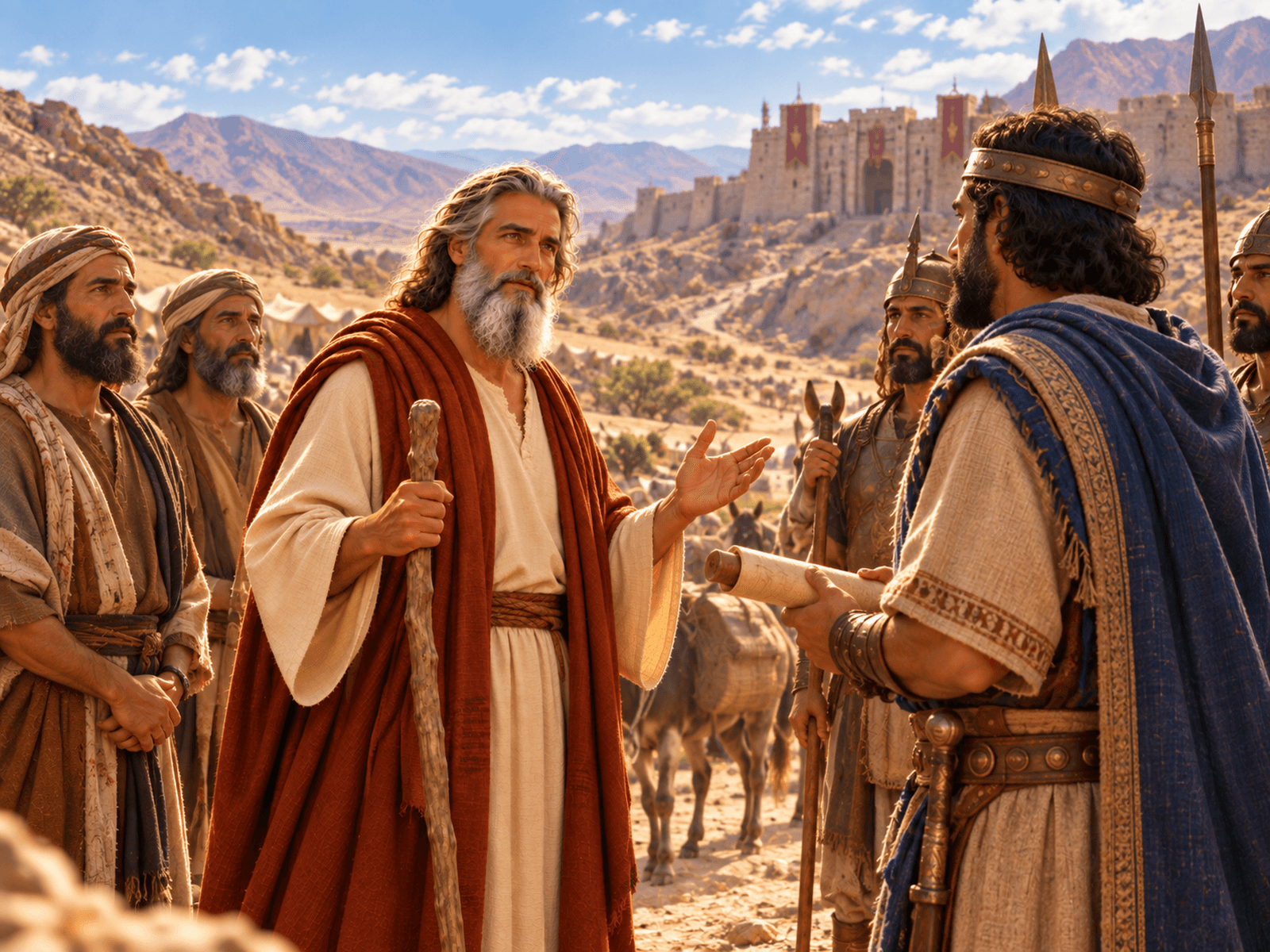
Illustrated scene from Moses's story: Victories over Sihon and Og (Deuteronomy 2:26–3:11)
Meet the people of the Bible
Follow their lives in order, with illustrated scenes and Bible passages that tell their stories.
 Moses

Photo: Photochrom print, Library of Congress Prints and Photographs Division (LCCN 2002724987). License: Public domain in the United States; Library of Congress states no known restrictions on publication. Source. Location: Hebron, West Bank; print preserved by the Library of Congress. Resized for the web.
Explore the places of the Bible
See where biblical events happened, why each place matters, and what archaeology helps us understand.
Hebron
Where Abraham lived and buried Sarah, and where David was first made king.
Get full access with one subscription
Explore the people and places of the Bible. Read summaries of every book, with images and clear explanations covering every chapter. Access all these features and our Bible study tools with one subscription.
See PlansAsk AI about Deuteronomy 2:26
Ask a question about this verse and get a clear answer, with Bible references you can read for yourself.
Every Bible book, explained chapter by chapter
Explore summaries of every book of the Bible, with images and easy-to-understand explanations covering every chapter.
Keep studying Deuteronomy 2:26
Related Bible verses
Key themes
Related topics
At a Glance — the Book of Deuteronomy
- Author
- Traditionally attributed to Moses
- Written
- Around 1400 BC
- Genre
- Law (Pentateuch)
- Original Audience
- The Israelites about to enter the Promised Land
Frequently Asked Questions
Quick, clear answers about this verse
What does Deuteronomy 2:26 mean?
Deuteronomy 2:26 describes a diplomatic effort where messengers are sent from Kedemoth to King Sihon of Heshbon with an offer of peace. This highlights the importance of seeking peaceful resolutions instead of engaging in conflict.
What is the significance of sending messengers in Deuteronomy 2:26?
Sending messengers in Deuteronomy 2:26 signifies a proactive approach to conflict resolution. It shows a willingness to communicate and negotiate, emphasizing that dialogue can lead to better outcomes than aggression.
What themes are present in Deuteronomy 2:26?
Deuteronomy 2:26 encompasses themes of peace, diplomacy, and communication. It illustrates the value of understanding and cooperation in resolving disputes, rather than resorting to violence.
How can we apply Deuteronomy 2:26 in our lives?
We can apply Deuteronomy 2:26 by striving to communicate openly in our own conflicts. By seeking peaceful resolutions and prioritizing dialogue, we can foster stronger relationships and a more harmonious environment.
Daily Verse — straight to your inbox
A verse and a 2-sentence plain-English explanation, every morning. Free. Unsubscribe anytime.