Old Testament
Deuteronomy 2:28
Read the Bible in clear, modern English—easy to understand, faithful to the meaning, and written for everyday readers.
Sell me food for silver so I can eat, and sell me water for silver so I can drink. Just let me walk through on foot —
Compare translations
Thou shalt sell me meat for money, that I may eat; and give me water for money, that I may drink: only I will pass through on my feet;
What Deuteronomy 2:28 means
Plain-English insight for readers
In this verse, the speaker is asking for basic necessities—food and water—in exchange for money. This request highlights the importance of trade and mutual respect in interactions. The speaker emphasizes a desire to pass through a territory peacefully, without causing trouble. It reflects a practical approach to survival during a journey. The focus is on obtaining what is needed to sustain life while maintaining a peaceful demeanor. This moment illustrates the human need for cooperation and understanding, even in challenging situations. It shows that sometimes, simple requests can pave the way for smoother interactions. The speaker's insistence on paying for what they need underscores the value of fairness and respect in relationships. This verse serves as a reminder that we can achieve our goals through honest communication and respect for others' resources and boundaries. It encourages us to seek what we need while being considerate of those around us, fostering a spirit of collaboration.
How to apply Deuteronomy 2:28 to your life
When you need something from others, remember to ask politely and offer something in return. This builds trust and respect in your relationships. Approach situations with a mindset of cooperation, and you may find that people are more willing to help you. Fair exchanges can lead to positive outcomes for everyone involved. Always be considerate of others' needs as well as your own.
Curated for this public verse page. Deuteronomy Summary
Learn the Bible through its people and places
Get to know the people in Scripture through illustrated stories, and explore the places where they lived and traveled.
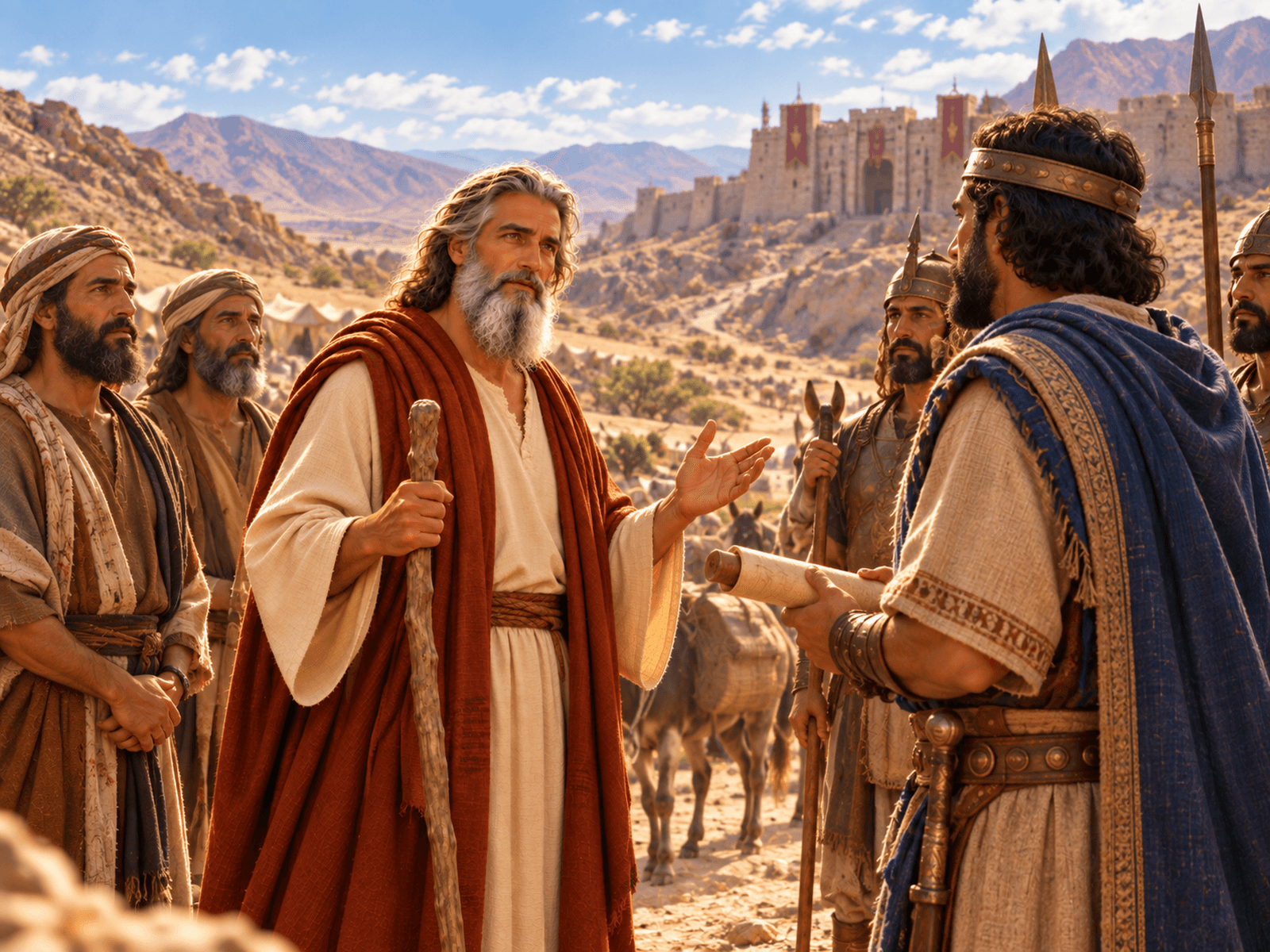
Illustrated scene from Moses's story: Victories over Sihon and Og (Deuteronomy 2:26–3:11)
Meet the people of the Bible
Follow their lives in order, with illustrated scenes and Bible passages that tell their stories.
 Moses

Photo: Photochrom print, Library of Congress Prints and Photographs Division (LCCN 2002724987). License: Public domain in the United States; Library of Congress states no known restrictions on publication. Source. Location: Hebron, West Bank; print preserved by the Library of Congress. Resized for the web.
Explore the places of the Bible
See where biblical events happened, why each place matters, and what archaeology helps us understand.
Hebron
Where Abraham lived and buried Sarah, and where David was first made king.
Get full access with one subscription
Explore the people and places of the Bible. Read summaries of every book, with images and clear explanations covering every chapter. Access all these features and our Bible study tools with one subscription.
See PlansAsk AI about Deuteronomy 2:28
Ask a question about this verse and get a clear answer, with Bible references you can read for yourself.
Every Bible book, explained chapter by chapter
Explore summaries of every book of the Bible, with images and easy-to-understand explanations covering every chapter.
Keep studying Deuteronomy 2:28
Related Bible verses
At a Glance — the Book of Deuteronomy
- Author
- Traditionally attributed to Moses
- Written
- Around 1400 BC
- Genre
- Law (Pentateuch)
- Original Audience
- The Israelites about to enter the Promised Land
Frequently Asked Questions
Quick, clear answers about this verse
What does Deuteronomy 2:28 mean?
Deuteronomy 2:28 expresses a request for food and water in exchange for money, highlighting the importance of trade and respect in interactions. The speaker seeks a peaceful passage through a territory, emphasizing cooperation and mutual respect.
What is the significance of asking for food and water in Deuteronomy 2:28?
Asking for food and water in Deuteronomy 2:28 signifies the basic human needs for survival during a journey. It reflects a practical approach to obtaining necessities while maintaining a respectful and peaceful demeanor.
What does the phrase 'only I will pass through on my feet' mean in Deuteronomy 2:28?
The phrase 'only I will pass through on my feet' indicates the speaker's intention to travel peacefully without causing trouble. It emphasizes a desire for a non-confrontational passage through the territory.
How does Deuteronomy 2:28 illustrate cooperation?
Deuteronomy 2:28 illustrates cooperation by showing that the speaker is willing to pay for food and water, which fosters a spirit of mutual respect and understanding. This approach encourages positive interactions during challenging situations.
Daily Verse — straight to your inbox
A verse and a 2-sentence plain-English explanation, every morning. Free. Unsubscribe anytime.