Old Testament
Genesis 4:3
Read the Bible in clear, modern English—easy to understand, faithful to the meaning, and written for everyday readers.
When harvest time came, Cain brought some of his crops as an offering to the LORD.
Compare translations
And in process of time it came to pass, that Cain brought of the fruit of the ground an offering unto the LORD.
What Genesis 4:3 means
Plain-English insight for readers
In this moment, Cain, a farmer, decided to bring an offering to God when it was time to harvest his crops. This act was significant because it showed his acknowledgment of God’s role in his life and work. Offering the fruits of his labor was a way to express gratitude and devotion. However, the nature of his offering would later become a point of contention. Cain's choice to bring 'some' of his crops suggests he may not have given his best. This raises questions about the intentions behind our actions and how we present ourselves to God. It’s a reminder that what we offer reflects our heart and priorities. The story of Cain and his offering sets the stage for deeper themes of acceptance, jealousy, and the consequences of our choices. It invites us to consider how we honor our commitments and relationships, both with God and others, through our actions and offerings. Ultimately, it challenges us to give our best in all aspects of life, not just in religious practices.
How to apply Genesis 4:3 to your life
Consider what you offer in your daily life, whether it’s time, resources, or attention. Are you giving your best, or just what’s convenient? Reflect on how your choices impact your relationships and your connection with God. Strive to offer your best in all you do, showing true commitment and care. This can transform your interactions and deepen your faith journey. “,”chapter_summary_teaser”: “This chapter introduces Cain and Abel, highlighting their offerings to God. It sets the
Curated for this public verse page. Genesis Summary
Learn the Bible through its people and places
Get to know the people in Scripture through illustrated stories, and explore the places where they lived and traveled.
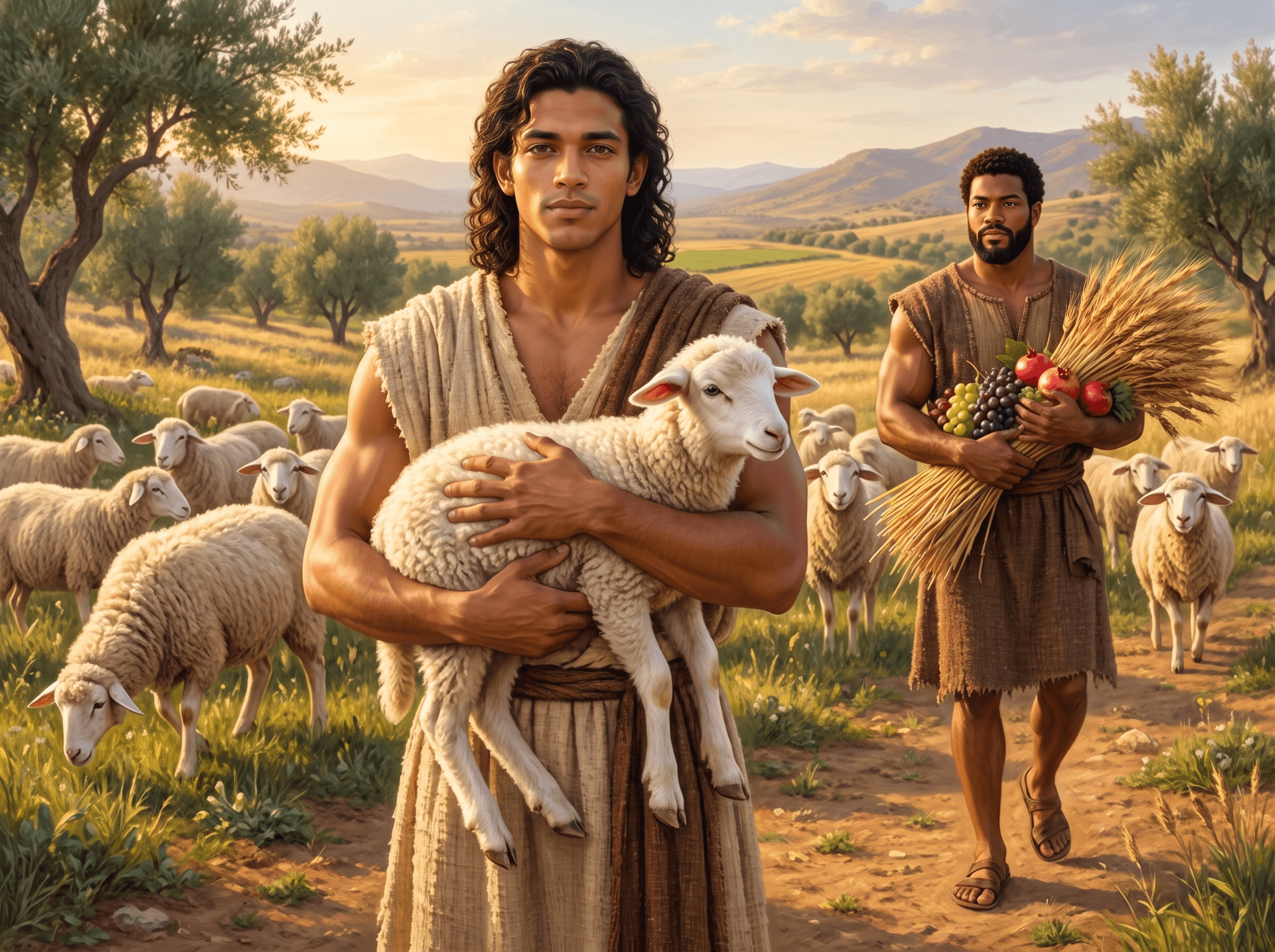
Illustrated scene from Cain's story: The Two Offerings (Genesis 4:3–7)
Meet the people of the Bible
Follow their lives in order, with illustrated scenes and Bible passages that tell their stories.
 Cain

Photo: Bukvoed, via Wikimedia Commons. License: CC BY 4.0. Source. Location: Burj Beitin, Beitin, Ramallah and al-Bireh Governorate, West Bank. Resized for the web.
Explore the places of the Bible
See where biblical events happened, why each place matters, and what archaeology helps us understand.
Bethel
Where Jacob dreamed of a stairway to heaven and met God.
Get full access with one subscription
Explore the people and places of the Bible. Read summaries of every book, with images and clear explanations covering every chapter. Access all these features and our Bible study tools with one subscription.
See PlansAsk AI about Genesis 4:3
Ask a question about this verse and get a clear answer, with Bible references you can read for yourself.
Every Bible book, explained chapter by chapter
Explore summaries of every book of the Bible, with images and easy-to-understand explanations covering every chapter.
Keep studying Genesis 4:3
Related Bible verses
Key themes
Related topics
At a Glance — the Book of Genesis
- Author
- Traditionally attributed to Moses
- Written
- Around 1400 BC
- Genre
- Law (Pentateuch)
- Original Audience
- The Israelites in the wilderness
Frequently Asked Questions
Quick, clear answers about this verse
What does Genesis 4:3 mean?
Genesis 4:3 describes Cain bringing an offering of his crops to God during harvest time. This act signifies Cain's recognition of God's role in his life, but it also raises questions about the quality of his offering and his intentions.
What is the significance of Cain's offering in Genesis 4:3?
Cain's offering in Genesis 4:3 is significant because it reflects his acknowledgment of God, but it also hints at his lack of commitment, as he only brought 'some' of his crops instead of his best.
What does 'some of his crops' imply in Genesis 4:3?
The phrase 'some of his crops' in Genesis 4:3 implies that Cain may not have given his best to God, suggesting a lack of full dedication and raising questions about the sincerity of his offering.
What themes are present in Genesis 4:3?
Genesis 4:3 presents themes of offering, gratitude, intentions, acceptance, and consequences, highlighting the importance of how we present ourselves and our gifts to God.
Daily Verse — straight to your inbox
A verse and a 2-sentence plain-English explanation, every morning. Free. Unsubscribe anytime.