Old Testament
Genesis 49:14
Read the Bible in clear, modern English—easy to understand, faithful to the meaning, and written for everyday readers.
"Issachar is a sturdy donkey lying down between two saddlebags."
Compare translations
Issachar is a strong ass couching down between two burdens:
What Genesis 49:14 means
Plain-English insight for readers
In Genesis 49:14, Issachar is compared to a sturdy donkey, symbolizing strength and reliability. The imagery of lying down between two saddlebags suggests a life of burden and service. This reflects Issachar's role as a tribe that would work hard and be dependable, often taking on the responsibilities of labor and agriculture. The mention of 'two burdens' indicates that Issachar would be positioned between two significant tasks or challenges, highlighting their willingness to support and carry the weight of their responsibilities. This verse illustrates the character of Issachar as one who is strong yet humble, ready to serve and contribute to the community, embodying the idea of being steadfast in the face of challenges. Overall, it emphasizes the importance of hard work and dedication in fulfilling one's duties, as well as the value of being a reliable support for others in times of need.
How to apply Genesis 49:14 to your life
We can learn from Issachar's example by embracing our responsibilities with diligence and strength. Whether in our jobs, families, or communities, being dependable and ready to serve others can make a significant impact. Let us strive to be reliable and hardworking in all that we do.
Curated for this public verse page. Genesis Summary
Learn the Bible through its people and places
Get to know the people in Scripture through illustrated stories, and explore the places where they lived and traveled.
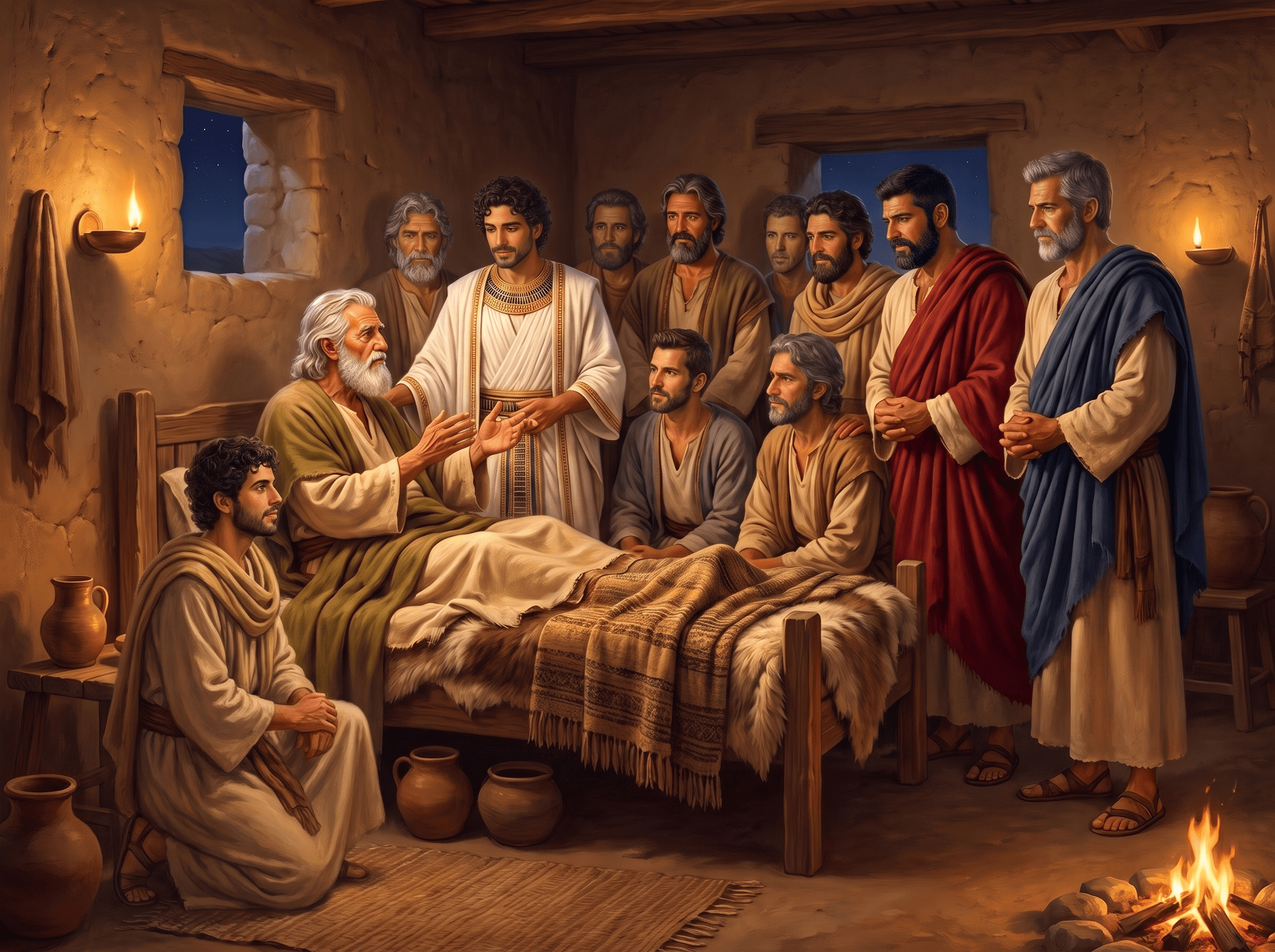
Illustrated scene from Joseph, Jacob's son's story: Jacob's Last Words (Genesis 49:1–33)
Meet the people of the Bible
Follow their lives in order, with illustrated scenes and Bible passages that tell their stories.
 Joseph, Jacob's son

Photo: Photochrom print, Library of Congress Prints and Photographs Division (LCCN 2002724987). License: Public domain in the United States; Library of Congress states no known restrictions on publication. Source. Location: Hebron, West Bank; print preserved by the Library of Congress. Resized for the web.
Explore the places of the Bible
See where biblical events happened, why each place matters, and what archaeology helps us understand.
Hebron
Where Abraham lived and buried Sarah, and where David was first made king.
Get full access with one subscription
Explore the people and places of the Bible. Read summaries of every book, with images and clear explanations covering every chapter. Access all these features and our Bible study tools with one subscription.
See PlansAsk AI about Genesis 49:14
Ask a question about this verse and get a clear answer, with Bible references you can read for yourself.
Every Bible book, explained chapter by chapter
Explore summaries of every book of the Bible, with images and easy-to-understand explanations covering every chapter.
Keep studying Genesis 49:14
Related Bible verses
Related topics
At a Glance — the Book of Genesis
- Author
- Traditionally attributed to Moses
- Written
- Around 1400 BC
- Genre
- Law (Pentateuch)
- Original Audience
- The Israelites in the wilderness
Frequently Asked Questions
Quick, clear answers about this verse
What does Genesis 49:14 mean?
Genesis 49:14 describes Issachar as a strong donkey, symbolizing strength and reliability. The imagery of lying between two burdens suggests a life dedicated to hard work and service, reflecting the tribe's role in agriculture and labor.
What is the significance of the donkey in Genesis 49:14?
The donkey in Genesis 49:14 represents strength and dependability. It highlights Issachar's character as a hardworking tribe that takes on responsibilities and supports others.
What does 'two burdens' refer to in Genesis 49:14?
The 'two burdens' in Genesis 49:14 symbolize significant tasks or challenges that Issachar would face. It emphasizes their willingness to shoulder responsibilities and contribute to their community.
How can we apply Genesis 49:14 to our lives today?
We can apply Genesis 49:14 by embracing our responsibilities with diligence and strength. Being dependable and ready to serve in our jobs, families, and communities can create a positive impact.
Daily Verse — straight to your inbox
A verse and a 2-sentence plain-English explanation, every morning. Free. Unsubscribe anytime.