New Testament
Hebrews 7:4
Read the Bible in clear, modern English—easy to understand, faithful to the meaning, and written for everyday readers.
Think about how great this man was — even Abraham, the patriarch himself, gave him a tenth of the best plunder.
Compare translations
Now consider how great this man was, unto whom even the patriarch Abraham gave the tenth of the spoils.
What Hebrews 7:4 means
Plain-English insight for readers
In Hebrews 7:4, the author emphasizes the greatness of Melchizedek, a mysterious figure from the Old Testament. The verse highlights that even Abraham, a key patriarch and the father of the Israelite nation, recognized Melchizedek's significance by giving him a tenth of the spoils from his victories. This act of giving a tithe signifies respect and acknowledgment of Melchizedek's authority and priestly role. The comparison serves to elevate Melchizedek's status, suggesting that he is greater than Abraham, which is a profound statement in Jewish tradition. The mention of the 'best plunder' indicates that Abraham did not just give any offering, but a significant portion, showcasing the honor he bestowed upon Melchizedek. This sets the stage for understanding the priesthood of Jesus, who is likened to Melchizedek, as both are seen as eternal priests, not bound by the Levitical order. Thus, this verse invites readers to reflect on the importance of recognizing spiritual authority and the significance of giving in worship.
How to apply Hebrews 7:4 to your life
This verse encourages us to recognize and honor spiritual leaders in our lives. Just as Abraham acknowledged Melchizedek's greatness, we should appreciate those who guide us in faith. Additionally, it reminds us of the importance of giving generously, as a reflection of our respect and gratitude for spiritual blessings.
Curated for this public verse page. Hebrews Summary
Explore more of the Bible
Learn the Bible through its people and places
Get to know the people in Scripture through illustrated stories, and explore the places where they lived and traveled.
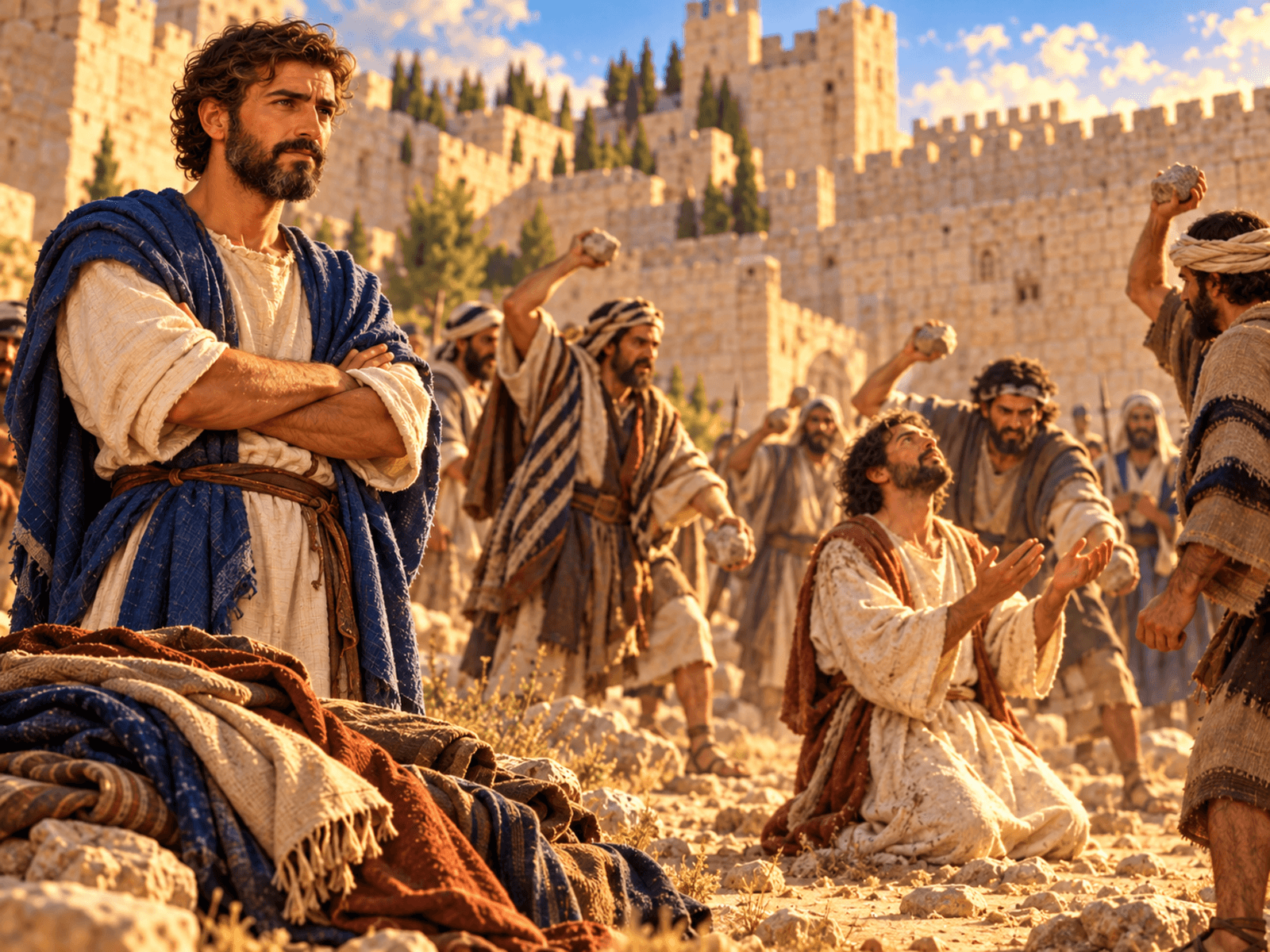
Illustrated scene from Paul's story: The Stoning of Stephen (Acts 7:57–8:2)
Meet the people of the Bible
Follow their lives in order, with illustrated scenes and Bible passages that tell their stories.
 Paul

Photo: Photochrom print, Library of Congress Prints and Photographs Division (LCCN 2002725045). License: Public domain in the United States; Library of Congress states no known restrictions on publication. Source. Location: Nazareth, Israel; print preserved by the Library of Congress. Resized for the web.
Explore the places of the Bible
See where biblical events happened, why each place matters, and what archaeology helps us understand.
Nazareth
The small town in Galilee where Jesus grew up.
Get full access with one subscription
Explore the people and places of the Bible. Read summaries of every book, with images and clear explanations covering every chapter. Access all these features and our Bible study tools with one subscription.
See PlansAsk AI about Hebrews 7:4
Ask a question about this verse and get a clear answer, with Bible references you can read for yourself.
Every Bible book, explained chapter by chapter
Explore summaries of every book of the Bible, with images and easy-to-understand explanations covering every chapter.
Keep studying Hebrews 7:4
Related Bible verses
Key themes
Related topics
At a Glance — the Book of Hebrews
- Author
- Author unknown; traditionally attributed to Paul
- Written
- Around AD 60-70
- Genre
- Letter and sermon
- Original Audience
- Jewish Christians
Frequently Asked Questions
Quick, clear answers about this verse
What does Hebrews 7:4 mean?
Hebrews 7:4 highlights the greatness of Melchizedek by noting that even Abraham, a significant patriarch, gave him a tenth of the spoils from his victories. This act signifies respect and acknowledges Melchizedek's authority as a priest.
What is the significance of Abraham giving a tithe in Hebrews 7:4?
Abraham giving a tithe to Melchizedek signifies his recognition of Melchizedek's importance and authority. It illustrates the honor bestowed upon Melchizedek, suggesting he holds a greater status than Abraham in this context.
Who is Melchizedek in Hebrews 7:4?
Melchizedek is a mysterious figure from the Old Testament, known as a king and priest. In Hebrews 7:4, he is presented as a significant spiritual authority, whose priesthood is likened to that of Jesus.
What does the phrase 'best plunder' mean in Hebrews 7:4?
The phrase 'best plunder' indicates that Abraham gave Melchizedek a significant and valuable portion of his spoils, reflecting the high regard and honor he had for Melchizedek.
Daily Verse — straight to your inbox
A verse and a 2-sentence plain-English explanation, every morning. Free. Unsubscribe anytime.